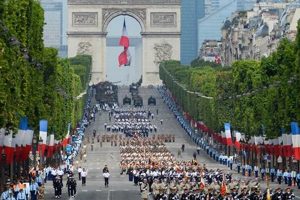
Determining appropriate attire for France’s national day celebrations involves considering both the historical significance of the event and contemporary fashion sensibilities. The occasion commemorates the storming of the Bastille, a pivotal moment in the French Revolution, and is generally celebrated with festivities ranging from formal gatherings to casual outdoor events.
Selecting garments that reflect the patriotic spirit of the day can enhance the celebratory experience. The French flag’s colors blue, white, and red often serve as inspiration for clothing choices. Historically, attire for national celebrations has been a means of expressing solidarity and cultural identity. Contemporary interpretations allow for creativity while acknowledging the holiday’s origins.
The subsequent sections will outline specific considerations regarding formality, color palettes, and accessory choices, providing guidance for assembling ensembles suitable for various Bastille Day events. Attention will also be given to practical aspects such as weather conditions and the anticipated level of physical activity.
Attire Suggestions for France’s National Day Celebrations
The following recommendations provide guidance for selecting suitable garments for Bastille Day, balancing patriotic expression with practical considerations.
Tip 1: Consider the Event’s Formality: Formal gatherings, such as embassy receptions, necessitate more sophisticated attire, potentially including cocktail dresses or suits. Casual outdoor events, conversely, allow for more relaxed garments, such as linen trousers or sundresses.
Tip 2: Incorporate the Tricolore: The French flag’s colors blue, white, and red can be integrated into an outfit through individual garments or accessories. A navy blazer paired with a white top and red scarf represents a subtle yet effective approach.
Tip 3: Prioritize Comfort: Many Bastille Day celebrations involve outdoor activities. Choosing breathable fabrics, such as cotton or linen, and comfortable footwear is paramount.
Tip 4: Accessorize Thoughtfully: Accessories provide opportunities to enhance an ensemble without overwhelming it. A beret, a silk scarf, or understated jewelry can complement the chosen attire.
Tip 5: Account for Weather Conditions: Weather forecasts should be consulted before selecting an outfit. Layering is advisable for unpredictable conditions, and rain gear should be considered if necessary.
Tip 6: Demonstrate Respectful Patriotism: While incorporating national colors is encouraged, avoid ostentatious or potentially offensive displays of nationalism. Subtlety and good taste are key.
Tip 7: Opt for Timeless Elegance: French fashion is often characterized by its enduring appeal. Garments with classic silhouettes and high-quality fabrics can convey sophistication and respect for the occasion.
Adhering to these suggestions facilitates the selection of appropriate and respectful attire, enabling confident participation in Bastille Day festivities.
The subsequent section provides examples of specific outfit combinations tailored for different types of Bastille Day events.
1. Formality of event

The formality of a Bastille Day event exerts a primary influence on attire selection. As Bastille Day celebrations encompass a broad spectrum of occasions, ranging from formal embassy receptions to informal public gatherings, the appropriate dress code varies substantially. Formal events inherently demand more elaborate and refined clothing choices, while informal settings permit more casual and comfortable attire. A mismatch between the event’s formality and an individual’s attire can result in discomfort and perceived disrespect for the occasion.
Consider, for example, an invitation to a Bastille Day gala hosted by the French consulate. Such an event typically requires formal evening wear, such as a cocktail dress for women or a dark suit for men. Conversely, attendance at a community picnic in a local park celebrating Bastille Day allows for more relaxed clothing, such as sundresses, linen shirts, and comfortable walking shoes. The event’s stated or implied dress code serves as a guide for attendees, ensuring that their attire aligns with the overall atmosphere and expectations of the gathering. Failure to ascertain the event’s formality can lead to sartorial missteps and undermine the individual’s participation.
In conclusion, understanding the level of formality associated with a specific Bastille Day celebration is critical for selecting appropriate attire. The guidelines provided by the event organizers, the location of the event, and the time of day can all offer clues regarding the anticipated dress code. Accurate assessment of these factors ensures that individuals can participate in Bastille Day festivities with confidence and respect for the occasion’s significance. Neglecting this initial assessment risks sartorial incongruity and potential social discomfort.
2. Tricolore Color Palette

The association between the tricolor color palette blue, white, and red and appropriate attire for France’s national day celebrations is a potent symbol of patriotic expression. The visual representation of the French flag serves as a direct and recognizable means of conveying solidarity and commemorating the historical significance of Bastille Day. Employing these colors in clothing choices, whether subtly or overtly, demonstrates respect for the occasion and aligns the individual with the collective celebration.
The incorporation of the tricolor palette into sartorial selections can manifest in various ways. A sophisticated approach might involve a navy blue dress accented with a white scarf and red jewelry. A more casual interpretation could feature a white t-shirt paired with red shorts or a blue denim jacket. Furthermore, accessories offer opportunities to integrate the colors without overwhelming the ensemble; a red handbag or blue earrings can serve as subtle nods to the national flag. The strategic use of these colors allows for a diverse range of outfits suitable for different event formats and personal styles, while maintaining thematic coherence with the holiday’s core symbolism. The decision to utilize the tricolor palette is thus a conscious act of cultural participation, blending personal expression with national identity.
However, it is imperative to exercise discretion when employing the tricolor palette. Overuse or garish combinations of the colors can detract from the intended effect and potentially appear disrespectful. The objective is to integrate the colors in a tasteful and balanced manner, avoiding stereotypical or exaggerated displays of patriotism. The tricolor palette, when skillfully applied, contributes to a meaningful and visually impactful celebration of Bastille Day, underscoring the connection between personal expression and collective identity while paying homage to the holiday’s historical importance. Therefore, the appropriate and deliberate use of the tricolor enhances and supports the expression of respect and gratitude for the holiday.
3. Weather appropriateness

The principle of weather appropriateness holds significant relevance when considering attire for Bastille Day celebrations. The nature of these celebrations, often held outdoors, renders individuals susceptible to prevailing weather conditions. Therefore, selecting garments that provide adequate protection and comfort in accordance with the expected climate is paramount.
- Fabric Selection
The choice of fabric directly impacts thermal regulation and moisture management. Breathable fabrics like linen or cotton are advisable for warm weather, facilitating air circulation and minimizing discomfort from perspiration. Conversely, cooler conditions necessitate insulating materials such as wool or fleece to retain body heat. The judicious selection of fabric based on the expected temperature is critical for maintaining comfort during prolonged outdoor exposure.
- Layering Strategies
Layering garments allows for adaptable thermal regulation in response to fluctuating temperatures. An ensemble incorporating multiple layers provides the flexibility to add or remove items as needed, accommodating shifts in weather conditions throughout the day. A light jacket or cardigan, worn over a short-sleeved shirt, exemplifies this principle, offering protection against unexpected breezes or drops in temperature.
- Precipitation Protection
The potential for precipitation warrants consideration of waterproof or water-resistant outerwear. Umbrellas, raincoats, or water-repellent jackets offer protection against rain, ensuring comfort and preventing discomfort or potential illness. The selection of appropriate footwear, such as waterproof boots or shoes, is equally important in preventing water damage and maintaining traction on wet surfaces.
- Sun Exposure Mitigation
Prolonged exposure to sunlight necessitates protection from ultraviolet radiation. Wide-brimmed hats, sunglasses, and clothing with ultraviolet protection factor (UPF) ratings can mitigate the harmful effects of sun exposure, reducing the risk of sunburn and skin damage. Light-colored fabrics reflect sunlight, further minimizing heat absorption and enhancing comfort.
Integrating these considerations regarding weather appropriateness into attire selection enhances the overall experience of Bastille Day celebrations. By prioritizing garments that provide adequate protection from the elements, individuals can participate in festivities with greater comfort and reduced risk of weather-related discomfort or health concerns. The correlation between weather conditions and clothing choices underscores the need for informed decision-making when preparing for these predominantly outdoor events.
4. Comfort and mobility
The intersection of comfort and mobility with attire suitable for Bastille Day festivities is a critical determinant of an individual’s overall enjoyment and participation. Bastille Day celebrations typically involve a range of activities, from parades and public gatherings to outdoor concerts and informal picnics. These activities often require extended periods of standing, walking, and engaging in social interactions. Consequently, clothing choices that prioritize comfort and facilitate unrestricted movement are essential for individuals to fully participate in the celebrations without physical limitations or distractions.
The selection of appropriate footwear is a prime example of this principle. High heels, while aesthetically appealing for certain formal events, are ill-suited for navigating crowded streets or participating in outdoor activities. Comfortable walking shoes or sandals, offering adequate support and cushioning, are far more practical choices. Similarly, garments constructed from restrictive materials, such as tight-fitting trousers or heavily structured jackets, can impede mobility and cause discomfort during prolonged wear. Opting for looser-fitting clothing made from breathable fabrics allows for a greater range of motion and prevents overheating, enhancing overall comfort throughout the day. Consider an individual attending a parade: comfortable shoes would allow them to stand for longer and participate more actively; breathable fabric prevents discomfort from being in the sun for long hours. This underscores the direct correlation between informed clothing choices and a more satisfying experience.
In summation, prioritizing comfort and mobility when selecting attire for Bastille Day is not merely a matter of personal preference but a practical necessity for maximizing participation and enjoyment. Clothing choices should be carefully considered in relation to the anticipated activities, prioritizing garments and footwear that facilitate unrestricted movement and provide adequate support and protection. Overlooking these considerations can result in discomfort, fatigue, and limited engagement with the festivities, thereby diminishing the overall celebratory experience. Therefore, a mindful approach to clothing selection, informed by an understanding of the day’s activities and potential physical demands, is crucial for a successful and enjoyable Bastille Day celebration.
5. Patriotic subtlety
The integration of patriotic expression into attire for France’s national day celebrations necessitates a nuanced approach, emphasizing subtlety over overt displays. While the expression of national pride is intrinsically linked to Bastille Day, the manner in which this sentiment is conveyed through clothing choices can significantly impact the overall impression. Exaggerated or ostentatious displays of patriotism risk appearing inauthentic or even disrespectful, diminishing the intended celebratory effect. Conversely, a subtle incorporation of national symbols or colors allows for a refined and respectful expression of national identity.
The strategic use of color palettes, such as the French tricolor, exemplifies this principle. Rather than donning clothing solely comprised of red, white, and blue, individuals might opt for a navy blazer paired with a white blouse and a discreet red scarf. Similarly, incorporating subtle design elements, such as a small French flag pin or a pattern inspired by French motifs, can effectively convey patriotic sentiment without overwhelming the ensemble. Consider the practical application of this concept: an individual attending a formal Bastille Day reception might choose a classic black dress accented with understated blue jewelry, thereby demonstrating respect for both the occasion and the host. The effectiveness of patriotic subtlety lies in its ability to convey national pride without sacrificing elegance or good taste.
In conclusion, patriotic subtlety represents a critical element in determining appropriate attire for France’s national day celebrations. By prioritizing nuance and restraint over overt displays of nationalism, individuals can effectively express their national pride in a manner that is both respectful and aesthetically pleasing. The strategic integration of subtle design elements and color palettes allows for a balanced and sophisticated expression of national identity, enhancing the overall celebratory experience. Failing to embrace this concept risks undermining the intended message and detracting from the significance of the occasion.
6. Personal style
The intersection of personal style and attire suitable for France’s national day celebrations represents a critical consideration in achieving a harmonious and authentic expression of national pride. While adherence to general guidelines regarding formality, color palettes, and weather appropriateness is essential, the integration of individual aesthetic preferences allows for a personalized interpretation of the celebratory dress code. Personal style, in this context, serves as a filter through which broader cultural norms are expressed, resulting in an outfit that is both respectful of the occasion and reflective of the individual’s unique identity.
The application of personal style can manifest in numerous ways. An individual with a penchant for classic elegance might opt for a vintage-inspired dress in navy blue, accented with subtle white accessories and a red lip. Conversely, someone with a more bohemian aesthetic could choose a flowing white dress paired with a red flower crown and blue espadrilles. A proponent of minimalist fashion might select a simple white linen dress, adding a touch of French flair with a blue and red scarf. In each scenario, the foundational principles of Bastille Day attire are honored, while individual preferences dictate the specific garments and accessories chosen. Consider, for instance, an artist attending an outdoor celebration; their attire might incorporate bold patterns and vibrant colors, reflecting their creative sensibilities while remaining within the thematic parameters of the holiday. Or a businesswoman attending a formal reception might favour a streamlined suit, subtly hinting at the tri-color scheme with elegant accessories, hence showing their persona and respect for dress-code.
In conclusion, the successful integration of personal style into attire for France’s national day celebrations necessitates a balance between adherence to established guidelines and the expression of individual preferences. By carefully considering the various factors that contribute to appropriate attire, while remaining true to one’s unique aesthetic sensibilities, individuals can create ensembles that are both respectful of the occasion and reflective of their personal identity. The challenge lies in navigating this intersection with sensitivity and discernment, resulting in an outcome that is both authentic and celebratory. The fusion of personal style with national tradition enhances the individual’s participation in the festivities, fostering a deeper sense of connection to both the event and their own identity.
Frequently Asked Questions
The following questions address common inquiries regarding appropriate attire for France’s national day celebrations, offering concise and informative guidance.
Question 1: Is it mandatory to wear clothing featuring the French flag’s colors?
While incorporating blue, white, and red is encouraged, it is not mandatory. Subtle nods to the French flag’s colors are acceptable, and personal style should also be considered.
Question 2: What is the appropriate attire for a formal Bastille Day gala?
Formal events typically require cocktail dresses or evening gowns for women and suits or tuxedos for men. Adherence to the event’s specific dress code is essential.
Question 3: What should be worn to an outdoor Bastille Day celebration?
Outdoor celebrations necessitate comfortable and weather-appropriate clothing. Breathable fabrics, comfortable shoes, and sun protection are recommended.
Question 4: Are there any types of clothing that are considered inappropriate for Bastille Day?
Clothing that is overly revealing, disrespectful of French culture, or overtly political should be avoided. The focus should be on respectful celebration.
Question 5: How can one incorporate patriotic themes without being ostentatious?
Subtle incorporation of the French flag’s colors through accessories or understated design elements is a tasteful approach to expressing patriotism.
Question 6: Should personal style be sacrificed for the sake of adhering to Bastille Day attire guidelines?
Personal style should be considered alongside Bastille Day attire guidelines. A balance between individual preferences and respectful celebration is ideal.
In conclusion, thoughtful attire selection reflects both respect for French culture and individual expression. Balancing these elements ensures a positive celebratory experience.
The subsequent section offers practical tips for assembling outfits suitable for various Bastille Day events, taking into account both formality and personal style.
Deciding What to Wear to a Bastille Day Party
This exploration has detailed the essential considerations for selecting appropriate attire for France’s national day celebrations. From understanding the formality of the event and thoughtfully incorporating the tricolor color palette to ensuring weather appropriateness, comfort, mobility, and patriotic subtlety, this analysis provides a framework for informed sartorial decisions. Balancing these elements with individual style allows for a respectful and personalized expression of national pride.
Understanding the nuances of appropriate attire enhances the individual’s participation in Bastille Day festivities. By approaching clothing choices with thoughtful consideration, individuals contribute to a more meaningful and respectful celebration of French culture and history. This comprehensive approach fosters a sense of collective identity and shared cultural appreciation.