The commemorative column stands as a prominent landmark in Paris, situated at the Place de la Bastille. It serves as a visual reminder of significant historical events that transpired at this location. This structure is not merely decorative; it embodies the spirit of revolutionary ideals.
Its importance stems from its position at the site of a pivotal historical event. The area surrounding the column holds deep historical significance, as it was the location of a former prison, and later, the scene of impactful social and political upheavals. The site now represents a dedication to freedom and serves as a focal point for national celebrations and demonstrations, reinforcing civic memory.
This location acts as a central point of reference for numerous historical tours, architectural studies, and cultural investigations. The area’s transformative history and current symbolic representation draw considerable interest from historians, architects, and citizens interested in understanding the evolution of the city’s urban landscape and collective identity.
Visiting the area surrounding the Bastille column requires consideration due to its historical importance and the potential for crowded conditions. The following tips aim to enhance the experience.
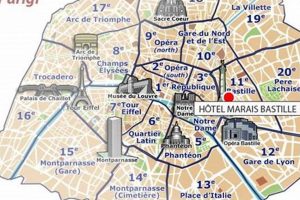
Tip 1: Utilize Public Transportation: Access to the Place de la Bastille is facilitated by the Paris Metro lines 1, 5, and 8. Utilizing the Metro system mitigates challenges associated with vehicle traffic and parking availability.
Tip 2: Schedule Visits Strategically: Weekday mornings generally present fewer crowds compared to weekends or public holidays. Planning visits during off-peak hours optimizes access to the site and minimizes potential disruptions.
Tip 3: Prioritize Pedestrian Safety: The Place de la Bastille is a high-traffic area. Exercise caution when navigating pedestrian crossings and be aware of surrounding vehicular movement to ensure personal safety.
Tip 4: Consult Local Event Schedules: The Place de la Bastille frequently hosts public gatherings, demonstrations, and celebratory events. Reviewing the event calendar ahead of time assists in anticipating potential disruptions or enhanced security measures.
Tip 5: Explore Surrounding Historical Sites: The district around the column contains notable historical sites. Allocate time to visit adjacent landmarks to expand the understanding of the area’s historical context and urban evolution.
Tip 6: Be Mindful of Pickpockets: As a major tourist destination, the area attracts pickpockets. Keep personal belongings secure and remain vigilant to prevent theft.
The preceding tips facilitate efficient and safe exploration of the area surrounding the column. Adhering to these recommendations enhances the overall experience by mitigating potential challenges and maximizing access to the site’s historical and cultural significance.
Consider further exploration of nearby historical archives and museums for a more comprehensive understanding of the events and social changes that shaped this Parisian landmark.
1. Revolutionary Symbolism

The commemorative column in Place de la Bastille serves as a tangible embodiment of revolutionary symbolism. Its placement on the site of the former prison, a physical manifestation of autocratic power, directly links it to the revolutionary ideals of liberty, equality, and fraternity. The storming of the Bastille itself represents a pivotal event in the French Revolution, and the monument erected subsequently functions as a constant reminder of this overthrow of oppressive rule. The column’s design, often featuring allegorical figures representing freedom, further reinforces its symbolic association with revolutionary principles. For instance, the “Gnie de la Libert” (Spirit of Freedom) atop the column exemplifies the triumph of revolutionary ideals over oppression. This contributes significantly to its purpose as more than just a physical structure; it stands as a visual representation of the people’s victory over tyranny.
The monument’s continued use as a site for civic celebrations and demonstrations amplifies its revolutionary symbolism. National holidays, such as Bastille Day, are commemorated at the Place de la Bastille, reinforcing the association between the monument and the revolutionary spirit. Furthermore, political demonstrations often converge at this location, drawing upon the monument’s symbolic power to advocate for social and political change. The column’s presence inspires a sense of collective identity and reinforces the historical narrative of revolution, reminding citizens of their rights and the importance of vigilance against oppression. The deliberate choice to erect the monument on this specific site, coupled with the imagery incorporated into its design, ensures that its revolutionary symbolism remains potent and relevant in contemporary society.
In summary, the revolutionary symbolism inherent within the commemorative column is a fundamental aspect of its significance. Its historical context, allegorical design, and continued use as a site for civic events solidify its role as a reminder of the French Revolution’s ideals. Challenges may arise in interpreting and preserving this symbolism across generations, but its enduring presence serves as a potent reminder of the fight for freedom and the ongoing pursuit of social justice. The understanding of this interplay between the physical monument and its symbolic meaning is crucial for appreciating the historical and cultural value of this Parisian landmark.
2. Place de la Bastille

The Place de la Bastille’s relationship to the commemorative column is intrinsically linked, with the former serving as the foundational context for the latter’s existence and meaning. The square’s significance stems from its historical role as the location of the Bastille Saint-Antoine, a medieval fortress later utilized as a state prison, the storming of which marked a turning point in the French Revolution. The subsequent demolition of the prison created the space that would eventually become the Place de la Bastille, now a prominent public square. The selection of this specific site for the erection of the monument directly connects the structure to the events of 1789. The Place de la Bastille, therefore, acts as the essential component that imbues the monument with its historical weight and revolutionary symbolism. Without the square’s historical context, the column would lose much of its significance.
The placement of the monument within the Place de la Bastille also influences how the square is utilized and perceived. The square functions not merely as a traffic intersection but as a space for commemorative events, political demonstrations, and public gatherings. The presence of the column reinforces this function, providing a focal point for such activities. For instance, Bastille Day celebrations traditionally center on the Place de la Bastille, drawing attention to the monument and the revolutionary ideals it represents. The square also provides a physical space for reflection on the events of the past, allowing citizens and visitors to engage with history in a tangible manner. The monument serves as a constant reminder of the sacrifices made in the pursuit of liberty and equality.
In conclusion, the Place de la Bastille is inextricably linked to the Bastille column. It provides the historical context that gives the monument its meaning, while the monument, in turn, shapes the function and perception of the square. Understanding this connection is crucial for appreciating the historical and cultural significance of both the site and the structure. While the modern-day Place de la Bastille is a bustling urban space, its historical roots, memorialized by the column, remain a powerful reminder of the revolutionary events that transformed France. Preserving this understanding ensures that the legacy of the French Revolution endures for future generations.
3. July Column

The July Column, situated prominently within the Place de la Bastille, functions as the physical embodiment of commemorative intent at the site. Its historical context and symbolic significance are intrinsically linked to the location’s revolutionary past.
- Commemoration of the July Revolution
The primary purpose of the July Column is to commemorate the July Revolution of 1830. This event resulted in the overthrow of King Charles X and the ascension of Louis-Philippe to the throne. The column serves as a memorial to those who died during the uprising, their names inscribed upon its surface. This direct connection to the 1830 revolution distinguishes it as more than a general symbol of liberty; it is a specific tribute to a specific historical event.
- Architectural Symbolism
The architectural design of the July Column contributes to its symbolic meaning. Constructed primarily of bronze, the column’s fluted shaft and Corinthian capital exemplify Neoclassical architectural principles. Atop the column stands the “Gnie de la Libert” (Spirit of Freedom) statue, a gilded bronze figure holding a torch and broken chains. This statue symbolizes freedom and the triumph over oppression. The overall design and detailing of the column thus reinforce its message of liberty and progress.
- Placement within the Place de la Bastille
The strategic placement of the July Column within the Place de la Bastille is crucial to its meaning. The square occupies the site of the former Bastille prison, a symbol of royal authority and oppression. Erecting the column in this location directly links it to the events of the French Revolution and the subsequent struggles for freedom. The column’s presence in this historically charged space serves as a constant reminder of the past and the ongoing pursuit of liberty.
- Civic Identity and Collective Memory
The July Column contributes to Parisian civic identity and collective memory. It serves as a focal point for national celebrations, political demonstrations, and public gatherings. Its presence in the Place de la Bastille reinforces the historical narrative of revolution and reminds citizens of their rights and responsibilities. The column functions as a tangible link to the past, shaping the present and informing the future of Parisian civic life.
The July Column, therefore, is not merely a decorative element within the Place de la Bastille, but a multifaceted symbol of historical events, architectural achievement, and civic identity. Its enduring presence continues to shape the understanding and interpretation of the historical site known as the Bastille monument Paris.
4. Civic Celebrations

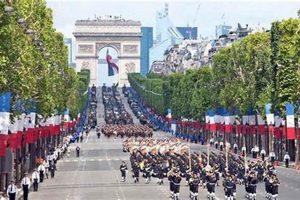
The convergence of civic celebrations and the monument in Paris at Place de la Bastille forms an integral part of the landmark’s enduring significance. The location serves as a primary site for national holidays, political demonstrations, and commemorative events, establishing a direct link between the structure and the collective expression of civic identity. The monument’s historical context, situated on the former site of the Bastille prison, lends symbolic weight to these celebrations, connecting them to the ideals of liberty, equality, and fraternity. For example, Bastille Day, observed annually on July 14th, sees the Place de la Bastille transformed into a focal point for national pride, with parades, concerts, and public gatherings centered around the monument, thereby reinforcing its status as a symbol of French republicanism. This demonstrates the monument’s utility as a tangible representation of national values and a gathering point for collective expression.
Further analysis reveals the practical implications of this connection for both national identity and tourism. The consistent utilization of the Place de la Bastille for civic celebrations reinforces a shared historical narrative, contributing to a sense of collective memory and national unity. The monument serves as a constant reminder of the past, shaping the present and informing the future of French civic life. Moreover, the site’s prominence during national celebrations attracts tourists from around the globe, boosting the local economy and fostering international understanding. Events held at the Place de la Bastille, therefore, function as both expressions of national identity and catalysts for economic and cultural exchange. The practical application of this understanding involves strategic urban planning, which must consider the site’s historical significance and its role in civic life when designing and managing public spaces.
In summary, the relationship between civic celebrations and the monument is characterized by mutual reinforcement. Civic celebrations provide the monument with relevance and visibility, while the monument lends symbolic weight and historical context to these events. The enduring presence of the monument, coupled with its consistent use for civic celebrations, solidifies its role as a cornerstone of French national identity and a prominent landmark. Addressing the challenges associated with preserving this historical site while accommodating modern-day civic activities requires careful consideration of the monument’s significance and its role in shaping collective memory. This careful balance of preservation and practical usage contributes significantly to the monument’s lasting cultural impact.
5. Architectural Landmark
The Bastille monument, situated in Paris, possesses significant architectural merit, contributing to its status as a prominent city landmark. Its design elements and historical context merge to create a notable structure within the urban landscape.
- Neoclassical Design Elements
The monument exhibits Neoclassical architectural principles, characterized by symmetry, proportion, and the use of classical motifs. The fluted column, Corinthian capital, and bronze construction exemplify these features. The adoption of this style serves to evoke a sense of grandeur and historical continuity, aligning with the monument’s commemorative function.
- Dominating Urban Presence
The monument’s verticality and central location within the Place de la Bastille contribute to its visual dominance. Its height and prominent positioning make it a focal point within the surrounding urban fabric, effectively drawing the eye and establishing a sense of place. This characteristic contributes to the landmark’s recognizability and orientation value within the city.
- Symbolic Sculptural Elements
The presence of the “Gnie de la Libert” (Spirit of Freedom) statue atop the column adds a symbolic layer to the architectural composition. The gilded bronze figure, holding a torch and broken chains, visually represents the ideals of liberty and liberation. This sculptural element enhances the monument’s artistic value and reinforces its commemorative message.
- Integration within Public Space
The monument’s placement within a public square allows for interaction and engagement with the surrounding urban environment. The open space facilitates pedestrian circulation and provides a setting for public gatherings and events. This integration with the public realm enhances the monument’s accessibility and contributes to its cultural significance as a shared urban resource.
These architectural facets collectively contribute to the Bastille monument’s status as a prominent and recognizable landmark within Paris. Its design elements, urban presence, symbolic sculptures, and integration within public space create a cohesive and meaningful architectural statement. The combination of these aspects ensures its continued relevance as a symbol of historical and cultural significance.
Frequently Asked Questions Regarding the Bastille Monument in Paris
The following section addresses common inquiries and clarifies essential aspects of the commemorative structure situated in the Place de la Bastille.
Question 1: What specific event does the July Column commemorate?
The July Column, located at the Place de la Bastille, serves as a memorial to the July Revolution of 1830. This revolution led to the abdication of Charles X and the subsequent installation of Louis-Philippe as the King of the French.
Question 2: Why was the Bastille monument erected on the Place de la Bastille?
The monument’s location is deliberate. The Place de la Bastille occupies the site of the former Bastille prison, a symbol of royal authority and oppression. Erecting the monument here links it directly to the French Revolution’s ideals of liberty and equality.
Question 3: Who is represented by the “Gnie de la Libert” statue atop the column?
The “Gnie de la Libert” (Spirit of Freedom) symbolizes liberty and the triumph over oppression. The statue, holding a torch and broken chains, embodies the revolutionary ideals associated with the site.
Question 4: What are the primary architectural features of the Bastille monument?
The monument showcases Neoclassical architectural elements, including a fluted column, Corinthian capital, and bronze construction. These features contribute to its grandeur and historical significance.
Question 5: How does the Bastille monument contribute to Parisian civic identity?
The monument functions as a focal point for national celebrations, political demonstrations, and public gatherings. It reinforces the historical narrative of revolution and reminds citizens of their rights and responsibilities, thereby shaping Parisian civic life.
Question 6: Is the Bastille monument the same as the Bastille prison?
No. The Bastille monument is a commemorative column erected after the demolition of the Bastille prison. The monument occupies the site where the prison once stood, serving as a symbolic reminder of its historical significance.
In summary, the Bastille monument in Paris stands as a potent symbol of revolutionary ideals, architectural achievement, and civic identity. Its historical context and enduring presence continue to shape the understanding of the city’s past and present.
Consider further investigation into the historical archives and related scholarly resources for a more comprehensive understanding of this prominent Parisian landmark.
Bastille Monument Paris
This exploration has detailed the multifaceted significance of the Bastille Monument Paris. From its symbolic representation of revolutionary ideals to its tangible presence in the Place de la Bastille, the structure serves as a constant reminder of pivotal historical events. The monument’s architectural design, commemorative purpose, and role in civic celebrations collectively contribute to its importance within the Parisian urban landscape.
The Bastille Monument Paris remains a powerful symbol, deserving of continued study and preservation. Understanding its historical context and cultural impact ensures the enduring legacy of the revolutionary spirit it represents. Further research and engagement with this landmark will undoubtedly yield deeper insights into the complexities of French history and civic identity.