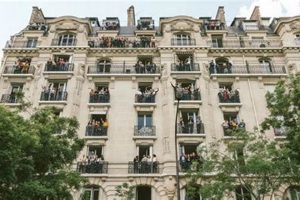
The site where the Bastille once stood is presently occupied by the Place de la Bastille. This is a significant public square in Paris, straddling the 4th, 11th, and 12th arrondissements. It is positioned east of the historical city center. The square’s central feature is the Colonne de Juillet (July Column), commemorating the July Revolution of 1830.
The former prison’s geographical position is crucial due to its role in the French Revolution. Its destruction symbolized the overthrow of royal authority. Today, the area represents freedom and revolution in the collective memory. The square is now a popular gathering point for demonstrations, celebrations, and other public events, solidifying its importance as a symbolic space.
While the physical fortress is no longer present, the area continues to hold historical weight and shapes our understanding of Parisian history. Its transformation from a symbol of oppression to a public space of liberation highlights the dynamic nature of urban landscapes and their enduring connection to historical events. Understanding its historical context is essential for comprehending its continued significance in contemporary Parisian society.
Visiting the area requires some consideration to fully appreciate its history and significance. Understanding a few key aspects can enrich the experience.
Tip 1: Understand the Symbolism. The Place de la Bastille is not merely a location; it embodies revolutionary ideals. Reflect on the prison’s destruction and its impact on French history before arriving.
Tip 2: Locate Vestiges of the Fortress. While the Bastille is gone, outlines of its foundations are marked on the pavement. Look for these markers to visualize the fortress’s original footprint.
Tip 3: Consider the July Column. The Colonne de Juillet, at the square’s center, commemorates the July Revolution of 1830, not the storming of the Bastille in 1789. Note the difference.
Tip 4: Explore the Surroundings. The area surrounding the square offers diverse experiences, including the Canal Saint-Martin, historical neighborhoods, and numerous restaurants and cafes.
Tip 5: Attend Commemorative Events. The Place de la Bastille is often the site of public gatherings, demonstrations, and celebrations. Check the calendar for any planned events during your visit.
Tip 6: Research the Prison’s History. Before your visit, investigate the history of the prison, its inmates, and the events leading up to its destruction. This context enriches the experience.
Tip 7: Be Mindful of Security. As a major public space, be aware of your surroundings and take precautions against pickpockets. Report any suspicious activity to the authorities.
Careful planning allows visitors to fully experience its historical depth.
With thoughtful preparation, any visitor can move beyond superficial experiences, gaining a deeper insight into the area’s historical and cultural essence.
1. Place de la Bastille

The Place de la Bastille, while not a precise geographical coordinate, serves as the contemporary marker denoting the former location of the Bastille prison in Paris. The square’s historical significance stems directly from its occupation of the site where the fortress once stood. Understanding the relationship between the physical location and the present-day public space is vital for grasping its cultural importance.
- Symbolic Center of Revolution
The Place de la Bastille transcends a mere geographical location; it embodies the spirit of the French Revolution. The storming of the Bastille in 1789 ignited the revolution, and the subsequent demolition of the prison transformed the site into a symbol of liberation and popular sovereignty. Today, public gatherings, demonstrations, and celebrations frequently occur at the Place de la Bastille, reinforcing its role as a focal point for social and political expression.
- Memorialization and Commemoration
The Colonne de Juillet, prominently positioned in the center of the square, commemorates the July Revolution of 1830. While not directly related to the storming of the Bastille, its presence serves as a reminder of France’s revolutionary past. The square itself functions as a memorial, prompting reflection on the events that transpired there and their enduring impact on French society. Outlines marking the fortress’s original footprint are inlaid in the pavement, enabling visitors to visualise its dimensions and spatial layout.
- Urban Transformation and Public Space
The demolition of the Bastille and the creation of the Place de la Bastille represent a significant transformation of urban space. What was once a symbol of royal authority and confinement became a public square open to all. This conversion exemplifies the revolutionary ideals of freedom and equality. The Place de la Bastille now serves as a vital transportation hub, a commercial center, and a recreational area, integrating historical significance with contemporary urban life.
- Historical Narrative and Tourist Destination
The association between the Place de la Bastille and the former prison shapes its appeal as a tourist destination. Visitors are drawn to the site to experience its historical aura and connect with the events of the French Revolution. The surrounding area offers various museums, historical landmarks, and cultural attractions that provide additional context and enrich the visitor experience. Interpretive plaques and guided tours further enhance understanding of the site’s historical significance.
In essence, the Place de la Bastille is far more than simply where the Bastille once stood; it is a living testament to the ideals and consequences of revolution. Its continued presence as a vibrant public space underscores the lasting impact of the storming of the Bastille and its role in shaping modern French identity.
2. East of city center

The geographical positioning of the Bastille fortress “east of the city center” significantly influenced its historical role and subsequent symbolic importance. This placement, rather than being arbitrary, reflected strategic considerations of defense and control within the urban fabric of Paris. The Bastille, acting as a fortified eastern gate, served to monitor and regulate entry into the city, particularly from the heavily populated and often rebellious faubourgs (suburbs). Its eastern orientation provided a clear line of sight and control over the primary routes leading into Paris, rendering it a critical component in maintaining order and suppressing potential uprisings originating from outside the city’s core. This position also allowed for the concentration of military resources and the rapid deployment of troops to quell disturbances within the capital.
The “east of city center” positioning also had practical implications for the Bastilles function as a prison. As a place of confinement for political dissidents and individuals deemed a threat to the monarchy, its location on the periphery served to isolate those imprisoned and physically separate them from the center of political power and public influence. This geographical distancing contributed to the suppression of dissenting voices and the maintenance of royal authority. Furthermore, the proximity of the Bastille to working-class neighborhoods, located outside the city’s core, highlighted the stark contrast between the opulence of the monarchy and the living conditions of the general populace. This disparity played a crucial role in fueling the revolutionary fervor that eventually led to the storming of the Bastille.
In summary, understanding the “east of city center” placement of the Bastille is crucial for comprehending its historical role and symbolic weight. This location was not simply a matter of convenience; it was a deliberate strategic choice that reflected the complex power dynamics of pre-revolutionary Paris. By controlling access to the city and isolating political prisoners, the Bastille’s eastern position contributed directly to the maintenance of royal authority. The subsequent storming of the Bastille, and its symbolic destruction, irrevocably altered the urban landscape and shifted the balance of power, forever associating the “east of city center” with revolution and the overthrow of tyranny.
3. 4th/11th/12th arrondissements

The Place de la Bastille, marking the former location of the Bastille prison, occupies a unique geographical position, straddling the boundaries of the 4th, 11th, and 12th arrondissements of Paris. This tri-arrondissement placement is not merely a cartographical detail; it has implications for understanding the area’s socio-economic character, historical evolution, and the symbolic resonance it holds for Parisians.
- 4th Arrondissement: Historical Core and Tourism
The portion within the 4th arrondissement links it to the historical heart of Paris, including areas like Le Marais. This connection exposes it to significant tourist traffic, impacting local businesses and urban planning around the Place. Consequently, historical preservation intersects with modern commercial activity, shaping the identity of this segment.
- 11th Arrondissement: Popular Districts and Social Dynamics
The 11th arrondissement, known for its dense population and diverse social makeup, brings a different dimension to the area. Characterized by its vibrant nightlife, working-class history, and politically active residents, the influence of the 11th on the Place de la Bastille contributes to its role as a site for demonstrations and public gatherings, reflecting the areas strong sense of civic engagement.
- 12th Arrondissement: Modern Development and Urban Planning
The segment falling within the 12th arrondissement connects the Place to more recent urban developments, including areas around the Bassin de l’Arsenal and the Opra Bastille. This introduces a focus on modernity and planning, balancing historical elements with contemporary architectural features and infrastructure, affecting the overall presentation and accessibility of the Place.
The straddling of these three distinct arrondissements influences the cultural and functional characteristics of the Place de la Bastille. It reflects a dynamic interaction between historical heritage, social diversity, and urban development. Understanding this tri-arrondissement placement allows for a nuanced appreciation of the Place de la Bastille as not just a memorial site, but as a complex intersection of Parisian life.
4. July Column centerpiece

The July Column, prominently situated at the “location of the bastille in paris,” serves as a focal point and a commemorative structure within the historical square. Its presence is inextricably linked to the events that transpired on this site, although not directly to the storming of the Bastille itself. The column commemorates the July Revolution of 1830, a separate but related period of upheaval in French history. It stands as a reminder of the ongoing struggle for liberty and self-governance that characterized much of 19th-century France. The positioning of the column in the center of the square solidifies the area’s status as a space dedicated to revolutionary ideals and national memory. The selection of this location, previously occupied by the Bastille, was a deliberate act, consciously connecting the new monument with the site’s potent symbolic power.
The column’s design and iconography further contribute to this understanding. Its height and central placement command attention, visually dominating the square and acting as a constant reminder of the historical events it represents. The inscriptions and sculptural elements on the column depict scenes from the July Revolution and honor those who fought and died during that period. In effect, the July Column integrates a later revolutionary narrative into the pre-existing symbolism associated with the “location of the bastille in paris,” layering historical meaning onto an already significant site. It transforms the square into a dynamic space, where multiple historical events and their associated ideals coexist and interact.
In conclusion, the July Column at the “location of the bastille in paris” is not merely an architectural element, but an integral component of its historical and cultural identity. While not directly related to the storming of the Bastille, it expands the square’s revolutionary narrative, weaving in the events of the July Revolution and solidifying its status as a lasting symbol of liberty and resistance. The strategic placement and symbolic design of the column ensure that the site continues to resonate with both historical memory and contemporary significance.
5. Symbol of revolution

The enduring connection between the concept of revolution and the “location of the bastille in paris” arises from the historical events that transpired there. The Bastille, a fortress and prison, became a potent symbol of royal authority and oppression. Its storming in 1789 ignited the French Revolution, transforming both the physical site and its perceived meaning.
- Overthrow of Royal Authority
The Bastille represented the monarchy’s power to arbitrarily imprison individuals, particularly political dissidents. By attacking and capturing the fortress, revolutionaries directly challenged royal authority. The act itself became a symbolic rejection of absolute rule, marking a shift towards popular sovereignty.
- Dismantling of Oppression
The demolition of the Bastille following its capture was as significant as the storming itself. The physical destruction of the prison symbolized the dismantling of the oppressive structures of the Ancien Rgime. The removal of the stones became a public spectacle, reinforcing the revolutionary message of liberation.
- Public Space of Commemoration
The transformation of the site into the Place de la Bastille, a public square, ensured that the revolutionary event remained in collective memory. The square became a focal point for celebrations, protests, and other public gatherings, solidifying its role as a symbol of ongoing struggles for freedom and equality.
- Inspiration for Future Revolutions
The events at the “location of the bastille in paris” resonated far beyond France, inspiring revolutionary movements around the world. The storming of the Bastille became a model for popular uprisings against oppressive regimes, demonstrating the power of collective action in challenging established authority.
The continued association of the “location of the bastille in paris” with revolution highlights the enduring impact of historical events on cultural memory. The site remains a reminder of the power of popular movements to challenge and transform established social and political orders.
Frequently Asked Questions
The following questions address common inquiries regarding the geographical and historical aspects of the Bastille’s former location in Paris.
Question 1: Is the Bastille still standing?
No. The Bastille was destroyed shortly after its storming in 1789 during the French Revolution. Only traces of its foundations remain visible today, marked on the pavement of the Place de la Bastille.
Question 2: What is the current address of the Bastille’s former site?
There is no specific address as the site is now a large public square, the Place de la Bastille, which spans the 4th, 11th, and 12th arrondissements.
Question 3: What is the Colonne de Juillet, and what does it commemorate?
The Colonne de Juillet (July Column) stands at the center of the Place de la Bastille. It commemorates the July Revolution of 1830, not the storming of the Bastille in 1789. The column honors those who died during that uprising.
Question 4: Are there any remnants of the original Bastille visible at the Place de la Bastille?
Yes, outlines of the Bastille’s foundations are marked on the pavement of the square. These outlines allow visitors to visualize the former size and shape of the fortress.
Question 5: In which arrondissement was the Bastille located?
The Bastille was situated at the intersection of what are now the 4th, 11th, and 12th arrondissements. The Place de la Bastille straddles these three districts.
Question 6: How did the area become the Place de la Bastille?
Following the destruction of the Bastille, the area was transformed into a public square. This transformation symbolized the overthrow of royal authority and the dawn of a new era of freedom and equality.
These questions aim to provide clarity on the precise location and its historical context. The answers reinforce an understanding of the present-day Place de la Bastille as a site laden with revolutionary significance.
Further exploration will cover the enduring legacy of the French Revolution on the urban landscape.
Conclusion
The foregoing exploration underscores that the “location of the bastille in paris” is more than a mere point on a map. It is a site imbued with profound historical significance, indelibly linked to the French Revolution and the ideals of liberty, equality, and fraternity. The physical absence of the fortress itself does not diminish the enduring symbolic power of the Place de la Bastille. Its transformation from a symbol of oppression to a public space of commemoration reinforces its crucial role in French national identity.
Understanding the historical context, geographical nuances, and symbolic representations associated with the “location of the bastille in paris” is essential for comprehending its continued relevance. Its status as a site of ongoing public gatherings and demonstrations demonstrates the enduring legacy of the revolution and its continuing influence on contemporary society. This serves as a reminder of the transformative power of popular movements and the ongoing struggle for social and political justice.