The annual commemoration of a pivotal moment in French history finds a vibrant expression in New York City. This celebration, primarily observed on the Upper East Side, centers around French culture, offering a taste of France within an urban setting. Expect food vendors, musical performances, and activities that recall the spirit of the original event. For instance, street fairs often feature French cuisine and live music.
The significance of this observation in New York extends beyond mere cultural exchange. It serves as a reminder of shared values like liberty and fraternity. Historically, its presence highlights the longstanding relationship between the United States and France. These celebrations also provide economic benefits to local businesses and contribute to the city’s diverse cultural landscape.
The following sections will detail specific events, locations, and traditions associated with the festivities held in Manhattan. Focus will be given to the cultural impact and the evolution of the celebration over the years.
To ensure a fulfilling experience during the annual French national holiday festivities in Manhattan, consider the following guidelines. Effective planning and awareness will maximize enjoyment.
Tip 1: Utilize Public Transportation. Manhattan locations are often crowded during this time. Public transit provides a more efficient mode of access than personal vehicles. Subways and buses offer frequent service to the Upper East Side, where many celebrations take place.
Tip 2: Arrive Early. Popular events draw significant crowds. Arriving early secures a better vantage point for performances and reduces wait times for food and activities. A morning arrival is advised for peak experiences.
Tip 3: Consult Event Schedules. Official schedules provide detailed information on locations, times, and featured entertainment. Reviewing these schedules allows for strategic planning of the day’s itinerary. Online resources and printed programs are typically available.
Tip 4: Prepare for Weather Conditions. Outdoor celebrations are subject to weather variations. Checking the forecast and dressing appropriately ensures comfort throughout the day. Hydration and sun protection are also essential.
Tip 5: Engage with French Culture. Immersing oneself in the French language and customs enhances the experience. Basic French phrases and an openness to cultural exchange enrich participation in the festivities.
Tip 6: Be Aware of Street Closures. Events often necessitate temporary street closures. Planning routes in advance and remaining aware of posted detours minimizes travel disruptions. Allow extra travel time to reach destinations.
Adhering to these suggestions will foster a more rewarding and efficient experience during the annual celebrations. Preparation is key to optimizing enjoyment and minimizing potential inconveniences.
The concluding sections will provide additional resources and perspectives on the significance of this cultural celebration.
1. Upper East Side

The Upper East Side functions as a primary locus for observances of the French national holiday in Manhattan. This concentration stems from the area’s historical ties to French culture and its role as the location for the French Consulate. The concentration of French-themed restaurants, businesses, and cultural institutions on the Upper East Side provides a ready-made infrastructure for these celebrations, drawing attendees and reinforcing the area’s cultural identity. Events often center around this existing infrastructure, leveraging established venues and resources.
The presence of the French Consulate on the Upper East Side directly facilitates many events. The consulate often organizes official ceremonies, receptions, and cultural programs, thereby setting the tone and direction for other activities. Street fairs, concerts, and other public gatherings often radiate outward from the consulate’s location, creating a focal point for attendees. The availability of public spaces and the residential character of the Upper East Side allows for large-scale outdoor events that are integral to the spirit of the commemoration. An example of cause and effect could be the Consulate-sponsored events directly leading to increased local business for French restaurants on that day.
In summary, the connection is symbiotic. The Upper East Side provides the cultural and logistical foundation, while the celebrations enhance the neighborhood’s French identity and visibility. Understanding this relationship allows for a more informed appreciation of the event’s geographical and cultural context, highlighting the importance of location in shaping cultural experiences. While logistical challenges related to space and accessibility remain, the Upper East Side’s continued role in hosting these events underscores its enduring significance to this cultural expression.
2. French Consulate
The French Consulate in Manhattan plays a pivotal role in shaping and directing the annual celebrations of the French national holiday. It functions as a central organizer, coordinating official events and setting the cultural tone for observances throughout the city. The Consulate’s involvement extends beyond ceremonial duties, directly influencing the scope, content, and logistical execution of many associated activities. As a result, the events benefit from the consulate’s resources, authority, and connection to French cultural institutions. For instance, the Consulate typically hosts an official reception, drawing dignitaries and community leaders. This event then sets the stage for subsequent public celebrations.
The Consulate’s role is also significant in promoting French culture and fostering cultural exchange. By sponsoring concerts, exhibitions, and educational programs, the Consulate uses this opportunity to introduce and reinforce French artistic traditions to the New York audience. These events can range from classical music performances to screenings of French films, all designed to enhance understanding and appreciation. The practical application of this understanding is that attendees can reliably anticipate a high degree of authenticity and cultural representation in Consulate-supported events. Local event planners can coordinate and support this event.
In summary, the French Consulate is not merely a location but an active participant in and shaper of the celebrations in Manhattan. Its involvement ensures a degree of authenticity, cultural richness, and organizational oversight that significantly impacts the overall event. While other organizations contribute, the Consulates influence remains a defining factor, effectively serving as both a catalyst and a guarantor of quality. This direct influence provides structure to this yearly celebration.
3. Street Fair

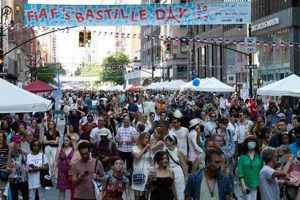
The street fair constitutes a central component of the annual French national holiday festivities held in Manhattan. It serves as a physical manifestation of French culture, providing attendees with direct access to food, crafts, and other items associated with France. The inclusion of a street fair transforms a commemorative event into an immersive cultural experience, attracting a broad audience and enhancing the overall visibility of the celebration. For example, food vendors typically offer classic French dishes such as crpes, macarons, and pain au chocolat. Craft vendors may sell items like berets, scarves, and artwork featuring French themes.
The importance of the street fair lies in its ability to create a tangible link between the holiday and its cultural origins. It provides a space for direct engagement with French traditions, fostering a greater understanding and appreciation of French heritage. Furthermore, the street fair has economic implications, supporting local businesses and providing opportunities for vendors to showcase their products. A practical effect is increased foot traffic for nearby businesses, irrespective of their French association. Event organizers understand the need to cater to large crowds through street fairs.
In summary, the street fair is more than just a marketplace; it is an integral element of the French national holiday celebration in Manhattan. It delivers a tangible connection to French culture, provides economic benefits, and enhances the overall atmosphere of the event. The challenge lies in effectively managing the logistical complexities of a large-scale outdoor event, ensuring smooth operations and a positive experience for all participants. The street fair exemplifies the practical translation of historical events into contemporary celebrations, providing a direct link to the broader themes of cultural exchange and international goodwill.
4. Musical Performances

Musical performances are integral to commemorations of the French national holiday in Manhattan, serving as a vehicle for expressing and reinforcing French cultural identity. These performances are not mere entertainment; they actively contribute to the atmosphere, creating a sense of celebration and community. The presence of music allows attendees to engage with French heritage in a participatory and emotional manner. For instance, live renditions of traditional French songs, such as La Marseillaise or songs by Edith Piaf, evoke specific historical and cultural associations. The choice of musical selections, therefore, is a deliberate act of cultural representation.
The selection of musical genres also impacts the tone and appeal of the event. While traditional French music provides a historical connection, the inclusion of contemporary French artists broadens the appeal to a more diverse audience. This strategic programming can draw younger attendees and introduce them to aspects of French culture they might not otherwise encounter. An example is the incorporation of French electronic music or hip-hop artists into the performance lineup. The practical application of this understanding lies in attracting a wider demographic and ensuring the event remains relevant and engaging across generations. This requires an event planner to be aware of the needs and expectations of attendees.
In summary, musical performances on this occasion are a deliberate and significant cultural act. They shape the experience for attendees, contribute to the overall atmosphere, and play a vital role in reinforcing French cultural identity within an urban context. The challenge lies in curating a program that balances tradition with contemporary appeal, ensuring that the music resonates with a broad audience. Understanding the role of musical performances is key to appreciating the multifaceted nature of the celebration and its ongoing importance as a cultural event. The specific musical numbers directly affect the success of the celebrations.
5. Cultural Exchange

The annual commemoration in Manhattan provides a focused opportunity for interaction and understanding between French and American cultures. This event serves as a platform where various elements of French heritage are presented and interpreted within an American context, resulting in reciprocal learning and appreciation. The event’s success hinges on facilitating meaningful engagement across cultural boundaries.
- Linguistic Interaction
The celebration fosters opportunities for linguistic exchange, promoting the use of the French language in a public setting. Attendees can practice their French, and those unfamiliar with the language are exposed to its sounds and nuances. This interaction extends beyond basic greetings, encompassing conversations about French culture and history. The presence of French speakers creates an immersive environment that encourages cross-cultural communication, enhancing language skills, and promoting linguistic diversity.
- Culinary Diplomacy
French cuisine is a central element of the celebration, providing a tangible and accessible entry point for cultural exploration. Attendees can sample traditional French dishes, learning about the ingredients, preparation methods, and cultural significance of various foods. This culinary experience extends beyond mere consumption, fostering an appreciation for French gastronomy and its role in French identity. The sharing of food also creates a communal atmosphere, encouraging interaction and exchange between people from diverse backgrounds.
- Artistic Expression
The event showcases various forms of French artistic expression, including music, dance, and visual arts. These performances and exhibitions provide a window into French culture, highlighting its artistic traditions and contemporary innovations. Attendees can engage with French art forms, broadening their understanding of French creativity and aesthetic values. This exposure can also inspire new artistic endeavors and foster a deeper appreciation for the role of art in cultural exchange.
- Historical Dialogue
The commemoration provides a platform for discussing the historical relationship between France and the United States, highlighting shared values and historical connections. Attendees can learn about the historical events that led to the storming of the Bastille and its significance in French history. This historical dialogue also explores the connections between the French and American Revolutions, emphasizing the shared ideals of liberty, equality, and fraternity. This process can foster a deeper understanding of the historical ties that bind the two nations and promote continued collaboration in the present.
These facets underscore how the Manhattan celebration functions as a vehicle for meaningful interaction between distinct cultures. The exchange extends beyond superficial observation, fostering deeper understanding, appreciation, and mutual respect. These interactions are critical for maintaining and strengthening the bonds between the United States and France, contributing to a broader global dialogue.
Frequently Asked Questions
This section addresses common inquiries concerning the annual celebrations of the French National Holiday in Manhattan. The aim is to provide clear, concise, and factual information.
Question 1: What is the primary geographic location for the celebrations?
The Upper East Side of Manhattan typically serves as the focal point for the festivities, owing to the presence of the French Consulate and a concentration of French-themed establishments.
Question 2: What types of activities are typically offered?
Activities generally include street fairs featuring French cuisine and crafts, musical performances showcasing French artists, and official ceremonies organized by the French Consulate.
Question 3: Is attendance free, or are there associated costs?
Many events are free and open to the public, particularly those held outdoors. However, certain events, such as concerts or special receptions, may require tickets or reservations.
Question 4: Are there specific security measures in place?
Given the public nature of the celebrations, security measures are typically implemented to ensure the safety of attendees. These may include bag checks, increased police presence, and designated entry points.
Question 5: How can one obtain a detailed schedule of events?
Official schedules are generally released by the French Consulate and various event organizers. Information is often available on consulate websites, local news outlets, and community event calendars.
Question 6: What is the cultural significance of these celebrations in Manhattan?
The celebration symbolizes the long-standing relationship between the United States and France. It promotes cultural exchange, fosters appreciation for French heritage, and strengthens bonds between the two nations.
These FAQs provide a foundational understanding of the celebration, addressing practical aspects and clarifying its cultural importance.
The following sections will further explore specific aspects of French cultural influence in New York City, providing a broader context for the festivities.
Conclusion
The preceding analysis has detailed the multifaceted nature of the annual celebrations in Manhattan. It has explored its geographic concentration, the role of the French Consulate, the importance of street fairs and musical performances, and its broader function as a vehicle for cultural exchange. The analysis highlights the deliberate efforts to foster understanding between French and American cultures, underlining the event’s ongoing relevance.
The information presented encourages further exploration into the cultural ties that bind New York City and France. The annual celebrations serve not only as a remembrance of a historical event but also as a testament to the enduring power of cultural exchange and international partnership. Continued engagement with these celebrations will reinforce these vital connections.


![Buy Doom Days Bastille Vinyl: Collector's Edition [Rare] | Hubbastille: Explore the Fusion of Culture, Music & Creativity](https://hubbastille.com/wp-content/uploads/2026/05/th-83-300x200.jpg "Buy Doom Days Bastille Vinyl: Collector's Edition [Rare] Hubbastille: Explore the Fusion of Culture, Music & Creativity")