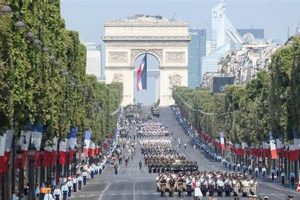
Selecting attire appropriate for the French National Day, celebrated on July 14th, often involves incorporating the colors of the French flag: blue, white, and red. Garments chosen for this occasion may range from casual everyday wear to more formal evening attire, depending on the planned festivities. As an example, one might choose a white dress accented with a red scarf and blue jewelry, or a simple blue shirt paired with white pants.
Commemorating the storming of the Bastille and the beginning of the French Revolution, this annual celebration is a moment of national pride. The garments worn contribute to the visual spectacle and collective identity of the event. Choosing colors and styles that reflect the national flag serves as a visual expression of patriotism and solidarity. Historical influences, such as garments reminiscent of the revolutionary era, can also subtly convey respect for the nation’s heritage.
The following article will explore specific stylistic options suitable for various Bastille Day events, examine the etiquette considerations for attending formal celebrations, and provide guidance on sourcing appropriate apparel. Consideration will also be given to the cultural symbolism embedded within the chosen colors and styles.
Guidance on Apparel for Bastille Day
Considerations for attire selections during the French National Day celebrations encompass stylistic elements, practicality, and respect for the solemnity of the occasion.
Tip 1: Prioritize color coordination. Integrating the French flag’s tricolor blue, white, and red into the ensemble demonstrates national pride. Subtlety is permissible; a single accessory in one of these colors suffices.
Tip 2: Account for the event’s formality. A casual daytime gathering permits relaxed attire, while a formal evening event necessitates more sophisticated garments, such as a dress or suit.
Tip 3: Consider weather conditions. July in France can be warm; breathable fabrics, such as linen or cotton, are advisable. For cooler evenings, a light jacket or shawl is recommended.
Tip 4: Respect cultural sensitivities. Avoid attire that could be construed as disrespectful to French history or national symbols. Refrain from overly revealing or ostentatious garments.
Tip 5: Ensure comfort and mobility. Bastille Day celebrations often involve parades and outdoor activities. Select footwear and clothing that allow for prolonged standing and movement.
Tip 6: Evaluate fabric choice. Lightweight, breathable materials are ideal for daytime events. Evening events may warrant heavier fabrics with more structure, depending on weather conditions.
Tip 7: Accessorize appropriately. Jewelry, scarves, and hats can enhance the ensemble. Choose accessories that complement the color scheme and formality of the event.
Adherence to these guidelines ensures an appropriate and respectful presentation, contributing positively to the Bastille Day celebrations.
The subsequent section will address common misconceptions regarding sartorial choices for this national holiday and offer additional insights into maximizing personal style while maintaining decorum.
1. Tricolore

The “Tricolore,” or French flag, composed of blue, white, and red vertical bands, exerts significant influence on attire choices for Bastille Day. Its symbolic value necessitates a nuanced understanding when incorporating it into sartorial selections for this national holiday.
- Color Proximity and Representation
Directly mirroring the Tricolore through entire garments or outfits is one approach. A blue dress, a white shirt, or red pants, worn separately or in combination, overtly displays national allegiance. However, subtlety is frequently preferred. Accessories such as scarves, hats, or jewelry in the Tricolore colors allow for symbolic representation without overwhelming the ensemble.
- Balance and Harmony of Colors
Employing the Tricolore’s colors requires careful consideration of balance. An overabundance of any single color can diminish the visual impact. Thoughtful distribution, for example, a primarily white outfit accented with blue and red accessories, creates a harmonious and refined aesthetic.
- Symbolic Usage in Prints and Patterns
The Tricolore’s colors may appear in patterns or prints, offering a less literal interpretation. Subtle stripes, geometric designs incorporating the colors, or floral patterns featuring red, white, and blue elements provide alternative expressions of national pride. The scale and placement of these patterns are crucial in maintaining an appropriate level of decorum.
- Contextual Appropriateness
The extent to which the Tricolore’s colors are incorporated should align with the event’s formality. A casual daytime celebration permits a more liberal and expressive use of the colors. Formal evening events, conversely, often demand a more restrained approach, with subtle hints of the Tricolore integrated into an otherwise sophisticated ensemble.
The effective utilization of the Tricolore in sartorial choices for Bastille Day demonstrates respect for French national identity while allowing for individual expression. Careful attention to color balance, pattern choice, and contextual appropriateness ensures a tasteful and meaningful presentation.
2. Formality

The degree of formality significantly influences attire selection for Bastille Day. The nature of the event, ranging from informal public gatherings to formal private celebrations, dictates the appropriateness of specific garments. Disregarding the established level of formality may result in social discordance. For instance, attending a military parade in casual beach attire would be incongruous, whereas wearing a full evening gown to a daytime picnic would be equally inappropriate. The expected level of dress contributes to the overall atmosphere and respect for the occasion.
Attire choices are directly correlated with the event’s purpose and setting. Casual gatherings, such as neighborhood street festivals or family barbecues, permit relaxed clothing options, including jeans, t-shirts, and comfortable shoes. Formal events, such as official receptions, galas, or dinners hosted by embassies or government officials, necessitate more elevated attire. For women, this might include cocktail dresses, evening gowns, or elegant pant suits. For men, options typically include suits, blazers, and dress pants with a collared shirt and tie. The venue itself can also offer clues regarding the appropriate level of formality; a celebration held in a park requires different considerations than one held in a grand ballroom.
Understanding the link between formality and attire selection is crucial for navigating Bastille Day events successfully. Failure to adhere to established dress codes can be interpreted as a sign of disrespect or ignorance of cultural norms. By carefully considering the event’s nature and selecting attire accordingly, individuals demonstrate respect for the occasion, the host, and the French national identity. The key takeaway is that the suitability of any garment depends entirely on the specific context of the Bastille Day celebration being attended.
3. Weather
Weather conditions in France during Bastille Day (July 14th) exert a significant influence on the selection of appropriate attire. The seasonal climate necessitates careful consideration of fabric, layering, and overall comfort to ensure an individual is suitably dressed for both potential daytime heat and possible evening coolness.
- Temperature Fluctuations
July in France typically experiences warm temperatures during the day, often ranging from the mid-20s to low-30s Celsius (mid-70s to mid-80s Fahrenheit). However, temperatures can drop noticeably in the evening. Therefore, layering becomes a critical strategy. Lightweight jackets, cardigans, or shawls provide adaptability as the temperature shifts. Garments should be chosen to allow for easy addition or removal as needed.
- Precipitation Probability
While July is generally a dry month in France, the possibility of rain cannot be discounted. Therefore, considering the potential for inclement weather is prudent. A lightweight, water-resistant jacket or umbrella may prove valuable, especially for outdoor celebrations. Choosing fabrics that dry quickly can also mitigate discomfort caused by unexpected showers.
- Fabric Considerations
Breathable fabrics such as linen, cotton, and silk are highly suitable for daytime wear due to their ability to wick away moisture and promote airflow. For evening events or locations with cooler temperatures, fabrics like wool blends or heavier cottons may provide necessary warmth. Selecting the appropriate fabric is crucial for maintaining comfort throughout the day and evening.
- Geographic Variations
France’s diverse geography means that weather conditions can vary significantly across different regions. Coastal areas may experience cooler temperatures and higher humidity compared to inland regions. Mountainous areas, such as the Alps or Pyrenees, can experience unpredictable weather patterns, including sudden changes in temperature and precipitation. Therefore, regional climate variations must be factored into attire selection.
In summary, successful attire choices for Bastille Day necessitate careful assessment of prevailing and anticipated weather conditions. Prioritizing breathable fabrics, employing layering techniques, and considering regional climate variations ensure comfort and appropriateness regardless of the specific event or location.
4. Respect
Attire selected for Bastille Day celebrations serves as a visual representation of respect towards French culture, history, and national identity. The chosen garments communicate an understanding of the event’s significance and a commitment to upholding its solemnity and celebratory spirit.
- Avoidance of Cultural Appropriation
Respect necessitates avoiding attire that appropriates or trivializes aspects of French culture or history. Garments that caricature historical figures or repurpose traditional attire without proper understanding demonstrate a lack of cultural sensitivity. Selecting clothing that honors, rather than mocks, French heritage is paramount.
- Adherence to Dress Codes and Etiquette
Respect is demonstrated through adherence to established dress codes for specific Bastille Day events. Formal occasions require elevated attire, while casual gatherings permit more relaxed options. Understanding and abiding by these unspoken rules communicates respect for the organizers and fellow attendees. Dressing inappropriately can be perceived as disrespectful and disruptive to the event’s atmosphere.
- Symbolic Representation and Patriotism
Incorporating the colors of the French flag (blue, white, and red) into attire is a common way to express national pride and respect. However, this should be done tastefully and avoid ostentatious displays. Subtle nods to French symbolism, such as wearing a beret or a fleur-de-lis pin, can also demonstrate an appreciation for French culture without appearing performative.
- Appropriateness for Commemorative Events
Bastille Day commemorates a pivotal moment in French history, involving significant loss of life. Attending commemorative events, such as memorial services or wreath-laying ceremonies, requires somber and respectful attire. Bright colors, flashy jewelry, and overly casual clothing are generally inappropriate in such contexts. Choosing understated, dignified garments reflects an understanding of the occasion’s solemnity.
The selection of attire for Bastille Day transcends mere aesthetics; it embodies a tangible expression of respect for French culture, history, and national identity. Thoughtful consideration of cultural appropriation, adherence to dress codes, symbolic representation, and appropriateness for commemorative events collectively contribute to a sartorial display that honors the significance of the occasion.
5. Comfort

The consideration of physical ease constitutes an integral element in the selection of garments for Bastille Day celebrations. The festivities often entail extended periods of standing, walking, and participating in outdoor activities, thus necessitating attire that prioritizes comfort and minimizes potential physical discomfort.
- Fabric Selection and Breathability
The selection of appropriate fabrics directly impacts comfort levels, particularly given the typical summer climate. Natural fibers such as cotton and linen offer superior breathability, facilitating ventilation and reducing perspiration. Synthetic materials, while potentially offering durability or water resistance, may compromise breathability and lead to discomfort in warmer temperatures. Therefore, careful evaluation of fabric composition is essential for optimizing comfort.
- Footwear Considerations
Footwear choices assume particular importance given the likelihood of prolonged periods of ambulation. High heels, while potentially aesthetically pleasing, may induce foot fatigue and discomfort, particularly on uneven surfaces. Conversely, supportive and well-cushioned footwear, such as walking shoes or sandals with adequate arch support, can mitigate foot strain and enhance overall comfort. The anticipated terrain and duration of activity should inform footwear selections.
- Garment Fit and Freedom of Movement
The fit of garments directly affects an individual’s ability to move freely and comfortably. Restrictive clothing, such as tight-fitting pants or dresses, can impede circulation and limit mobility, particularly during active participation in Bastille Day events. Looser, more relaxed silhouettes often provide greater freedom of movement and enhance overall comfort. Garments should allow for a full range of motion without constricting or binding.
- Layering and Temperature Regulation
Given the potential for fluctuating temperatures, layering constitutes a crucial strategy for maintaining comfort throughout the day and evening. Lightweight layers, such as cardigans or jackets, can be easily added or removed to accommodate changes in temperature. This approach allows for effective regulation of body temperature and prevents both overheating and chilling. The ability to adapt to changing environmental conditions is paramount for ensuring comfort throughout the duration of Bastille Day celebrations.
In summary, prioritizing comfort in the selection of attire for Bastille Day necessitates careful attention to fabric selection, footwear considerations, garment fit, and layering strategies. Attire that facilitates ease of movement and adaptability to varying environmental conditions enhances the overall experience and allows for unencumbered participation in the festivities.
6. Accessories
Accessories augment sartorial choices for Bastille Day, enhancing the expression of national pride and individual style. These accoutrements, when selected judiciously, contribute to the overall aesthetic and convey a nuanced understanding of the celebration’s significance.
- Color Coordination and Symbolic Representation
Accessories offer a subtle yet effective avenue for incorporating the tricolor motif. Scarves, hats, and jewelry in blue, white, or red can be employed to introduce patriotic elements without overwhelming the ensemble. A white dress, for example, can be accented with a red scarf and blue earrings, thus subtly referencing the French flag. The choice of color allows for personalized interpretation while maintaining adherence to the thematic intent.
- Formality and Contextual Appropriateness
Accessories can elevate or temper the formality of an outfit. A simple dress paired with elegant jewelry and a structured handbag projects a sophisticated image suitable for formal events. Conversely, the same dress paired with casual sandals and a straw hat conveys a more relaxed aesthetic appropriate for daytime festivities. The careful selection of accessories ensures the ensemble aligns with the event’s specific dress code and ambiance.
- Weather Adaptation and Practicality
Accessories serve practical purposes in addition to their aesthetic value. Hats provide protection from the sun, while scarves offer warmth during cooler evenings. Umbrellas and raincoats, though functional, can also be chosen to complement the overall color scheme and style. The integration of weather-appropriate accessories ensures comfort and preparedness while maintaining a cohesive visual presentation.
- Cultural Symbolism and National Identity
Certain accessories carry cultural significance and contribute to the expression of national identity. A beret, for instance, is a recognizable symbol of French culture. Similarly, jewelry featuring the fleur-de-lis or other national emblems can subtly convey patriotic sentiments. The incorporation of these accessories demonstrates an appreciation for French heritage and adds depth to the overall sartorial message.
The strategic employment of accessories amplifies the impact of attire selected for Bastille Day. These additions facilitate personalized expression, adherence to dress codes, adaptation to environmental factors, and the subtle conveyance of cultural appreciation. Accessories, therefore, represent a crucial element in achieving a cohesive and meaningful sartorial statement.
Frequently Asked Questions
The following section addresses common inquiries regarding appropriate attire for Bastille Day celebrations, providing clarity on sartorial choices for various event types and contexts.
Question 1: Is it mandatory to wear the colors of the French flag on Bastille Day?
No, wearing the colors of the French flag (blue, white, and red) is not mandatory, but it is a customary and widely accepted way to express national pride and commemorate the holiday. Adherence to this color scheme is viewed as a respectful gesture, but is not a formal requirement.
Question 2: What constitutes appropriate attire for a formal Bastille Day celebration?
Formal Bastille Day celebrations typically necessitate elevated attire. For women, this may include cocktail dresses, evening gowns, or elegant pantsuits. For men, suits, blazers with dress pants, or a formal dress shirt with a tie are generally considered appropriate. Darker, more subdued color palettes are often favored for evening events.
Question 3: What type of clothing is suitable for outdoor Bastille Day events during the day?
For outdoor daytime events, comfort and practicality are paramount. Lightweight, breathable fabrics such as linen and cotton are recommended. Casual attire, including jeans, shorts, t-shirts, and comfortable walking shoes, is generally acceptable. Sun protection, such as hats and sunglasses, is also advisable.
Question 4: Are there any types of clothing that are considered disrespectful to wear on Bastille Day?
Attire that appropriates French culture or trivializes historical events should be avoided. Overly revealing clothing or garments with offensive imagery may also be considered disrespectful. Exercise discretion and choose clothing that demonstrates respect for the occasion and French national identity.
Question 5: How can one incorporate the French flag colors into attire without being overly literal?
Subtle incorporation of the French flag colors can be achieved through accessories such as scarves, hats, jewelry, or handbags. A single item in blue, white, or red can effectively convey patriotic sentiment without necessitating an entire outfit in those colors. A minimalist approach often proves more sophisticated.
Question 6: Is it permissible to wear clothing featuring the French flag emblem or other national symbols?
Wearing clothing featuring the French flag emblem or other national symbols is generally permissible, provided it is done respectfully and without any intent to mock or denigrate French culture. Avoid items that are overly ostentatious or that distort the symbols in a disrespectful manner.
The selection of attire for Bastille Day requires a balance of personal style, cultural sensitivity, and practicality. By considering the event’s formality, weather conditions, and the potential for misinterpretation, individuals can make informed choices that demonstrate respect for French culture and the significance of the holiday.
The subsequent section provides a detailed exploration of resources for sourcing appropriate apparel for Bastille Day celebrations, including both online and brick-and-mortar retailers.
Concluding Remarks on Dress for Bastille Day
This exploration of “dress for Bastille Day” has underscored the multifaceted considerations inherent in selecting appropriate attire. The significance of the Tricolore, the event’s formality, weather conditions, and the paramount importance of demonstrating respect have been thoroughly examined. Furthermore, the emphasis on comfort and the strategic use of accessories has been elucidated, providing a comprehensive framework for sartorial decision-making.
As individuals commemorate this pivotal moment in French history, the chosen attire serves as a tangible expression of cultural understanding and national pride. Thoughtful application of these guidelines not only enhances personal style but also fosters a deeper appreciation for the enduring legacy of Bastille Day, promoting respectful and meaningful participation in the celebrations. The informed selection of garments contributes to the collective commemoration of this significant national holiday.