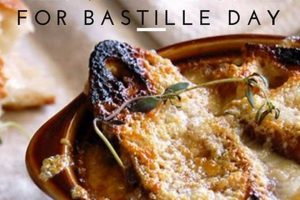
Bastille Day, celebrated annually on July 14th, commemorates the storming of the Bastille in 1789, a pivotal event in the French Revolution. The culinary traditions associated with this national holiday reflect both a sense of national pride and a celebration of French gastronomy. While there isn’t a single, universally mandated dish, several foods are commonly enjoyed during the festivities.
Traditional celebratory meals often feature grilled meats, reflecting the outdoor gatherings and communal feasts that mark the day. Dishes like steak frites (steak and fries) and various types of sausages are popular choices. Additionally, classic French desserts such as macarons, clairs, and tarte aux fruits contribute to the celebratory atmosphere. The consumption of wine, particularly French wine, is also a common practice. These foods and beverages contribute to a festive experience, reinforcing national identity and providing a tangible connection to French culture.
Beyond specific dishes, the essence of the food consumed on this day emphasizes shared enjoyment and a celebration of French heritage. The selection of food and drink aims to create a convivial atmosphere, contributing to the overall spirit of unity and national pride that characterizes the Bastille Day holiday.
Culinary Considerations for Bastille Day
The selection of food for Bastille Day celebrations should reflect both traditional French gastronomy and the spirit of communal festivity.
Tip 1: Prioritize Seasonal Ingredients: Incorporating locally sourced, seasonal produce enhances the freshness and flavor of the meal. Summer fruits and vegetables, prevalent in July, contribute to vibrant and appealing dishes.
Tip 2: Balance Rich and Light Options: Given the potential for warm weather, a balance between heavier dishes, such as grilled meats, and lighter options, such as salads or fruit tarts, ensures broader appeal.
Tip 3: Select Appropriate Beverages: Choose French wines that complement the meal. Consider offering both red and white options to cater to diverse preferences. Non-alcoholic alternatives, such as sparkling cider or fruit juices, should also be available.
Tip 4: Incorporate Symbolic Desserts: French pastries, particularly those decorated with the French flag’s colors (blue, white, and red), visually reinforce the holiday’s theme and provide a visually appealing end to the meal.
Tip 5: Opt for Ease of Service: If hosting a large gathering, choose dishes that can be prepared in advance or served buffet-style, minimizing time spent in the kitchen and maximizing time spent with guests.
Tip 6: Respect Dietary Restrictions: Inquire about any dietary restrictions or allergies among guests and offer suitable alternative dishes or substitutions.
Tip 7: Emphasize Presentation: Food presentation enhances the overall dining experience. Pay attention to plating and garnishing to create visually appealing dishes.
Adherence to these suggestions will ensure a Bastille Day culinary experience that is both delicious and culturally resonant.
Consider these insights when planning a Bastille Day celebration.
1. Celebratory Meals

Celebratory meals form a cornerstone of Bastille Day observances, directly shaping “what is eaten on Bastille Day.” These meals serve not merely as sustenance but as a focal point for national pride, historical commemoration, and communal gathering.
- Symbolic Dishes
Certain dishes carry symbolic weight, representing aspects of French history or cultural identity. The prevalence of the tricolor (blue, white, red) in desserts, for example, overtly references the French flag and national unity. Dishes prepared with ingredients significant to French agriculture also reinforce a connection to the land and its bounty.
- Regional Variations
While national dishes have prominence, regional culinary traditions also feature prominently in Bastille Day meals. Different regions of France contribute unique recipes and ingredients, reflecting local agricultural products and historical influences. This regional diversity enriches the overall culinary landscape of the celebrations.
- Communal Dining
Bastille Day meals emphasize communal dining experiences, where families, friends, and communities gather to share food and celebrate together. The act of sharing a meal reinforces social bonds and fosters a sense of collective identity. Picnics, barbecues, and public feasts are common features of these celebrations, encouraging participation and interaction.
- Festive Atmosphere
The atmosphere surrounding these meals is inherently festive. Music, decorations, and other forms of entertainment often accompany the dining experience, enhancing the celebratory mood. The food itself is presented in an appealing manner, reflecting the importance placed on gastronomy within French culture.
In conclusion, the significance of celebratory meals on Bastille Day extends beyond mere sustenance, profoundly influencing “what is eaten on Bastille Day.” They embody national identity, regional diversity, communal unity, and festive atmosphere, solidifying the holiday’s cultural and historical importance.
2. Grilled Meats

Grilled meats represent a significant component of Bastille Day culinary traditions, impacting “what is eaten on Bastille Day” by offering a readily available and versatile option suitable for large gatherings and outdoor celebrations. The prevalence of grilled meats underscores a preference for communal feasting and accessible cuisine during this national holiday.
- Symbolism of Abundance
Grilled meats, often served in generous portions, symbolize abundance and prosperity. This reflects a historical context where food security was a crucial concern, and celebratory meals were meant to showcase national strength and well-being. The consumption of substantial quantities of grilled meats contributes to this symbolic representation.
- Facilitation of Communal Feasting
The ease with which grilled meats can be prepared and served facilitates communal feasting. Large quantities can be cooked simultaneously, accommodating diverse palates and dietary needs within a group setting. This convenience promotes inclusivity and enhances the social aspect of Bastille Day celebrations.
- Adaptability to Regional Variations
While the concept of “grilled meats” remains constant, the specific types of meat and accompanying seasonings vary regionally. Different areas of France may feature locally sourced meats or unique marinades, adding a layer of regional identity to the overall culinary landscape of Bastille Day. This adaptability ensures that local traditions are preserved and celebrated.
- Complementary to Outdoor Celebrations
The nature of grilling lends itself well to outdoor celebrations, aligning with the common practice of hosting Bastille Day festivities in public spaces and private gardens. The use of barbecues and open-air cooking methods enhances the sensory experience of the meal, contributing to a festive and convivial atmosphere.
The integration of grilled meats into Bastille Day celebrations reflects a combination of historical symbolism, practical considerations, and regional adaptations. The prominence of grilled meats highlights the importance of communal feasting and accessible cuisine in defining “what is eaten on Bastille Day,” shaping the overall experience of the holiday.
3. French Pastries

French pastries hold a prominent position in Bastille Day culinary traditions, significantly shaping “what is eaten on Bastille Day.” They represent a culmination of culinary artistry, national pride, and festive indulgence.
- Symbolic Representation of French Gastronomy
French pastries, renowned for their intricate craftsmanship and diverse flavors, exemplify French culinary excellence. Including these pastries in Bastille Day celebrations underscores the nation’s commitment to gastronomy as a cultural cornerstone. The presence of iconic pastries elevates the dining experience, reinforcing national identity through culinary artistry.
- Festive Decoration and Visual Appeal
Many French pastries are visually striking, often decorated with the colors of the French flag (blue, white, and red). This deliberate aesthetic enhances the festive atmosphere of Bastille Day celebrations. The visual appeal of these desserts contributes to the overall celebratory mood, creating a memorable culinary experience.
- Variety and Regional Specialization
France boasts a vast array of regional pastries, offering diverse flavors and textures. Bastille Day celebrations provide an opportunity to showcase this culinary diversity, with local bakeries and pastry shops offering specialty items unique to their region. The inclusion of regional pastries adds depth and authenticity to the culinary experience.
- Sweet Culmination of Celebratory Meals
French pastries often serve as the final course in Bastille Day meals, providing a sweet culmination to the culinary festivities. The consumption of these desserts signifies the end of the celebratory meal, leaving a lasting positive impression and reinforcing the overall festive atmosphere. The quality and presentation of the pastries contribute significantly to the success of the dining experience.
The integration of French pastries into Bastille Day observances underscores their cultural significance and culinary appeal. Their presence not only enriches the dining experience but also reinforces national identity and celebrates the nation’s culinary heritage, significantly defining “what is eaten on Bastille Day.”
4. Regional Specialties

The diverse culinary landscape of France significantly influences “what is eaten on Bastille Day,” with regional specialties playing a crucial role in defining the gastronomic experience. The integration of locally sourced ingredients and time-honored recipes reflects the unique cultural identity of each region.
- Provence: Ratatouille and Bouillabaisse
The Provence region contributes ratatouille, a vegetable stew featuring eggplant, zucchini, peppers, and tomatoes, showcasing the area’s abundant summer produce. Bouillabaisse, a fish stew originating from Marseille, emphasizes seafood and aromatic herbs. These dishes exemplify the Mediterranean influence on Provenal cuisine and its relevance to Bastille Day celebrations.
- Brittany: Crpes and Galettes
Brittany is known for its crpes (sweet pancakes) and galettes (savory buckwheat pancakes). Galettes, often filled with ham, cheese, and eggs, provide a hearty option, while crpes offer a sweet counterpart, highlighting the region’s culinary versatility. These items showcase Brittany’s agricultural traditions and its distinct culinary identity during national festivities.
- Alsace: Choucroute Garnie and Kougelhopf
Alsace features choucroute garnie, a dish of sauerkraut cooked with various meats and sausages, reflecting Germanic influences. Kougelhopf, a sweet brioche-like cake baked in a distinctive fluted mold, offers a sweet alternative. These specialties illustrate the region’s cultural blending and its distinctive contribution to Bastille Day menus.
- Lyon: Salade Lyonnaise and Quenelles
Lyon, regarded as a gastronomic center, offers Salade Lyonnaise, a salad featuring frise lettuce, bacon lardons, and a poached egg. Quenelles, delicate dumplings made from creamed fish or poultry, showcase the region’s culinary refinement. These dishes epitomize Lyonnaise cuisine’s emphasis on quality ingredients and refined techniques during Bastille Day celebrations.
The inclusion of regional specialties in Bastille Day celebrations underscores the importance of culinary diversity and local traditions in defining “what is eaten on Bastille Day.” By showcasing the unique flavors and ingredients of each region, the holiday becomes a celebration of French culture in its entirety.
5. Communal Feasting

Communal feasting is intrinsically linked to “what is eaten on Bastille Day,” serving as both a cause and an effect. The act of celebrating France’s national day through shared meals influences the types of food prepared and consumed, while the selection of dishes fosters a sense of unity and collective identity. This connection is evident in the prevalence of large-format dishes suitable for sharing, such as grilled meats, hearty stews, and large platters of cheeses and charcuterie.
The importance of communal feasting as a component of “what is eaten on Bastille Day” stems from the holiday’s historical context. The storming of the Bastille symbolized the overthrow of an oppressive regime and the triumph of the people. Sharing food became a tangible expression of this newfound freedom and equality. Public picnics and gatherings, where individuals contribute to a collective spread, reflect this spirit of community. Real-life examples include town-wide celebrations featuring communal tables laden with regional specialties, and family gatherings where traditional recipes are passed down and shared. This understanding has practical significance, as it guides the planning and execution of Bastille Day events, ensuring that food plays a central role in fostering a sense of shared national identity.
Understanding the connection between communal feasting and the dishes enjoyed on Bastille Day informs event planning, food preparation, and cultural preservation. Challenges arise in maintaining authenticity while accommodating diverse dietary needs and preferences. However, prioritizing dishes that are easily shared, culturally relevant, and adaptable ensures the continuation of this important tradition, solidifying the relationship between “communal feasting” and “what is eaten on Bastille Day” as a cornerstone of the national holiday.
6. Seasonal Produce

The availability and quality of seasonal produce significantly influence “what is eaten on Bastille Day,” affecting menu choices and culinary traditions. Celebrations occurring in July coincide with the peak season for many fruits and vegetables in France, creating a direct link between the produce that is readily available and the dishes that are prepared. The influence of seasonal ingredients extends beyond mere availability, impacting the flavor profiles and nutritional value of the meals consumed during this national holiday. For example, the abundance of ripe tomatoes, zucchini, and peppers leads to the prevalence of dishes like ratatouille and tomato tarts, reflecting the regional adaptations of Bastille Day cuisine.
The significance of seasonal produce as a component of “what is eaten on Bastille Day” stems from a historical emphasis on local sourcing and agricultural traditions. The French culinary identity is deeply rooted in the concept of “terroir,” which emphasizes the unique characteristics of ingredients derived from specific regions. Incorporating seasonal produce into Bastille Day meals aligns with this philosophy, reinforcing a connection to the land and its bounty. Real-life examples include farmers’ markets held in towns and villages across France leading up to Bastille Day, showcasing locally grown fruits, vegetables, and herbs. These markets provide access to fresh ingredients, directly influencing the choices made by home cooks and professional chefs alike. Furthermore, the use of seasonal ingredients often reduces transportation costs and environmental impact, aligning with contemporary sustainability practices.
Understanding the connection between seasonal produce and Bastille Day cuisine has practical implications for menu planning, recipe development, and event organization. Challenges may arise in adapting traditional recipes to accommodate variations in seasonal availability or changing weather patterns. However, prioritizing the use of fresh, locally sourced ingredients enhances the flavor and nutritional value of the meals, while also supporting local farmers and promoting sustainable practices. Integrating seasonal considerations into Bastille Day celebrations ensures that “what is eaten on Bastille Day” remains a vibrant reflection of French culture and agricultural heritage.
Frequently Asked Questions
This section addresses common inquiries regarding the foods typically consumed during Bastille Day celebrations, providing clarity on culinary customs and their significance.
Question 1: Is there a single, definitive dish that must be eaten on Bastille Day?
No. Unlike Thanksgiving in the United States, which is closely associated with turkey, Bastille Day does not have one specific dish universally mandated for consumption. The culinary traditions are more diverse and regionally influenced.
Question 2: Are the foods eaten on Bastille Day symbolic?
Many dishes consumed during Bastille Day celebrations carry symbolic weight, representing aspects of French history, national identity, or regional pride. For example, the colors of the French flag (blue, white, and red) often appear in desserts, overtly referencing national unity.
Question 3: What role do regional specialties play in Bastille Day meals?
Regional specialties are integral to Bastille Day celebrations. Different regions of France contribute unique recipes and ingredients, reflecting local agricultural products and historical influences. This regional diversity enriches the overall culinary landscape of the celebrations.
Question 4: Why are grilled meats so prevalent during Bastille Day festivities?
Grilled meats are popular due to their versatility, ease of preparation, and suitability for large gatherings. They also symbolize abundance and prosperity, reflecting a historical context where food security was a crucial concern.
Question 5: How does seasonal produce influence Bastille Day menus?
The availability of seasonal produce significantly influences menu choices. Celebrations occurring in July coincide with the peak season for many fruits and vegetables in France, impacting the dishes prepared and consumed. Utilizing seasonal ingredients aligns with the French culinary emphasis on “terroir” and local sourcing.
Question 6: What is the significance of communal feasting on Bastille Day?
Communal feasting is central to Bastille Day celebrations, reflecting the holiday’s historical context and the spirit of unity. Sharing food becomes a tangible expression of freedom and equality, fostering a sense of collective identity.
In summary, the culinary traditions of Bastille Day are characterized by diversity, regional variations, and a focus on communal feasting, reflecting the historical and cultural significance of the holiday.
Consider these insights when planning a Bastille Day celebration, whether large or small.
Culinary Commemoration
This exploration of what is eaten on Bastille Day has revealed a diverse tapestry of culinary traditions deeply interwoven with French history, regional identity, and communal celebration. The absence of a single, mandated dish underscores the emphasis on regional specialties and the use of seasonal produce, both of which contribute to a varied and authentic dining experience. The prevalence of grilled meats reflects the outdoor festivities and the desire for accessible, shareable cuisine, while the inclusion of French pastries represents a culmination of culinary artistry and festive indulgence.
As Bastille Day celebrations continue, an understanding of these culinary customs provides a deeper appreciation for the holiday’s cultural significance. By embracing the diversity of French gastronomy and fostering communal dining experiences, individuals can connect with the historical spirit of the day, ensuring that these traditions are preserved and passed on to future generations. The continued exploration and celebration of these culinary customs serve as a testament to the enduring legacy of Bastille Day.