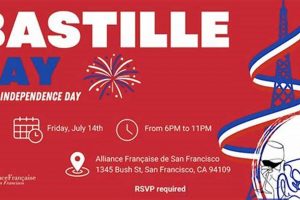
Apparel associated with France’s national day, celebrated on July 14th, often evokes elements of the French Revolution or French national symbols. Examples include tricolor rosettes, revolutionary-era clothing styles, or outfits inspired by historical figures such as Marie Antoinette or Marianne, the symbol of the French Republic. The selection of such attire contributes to the commemorative atmosphere of the event.
Wearing thematic clothing for this particular holiday promotes a sense of national pride and historical awareness. It serves as a visual representation of solidarity and participation in the celebration. Furthermore, it can enhance educational opportunities by prompting conversations about the historical events surrounding the storming of the Bastille and the subsequent revolution. It underscores the importance of liberty, equality, and fraternity, the core values of the French Republic.
The following discussion will delve into specific costume ideas, sources for acquisition, and considerations for historical accuracy and cultural sensitivity when choosing celebratory garments. This will provide a practical guide for those seeking to fully engage in the annual commemoration.
Guidance for Selecting Appropriate Attire for Bastille Day
Selecting apparel for the French national holiday requires consideration of both celebratory spirit and respect for historical context. The following guidelines provide insights into choosing suitable options.
Tip 1: Prioritize Historical Accuracy: Researching authentic garments from the Revolutionary era is crucial. Focus on simple fabrics and cuts representative of the period. Avoid modern interpretations that distort historical representations.
Tip 2: Incorporate Tricolor Elements Subtly: The French flags colors (blue, white, and red) can be integrated through accessories, such as sashes or ribbons, rather than through overtly theatrical or imbalanced applications across the entire ensemble.
Tip 3: Consider Regional Variations: France possesses diverse regional identities. Investigating traditional clothing styles from different areas of France can offer a richer understanding and inspire more nuanced stylistic choices, promoting inclusivity.
Tip 4: Focus on Symbolic Accessories: Phrygian caps, also known as liberty caps, or cockades serve as historically significant symbols of the Revolution and can be incorporated to signal understanding of the holiday’s historical underpinnings.
Tip 5: Avoid Stereotypical Depictions: Refrain from perpetuating harmful stereotypes or caricatures when choosing attire. Instead, aim for respectful representations of French history and culture.
Tip 6: Prioritize Comfort and Functionality: Bastille Day often involves outdoor celebrations. Ensure the attire selected is comfortable and appropriate for the weather conditions to allow for uninhibited participation in festivities.
Tip 7: Research Notable Figures: While not advocating direct imitation, researching influential historical figures and incorporating subtle stylistic allusions to their garments can demonstrate historical understanding. However, avoid insensitive caricatures.
Employing these guidelines ensures the selection of attire reflects a comprehensive understanding of French history and promotes a respectful and engaging celebration. This approach demonstrates a deeper appreciation for the holiday’s significance.
The subsequent sections will address avenues for obtaining appropriate attire and explore methods for further enriching the Bastille Day experience.
1. Historical accuracy imperative

The selection of a Bastille Day costume carries a responsibility to represent the historical period authentically. Inaccuracies undermine the educational and commemorative purpose of the holiday. For instance, depicting revolutionary figures in anachronistic attire, such as modern synthetic fabrics or styles from later historical periods, detracts from the symbolic significance and distorts the understanding of the French Revolution. The proliferation of historically inaccurate portrayals, if unchecked, could lead to a diluted appreciation for the actual events.
Achieving historical accuracy requires diligent research into clothing styles, materials, and social contexts of the late 18th century in France. Examples of accurate choices include simple linen shirts and woolen trousers for men representing the common people, or cotton dresses with minimal ornamentation for women. Details such as the cut of a coat or the style of a bonnet can significantly contribute to the authenticity of the portrayal. Conversely, the use of elaborate, heavily embellished costumes would be inaccurate for most social classes involved in the Revolution, potentially misrepresenting the social dynamics of the time.
Failure to prioritize historical accuracy in costume selection not only diminishes the integrity of the Bastille Day celebration, but may also perpetuate misconceptions about the French Revolution. While absolute perfection may be unattainable, a concerted effort to adhere to historical facts ensures a more meaningful and respectful commemoration. This approach honors the historical significance of the event and avoids unintended misrepresentation.
2. Tricolore integration subtlety

Strategic employment of the French national colorsblue, white, and redwithin attire chosen for the French national holiday is paramount. Subtlety in their integration demonstrates respect for the historical context and avoids garish or overly theatrical displays. It emphasizes commemoration over caricature.
- Accessory Selection
The tricolor may be most effectively introduced through accessories. A simple sash, a cockade pinned to a hat, or ribbons woven into hair offer restrained nods to national symbolism. These elements provide visual cues without overwhelming the overall aesthetic of the garment. For example, a white dress could be complemented by a thin blue and red ribbon tied around the waist.
- Fabric Choice
If employing the tricolor in the garment itself, consider using subtle variations of the colors or incorporating them into patterns, rather than large, block sections. A fine blue pinstripe on a white shirt, or a red and white gingham pattern, are examples of understated integration. Avoid creating an outfit that resembles the French flag itself; rather, allude to its presence through nuanced design.
- Placement and Proportion
The placement of tricolor elements is equally important. A small tricolor rosette, discreetly placed on the lapel of a jacket, is more sophisticated than a large, prominently displayed flag. The proportions of the colors should also be considered. Favoring one color over the others can create an imbalanced and less nuanced effect. For instance, a small red ribbon alongside a larger white shawl and a blue hat can achieve a harmonious balance.
- Historical Accuracy
Ensure the integration of the tricolor aligns with the historical period being represented. The French flag, as it is known today, was officially adopted during the Revolution. Therefore, incorporating it into attire meant to represent pre-revolutionary France would be historically inaccurate. Subtlety also aligns with the resources during that time and the practicalities and means of production.
Careful consideration of accessory selection, fabric choice, placement, proportion, and historical accuracy ensures the tricolor is integrated into holiday attire in a tasteful and meaningful manner. This approach avoids trivializing the significance of the national holiday and demonstrates a deeper understanding of its historical underpinnings.
3. Revolutionary Era garments
Apparel from the Revolutionary Era forms a crucial basis for the historical accuracy and symbolic representation often sought in attire chosen for the French national holiday. Understanding the characteristics of these garments allows for informed selection when commemorating Bastille Day.
- Sans-Culottes Trousers
The trousers worn by the sans-culottes, the working-class revolutionaries, represent a rejection of aristocratic breeches. These long, unfitted trousers, typically made of wool or coarse linen, are symbolic of the common people’s uprising. In a Bastille Day context, recreating this garment communicates solidarity with the revolutionary ideals of equality and challenges traditional social hierarchies. This contrasts sharply with the knee-breeches worn by aristocracy.
- Carmagnole Jackets
The Carmagnole jacket, a short, woolen coat favored by revolutionaries, became associated with radical political views. Its simple design and dark color reflected the utilitarian nature of revolutionary garments. Including a Carmagnole jacket within a Bastille Day ensemble suggests adherence to the revolutionary cause and signals a rejection of ornate aristocratic fashion. Often paired with the Phrygian cap for added emphasis on revolutionary ideals.
- Phrygian Cap (Bonnet Rouge)
The Phrygian cap, also known as the bonnet rouge, is a soft, conical cap that became a potent symbol of liberty and revolution. Its origins can be traced back to antiquity, but it gained prominence during the French Revolution. Integrating this element into attire intended for Bastille Day visually affirms commitment to the principles of liberty, equality, and fraternity, thereby underscoring the foundational values of the French Republic.
- Women’s Simple Gowns
During the Revolutionary Era, women’s fashion shifted towards simpler gowns made from cotton or linen, reflecting a move away from the opulent styles associated with the aristocracy. Choosing a simple gown for Bastille Day attire demonstrates alignment with the revolutionary ethos of modesty and practicality. This can be further enhanced through minimal embellishments and muted color palettes, contrasting with the lavish silks and intricate designs of pre-revolutionary court attire. It’s vital to research the era to assure authenticity.
The selection of attire inspired by Revolutionary Era garments not only contributes to historical accuracy but also conveys specific political and social messages. By understanding the symbolism embedded within these garments, individuals participating in Bastille Day celebrations can express their connection to the revolutionary ideals that shaped modern France. A thoughtful and informed approach enables a deeper and more meaningful engagement with the holiday’s significance.
4. Symbolism consideration Phrygian

The Phrygian cap, a soft conical hat also known as the liberty cap, serves as a potent symbol of freedom and revolution, intrinsically linked to the attire associated with France’s national holiday. Its inclusion, or exclusion, directly impacts the historical accuracy and the conveyed meaning of garments intended for Bastille Day celebrations. The cap’s association with liberty stems from its use in antiquity, often worn by freed slaves, which subsequently resonated with revolutionaries seeking liberation from monarchy and aristocracy.
A Bastille Day costume omitting the Phrygian cap neglects a critical element of revolutionary symbolism. The cap visually communicates adherence to the ideals of liberty, equality, and fraternity, core tenets of the French Revolution. For example, a sans-culotte outfit featuring long trousers and a Carmagnole jacket, without the Phrygian cap, presents an incomplete representation of the revolutionary aesthetic and dilutes the message of defiance against oppression. Conversely, a costume incorporating the cap, even with other minor historical inaccuracies, more effectively conveys the symbolic intent. The presence of the Phrygian cap distinguishes between mere historical dress-up and a deliberate statement aligning with the revolutionary spirit.
Understanding the symbolism of the Phrygian cap facilitates a more nuanced appreciation of Bastille Day and the historical events it commemorates. It highlights the importance of thoughtfully considering the message conveyed by chosen attire. While other elements of a costume contribute to historical accuracy, the Phrygian cap acts as a focal point for revolutionary ideology. Recognizing its significance ensures that participation in Bastille Day celebrations reflects a deeper understanding and respect for the historical context and the values it represents.
5. Cultural sensitivity paramount

The selection of attire for Bastille Day, Frances national holiday, necessitates careful consideration of cultural sensitivity. Costumes that perpetuate harmful stereotypes, misrepresent historical figures, or appropriate cultural elements disrespectfully undermine the commemorative spirit of the occasion. The historical context of the French Revolution, marked by social upheaval and the pursuit of equality, demands a thoughtful approach to representation. A lack of sensitivity can transform a celebratory gesture into an act of cultural appropriation or historical misrepresentation, thereby diminishing the significance of the event and causing offense. The cause of cultural insensitivity in costume selection often stems from a superficial understanding of history and a failure to consider the potential impact of representations on marginalized groups or the descendants of those who experienced historical injustices.
Instances of culturally insensitive Bastille Day attire might include caricatures of Marie Antoinette, which reduce her to a symbol of frivolous excess without acknowledging the complexities of her historical role. Other examples involve the inappropriate use of religious or ethnic garb, conflating national identity with other cultural affiliations in a manner that trivializes distinct traditions. The practical significance of cultural sensitivity lies in fostering an inclusive and respectful environment during Bastille Day celebrations. By adhering to principles of historical accuracy and respectful representation, individuals can participate in the commemorations without perpetuating harmful stereotypes or causing offense. The understanding promotes a more profound appreciation of French history and cultural diversity.
Upholding cultural sensitivity in attire selection for Bastille Day requires ongoing education and a commitment to thoughtful engagement with history. This ensures the commemorative nature of the event is maintained while acknowledging and respecting the diverse cultural tapestry of France and its global interconnectedness. Addressing the challenge involves self-reflection and a willingness to learn from potential missteps, leading to a more nuanced and respectful celebration. Ultimately, cultural sensitivity in costume choice allows for a more inclusive and meaningful expression of national pride and historical awareness.
Frequently Asked Questions
This section addresses common queries and misconceptions regarding appropriate and respectful attire for France’s national holiday, celebrated on July 14th. The information provided emphasizes historical accuracy, cultural sensitivity, and thoughtful commemoration.
Question 1: Is it appropriate to dress as Marie Antoinette for Bastille Day?
Depicting historical figures requires careful consideration. While dressing as Marie Antoinette is not inherently inappropriate, avoid caricatures that trivialize her historical role or perpetuate harmful stereotypes. If choosing this representation, it is crucial to portray her with historical accuracy and sensitivity, acknowledging the complexities of her life and the historical context surrounding the French Revolution.
Question 2: What constitutes a culturally insensitive Bastille Day costume?
Costumes that appropriate cultural elements disrespectfully, perpetuate stereotypes, or misrepresent historical narratives are deemed culturally insensitive. Examples include the inappropriate use of religious or ethnic garb, or the reduction of complex historical events to simplified and offensive representations. Upholding cultural sensitivity requires careful research and an understanding of the potential impact of chosen attire.
Question 3: How can the tricolor (blue, white, and red) be incorporated into Bastille Day attire respectfully?
The tricolor should be integrated subtly and thoughtfully. Using it in accessories, such as rosettes or ribbons, offers a restrained nod to national symbolism. Overly theatrical or garish displays of the tricolor may detract from the solemnity of the occasion. Consider incorporating the colors into patterns or textures rather than large, block sections.
Question 4: What is the significance of the Phrygian cap (bonnet rouge)?
The Phrygian cap is a potent symbol of liberty and revolution, representing the ideals of the French Revolution. Its inclusion in attire signifies adherence to these principles. Omitting the Phrygian cap from a revolutionary-themed costume diminishes the symbolic impact and may be interpreted as a lack of understanding of the historical context.
Question 5: Is it acceptable to wear modern interpretations of historical clothing for Bastille Day?
While modern interpretations are permissible, prioritize historical accuracy as much as possible. Avoid incorporating modern fabrics or styles that deviate significantly from the garments of the Revolutionary Era. The goal is to commemorate the historical events, and deviations can detract from that purpose.
Question 6: Where can authentic Revolutionary Era-inspired garments for Bastille Day be obtained?
Researching historical costume suppliers, theater costume rental shops, or skilled tailors specializing in historical reproductions is recommended. Online marketplaces may offer options, but careful scrutiny of product descriptions and seller reviews is necessary to ensure accuracy and quality. Consult with historians or costume experts for guidance, particularly if precise replicas are desired.
Selecting appropriate attire requires a thoughtful consideration of historical context, cultural sensitivity, and symbolic representation. Upholding these principles ensures a respectful and meaningful commemoration of France’s national holiday.
The following section explores avenues for enriching the Bastille Day experience beyond attire, through participation in local events, cultural exploration, and historical learning.
Conclusion
The preceding exploration of apparel selection for France’s national holiday emphasizes the critical importance of historical accuracy, cultural sensitivity, and symbolic representation. Consideration of these factors allows for a more meaningful engagement with the historical context of the French Revolution and avoids the perpetuation of harmful stereotypes or misrepresentations. The choice of garments for Bastille Day should reflect a conscious effort to honor the values of liberty, equality, and fraternity, which underpin the founding principles of the French Republic.
Continued adherence to these principles ensures that Bastille Day celebrations remain a respectful and informative commemoration of French history and culture. Furthermore, diligent research and thoughtful consideration regarding garment selection contribute to a deeper understanding and appreciation of the holiday’s significance, promoting a more inclusive and enriching experience for all participants. The ongoing commitment to education and awareness concerning the historical and cultural context of Bastille Day is essential to ensuring its continued relevance and positive impact.