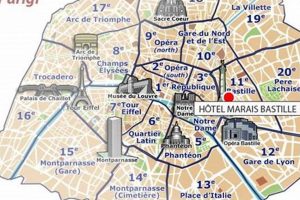
The former site of the Bastille, a fortress that symbolized royal authority, is presently situated in the Place de la Bastille. This location straddles the 4th, 11th, and 12th arrondissements of Paris. No physical remnants of the original structure remain above ground.
The location holds significant historical importance. The storming of the Bastille on July 14, 1789, marked a pivotal event in the French Revolution. The Place de la Bastille now serves as a public square and a symbolic space for demonstrations, celebrations, and commemorations. It’s also a major transportation hub.
The area is now defined by the Colonne de Juillet (July Column), which commemorates the July Revolution of 1830. The Opra Bastille, a modern opera house, also stands prominently in the vicinity, contributing to the area’s contemporary identity and cultural significance.
Visiting the Bastille area requires some orientation beyond simply knowing its historical significance. This section offers guidance for a more informed experience.
Tip 1: Understand the Boundaries: The “Bastille” area is not confined to a single street. It encompasses parts of three arrondissements. Orienting oneself using a map that displays arrondissement boundaries helps avoid confusion.
Tip 2: Recognize the Central Landmark: The Colonne de Juillet, or July Column, is the central landmark in the Place de la Bastille. Use it as a point of reference when navigating the square and surrounding streets.
Tip 3: Be Aware of Underground Infrastructure: The Place de la Bastille sits atop a major transportation hub. Multiple metro lines converge here. Understanding the metro system is essential for reaching the site and connecting to other parts of Paris.
Tip 4: Explore Surrounding Neighborhoods: The Marais district, with its historical architecture, and the Canal Saint-Martin, known for its picturesque setting, are within walking distance. Extend your exploration beyond the immediate Bastille area.
Tip 5: Consider Event Schedules: The Place de la Bastille frequently hosts demonstrations and public events. Check local listings or news sources for scheduled activities that might affect access or traffic.
Tip 6: Note the Absence of the Original Structure: It’s crucial to remember that the Bastille prison no longer exists. Expect to find a large public square and modern structures rather than historical ruins.
By keeping these points in mind, visitors can more effectively understand the location and appreciate the area’s historical and cultural context.
These tips will aid in appreciating the historical and present-day significance of this Parisian location.
1. Intersection of arrondissements

The intersection of arrondissements at the Bastille is not merely a geographical quirk but a fundamental aspect of understanding its location and significance within the urban fabric of Paris. The location’s influence stems from its positioning across multiple administrative districts.
- Symbolic Division of Power
The Bastille’s location at the juncture of the 4th, 11th, and 12th arrondissements creates a symbolic division of power. This convergence affects how the area is administered and perceived, encompassing diverse neighborhoods and populations. It highlights the Bastille’s role as a point of confluence, not just within Paris but also across different administrative identities.
- Administrative Complexities
The division of the Bastille across multiple arrondissements introduces administrative complexities. Local governance, planning, and public services require cooperation and coordination among district authorities. This intersectionality reflects the challenges of managing a site that does not fall neatly within single administrative boundaries.
- Diverse Urban Character
Each arrondissement brings its unique urban character to the Bastille area. The 4th arrondissement contributes its historical architecture, the 11th its vibrant nightlife, and the 12th its modern developments. This blending of distinct urban environments enhances the multifaceted appeal of the Bastille, attracting various residents and visitors.
- Accessibility and Connectivity
The intersection of arrondissements at the Bastille enhances its accessibility and connectivity within Paris. Major transportation routes converge at this point, facilitating movement between different parts of the city. This connectivity underscores the Bastille’s central role as a transit hub, further cementing its location within the Parisian landscape.
Understanding the intersection of arrondissements at the Bastille is essential for appreciating its location. It highlights the administrative, cultural, and urban dynamics that shape the area, making it a significant point of convergence in Paris. This aspect underscores the importance of considering broader urban contexts when assessing the location.
2. Place de la Bastille

The Place de la Bastille serves as the contemporary geographical marker for the historical site “where is the bastille located in Paris”. Its name directly evokes the fortress that once stood there. However, the physical square encompasses more than just the former prison grounds; it represents a broader area shaped by historical events and urban development.
- Symbolic Public Space
The Place de la Bastille functions primarily as a public square. It serves as a gathering point for demonstrations, celebrations, and commemorations. This role underscores its significance as a symbol of republican values and popular sovereignty. The absence of the Bastille prison itself makes the square a stage for collective expression, tying its location intrinsically to the ideals associated with its history.
- Transportation Hub
The Place de la Bastille is a major transportation interchange. Several metro lines converge beneath the square, facilitating movement across Paris. This infrastructural importance integrates the site into the daily lives of Parisians and visitors alike. The ease of access contributes to its continuous relevance and usage as a central point in the city.
- Urban Transformation
The area surrounding the Place de la Bastille has undergone significant urban transformation since the destruction of the prison. The construction of the Opra Bastille and the development of adjacent neighborhoods have reshaped the site’s character. These changes illustrate the evolution of the area from a symbol of oppression to a modern cultural and commercial center.
- Memorial and Remembrance
Despite the lack of physical remnants, the Place de la Bastille functions as a memorial. The Colonne de Juillet commemorates the July Revolution of 1830, while the square itself evokes the storming of the Bastille in 1789. This dual role as a space of both celebration and remembrance solidifies its significance in the collective memory of the French Revolution and subsequent historical events.
These facets of the Place de la Bastille highlight the complexities of “where is the bastille located in Paris”. While the physical location is now a public square, its historical and cultural significance continues to resonate, shaping its function and identity within the city.
3. Former prison site
The designation of “where is the bastille located in paris” is intrinsically linked to its historical identity as a former prison site. The Bastille’s original purpose as a fortress and later a state prison fundamentally shaped its significance and ultimately led to its pivotal role in the French Revolution. The storming of the prison on July 14, 1789, an act of profound revolutionary symbolism, defines the location’s place in history. Understanding the physical attributes and function of the former prison is crucial to comprehending the enduring importance of its location. For instance, the prison’s imposing structure and perceived role in royal oppression directly contributed to its selection as a target by revolutionary forces. The act of dismantling the prison itself became a physical manifestation of the overthrow of the old regime.
The absence of the physical prison structure today underscores the transformative nature of the Revolution. While no longer a physical presence, the “former prison site” remains a potent symbolic space. The Place de la Bastille, which now occupies the location, serves as a public square where collective memory is actively cultivated. The July Column, erected to commemorate the July Revolution of 1830, further reinforces the site’s historical narrative. The Opra Bastille, a modern architectural landmark, stands as a deliberate juxtaposition against the site’s historical connotations, representing a departure from the past towards a more democratic future. The annual Bastille Day celebrations, which center around the Place de la Bastille, serve as a yearly reminder of the events that transpired at the “former prison site.”
In essence, the “former prison site” is not merely a geographical designation but a condensed symbol of political upheaval and societal transformation. The location’s persistent relevance stems from its ability to evoke powerful historical narratives. Appreciating the connection between the physical location, the events that transpired there, and the subsequent reshaping of the urban landscape provides a comprehensive understanding of its lasting significance. The “where is the bastille located in paris” question is, therefore, answered not only by providing geographical coordinates but also by acknowledging the profound historical weight carried by the “former prison site.”
4. July Column placement

The placement of the July Column within the Place de la Bastille directly relates to the historical and symbolic significance of “where is the bastille located in paris.” Its positioning is not arbitrary; it serves as a deliberate commemoration and a physical marker within the square.
- Symbolic Centerpoint
The July Column’s placement at the approximate center of the Place de la Bastille establishes it as the symbolic centerpoint of the location. This ensures visual prominence and positions it as the primary focus for visitors and gatherings. Its height and design draw the eye, reinforcing its importance as a memorial.
- Commemoration of the July Revolution
The column specifically commemorates the July Revolution of 1830, a subsequent uprising that also championed liberty. This historical reference connects the location not only to the storming of the Bastille in 1789 but also to later struggles for democratic ideals. The choice to erect a monument to the 1830 revolution at this specific site underscores the continuous pursuit of freedom.
- Reinforcement of Republican Values
The presence of the July Column reinforces republican values and principles. Its design and inscriptions celebrate freedom, progress, and the sovereignty of the people. This intentional association of the location with republican ideals ensures that the Place de la Bastille serves as a lasting reminder of France’s commitment to democratic governance.
- Spatial Relationship to the Former Prison
While the Bastille prison no longer exists, the July Column occupies a space that was once part of the prison grounds. This spatial relationship creates a direct link between the present-day monument and the historical event. The location serves as a tangible connection to the past, allowing visitors to visualize the events that took place on that very spot.
In summary, the strategic placement of the July Column is integral to understanding “where is the bastille located in paris.” It serves as a symbolic, historical, and spatial marker that reinforces the location’s significance as a site of revolution, republican values, and collective memory.
5. Opera Bastille proximity

The proximity of the Opra Bastille to the historic site “where is the bastille located in Paris” significantly alters the character and perception of the area. Completed in 1989, the modern opera house serves as a deliberate counterpoint to the site’s revolutionary past, introducing a contemporary cultural element to a location steeped in historical significance. This juxtaposition has practical consequences for urban planning, tourism, and the overall identity of the district.
The Opra Bastille attracts a large number of visitors, many of whom are also drawn to the historical significance of the Place de la Bastille. This creates a synergy between cultural tourism and historical appreciation, boosting local commerce and influencing the types of services available in the vicinity. Businesses cater to both opera attendees and history enthusiasts, fostering a diverse economic environment. The opera’s presence also necessitates specific infrastructure considerations, such as parking facilities and public transportation enhancements, further impacting the urban landscape. For instance, the increased foot traffic resulting from opera performances requires careful management of pedestrian flow and public safety measures within the square.
The Opera Bastille vicinity presents a complex interplay between historical commemoration and modern cultural expression. Understanding the implications of this proximity allows for a more nuanced appreciation of the area’s identity. Balancing the needs of opera patrons with the preservation of historical memory remains an ongoing challenge, requiring thoughtful urban planning and community engagement. By integrating both the historical and contemporary aspects, “where is the bastille located in paris” transcends a simple geographical designation, becoming a multifaceted cultural space.
6. Major transport hub

The status of the Bastille area as a major transport hub significantly influences the experience and understanding of “where is the bastille located in paris.” The convergence of multiple transportation modes shapes the accessibility, flow of people, and overall character of the location.
- Convergence of Metro Lines
The Place de la Bastille is served by multiple metro lines, including lines 1, 5, and 8. This convergence facilitates access from various points across Paris. The metro station serves as a primary entry and exit point for those visiting the historical site, impacting the volume of pedestrian traffic and the immediate experience of arriving at the Bastille.
- Bus Network Integration
An extensive network of bus routes intersects at the Place de la Bastille, connecting the area to both central and peripheral districts of Paris. The bus network complements the metro system, offering alternative transportation options and serving areas not directly accessible by the metro. This integration enhances overall connectivity and expands the reach of the transport hub.
- Facilitation of Tourism
As a major transport hub, the Bastille area facilitates tourism by providing easy access to historical sites, cultural attractions, and commercial districts. The efficient transportation infrastructure allows visitors to navigate the city effectively, maximizing their exploration opportunities. The concentration of transportation options caters to the needs of tourists, solidifying the Bastille’s role as a key point in the Parisian tourism circuit.
- Impact on Urban Dynamics
The status as a major transport hub shapes the urban dynamics of the Bastille area. The constant flow of people and vehicles influences land use, commercial activity, and the overall rhythm of the location. The presence of a major transport hub necessitates infrastructure investments, traffic management strategies, and pedestrian-friendly designs, all of which contribute to the evolving character of the Bastille area.
The confluence of metro lines, bus routes, and pedestrian traffic directly shapes the accessibility and urban dynamics surrounding “where is the bastille located in paris”. This infrastructural importance underscores its integration into the fabric of the city, enhancing its function both as a historical landmark and a contemporary urban space.
Frequently Asked Questions
This section addresses common inquiries and clarifies misunderstandings regarding the location of the Bastille in Paris.
Question 1: Are there any remaining parts of the Bastille prison structure still visible?
No, the original Bastille prison was dismantled shortly after the storming in 1789. No above-ground physical remnants remain at the site. The outlines of some towers are marked by paving stones.
Question 2: In which arrondissement of Paris is the Bastille located?
The Place de la Bastille, where the prison once stood, straddles the 4th, 11th, and 12th arrondissements of Paris. It does not fall solely within a single arrondissement.
Question 3: What is the significance of the July Column located at the Place de la Bastille?
The July Column commemorates the July Revolution of 1830, a separate but related event in French history that also championed liberty and constitutional monarchy. It is not directly related to the storming of the Bastille in 1789.
Question 4: How does the Opra Bastille influence the area’s character?
The Opra Bastille, a modern opera house, provides a cultural counterpoint to the historical significance of the location. It attracts visitors and influences commercial activity, blending contemporary culture with historical commemoration.
Question 5: How accessible is the Bastille location via public transportation?
The Place de la Bastille is a major transportation hub. It is served by multiple metro lines (1, 5, and 8) and numerous bus routes, facilitating access from various parts of Paris.
Question 6: Is the Place de la Bastille solely a historical site, or does it serve other purposes?
While it holds significant historical importance, the Place de la Bastille functions as a public square, a transportation hub, and a site for demonstrations and events. It integrates historical commemoration with contemporary urban life.
The location of the Bastille, while marked by the Place de la Bastille, is more than just a geographical point. It’s a complex intersection of history, culture, and urban life.
Explore the historical context further to gain a deeper understanding of the location.
Where is the Bastille Located in Paris
The investigation reveals that “where is the Bastille located in Paris” is not answerable by providing simple coordinates. The inquiry encompasses the historical significance of the former prison site, now marked by the Place de la Bastille spanning the 4th, 11th, and 12th arrondissements. The location’s importance is reinforced by the presence of the July Column commemorating the July Revolution and juxtaposed by the modern Opra Bastille. Furthermore, the Place’s role as a major transportation hub connects it to the broader urban fabric of Paris.
Therefore, understanding the location requires acknowledging the intersection of history, politics, culture, and infrastructure. Continued inquiry into such multifaceted sites fosters a deeper appreciation for the complexities of urban spaces and their lasting impact on collective memory. The exploration of the Bastille’s location serves as a reminder that geographical points often hold layers of historical and cultural meaning beyond their mere physical presence.