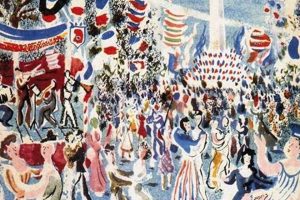
The events of July 14, 1789, in Paris, remain a pivotal point in French history. The storming of a medieval fortress marked a turning point during a period of widespread social and political unrest. This event, symbolic of the oppressive regime then in power, ignited a broader revolutionary movement.
The significance of this date extends beyond its immediate impact. It represents the triumph of popular will over authoritarian rule, establishing principles of liberty, equality, and fraternity as cornerstones of modern French identity. Commemorations and celebrations serve as a reminder of the ongoing pursuit of these ideals and their enduring value.
The ensuing sections will delve into the specific circumstances leading up to the assault, the key figures involved, and the long-term consequences for France and the wider world. Further examination will reveal the multifaceted nature of this historical occurrence and its continuing relevance in contemporary society.
Understanding the Significance
Examining the details surrounding the events of July 14, 1789, provides valuable perspectives on social upheaval, political transformation, and the enduring pursuit of liberty. These insights can inform contemporary understanding of similar events.
Tip 1: Recognize the Role of Symbolism: The physical structure itself, a prison rather than a military stronghold, held symbolic significance as a representation of royal authority and arbitrary imprisonment. Understanding symbolic targets is crucial in analyzing revolutionary movements.
Tip 2: Appreciate the Power of Popular Uprising: The events demonstrate the transformative potential of collective action when fueled by widespread discontent and a shared desire for change. Social cohesion in the face of oppression can yield unexpected results.
Tip 3: Analyze the Precursors to Revolution: Widespread economic hardship, social inequality, and political disenfranchisement created fertile ground for revolt. Identifying these underlying factors is essential for comprehending revolutionary triggers.
Tip 4: Understand the Impact of Communication: Rumors and pamphlets played a significant role in mobilizing the population. The dissemination of information, accurate or otherwise, can profoundly influence public opinion and incite action.
Tip 5: Consider the Long-Term Consequences: The event triggered a series of events that fundamentally altered the political landscape of France and Europe. Assessing the long-term ramifications of revolutionary actions is crucial for historical understanding.
Tip 6: Examine the Shifting Alliances: The initial coalition of revolutionaries comprised diverse groups with varying objectives. Recognizing the fluidity of alliances during periods of social upheaval is essential.
Tip 7: Appreciate the Role of Individuals: While a collective event, the actions of individuals shaped the outcome. Figures such as Camille Desmoulins spurred the public toward action.
By studying the circumstances surrounding this historical event, a greater understanding of social dynamics, political change, and the enduring pursuit of fundamental rights can be achieved. Its lessons continue to resonate in the present day.
The subsequent sections will explore the wider implications of the events, considering its influence on political thought and social reform movements across the globe.
1. Revolution

The storming of the Bastille on July 14, 1789, stands as a seminal event intricately interwoven with the broader context of the French Revolution. This act of insurrection directly catalyzed further revolutionary actions, serving as a potent symbol of defiance against monarchical authority and marking a decisive shift toward radical change.
- Catalyst for Uprising
The event acted as a galvanizing force, inspiring widespread popular uprisings throughout France. The success, however limited, in breaching the prison emboldened citizens to challenge existing power structures and demand systemic reform. Examples include peasant revolts in the countryside and the formation of revolutionary committees in various cities. The implications of this catalyzing effect was the shift from unrest to organized dissent, accelerating the revolution.
- Symbol of Overthrow
The storming held immense symbolic value as the prison represented royal tyranny and oppression. Its capture signified a dismantling of the old order and a tangible victory for the revolutionaries. This symbolism resonated deeply with the population, reinforcing their commitment to revolutionary ideals. The implications involved shifting the political and societal landscape, making the old traditions lose favour.
- Shift in Power Dynamics
The event directly challenged the absolute authority of the monarchy, demonstrating the power of the people to effect change through direct action. It forced the royal government to acknowledge the growing strength of the revolutionary movement and initiated a period of negotiation and compromise, albeit short-lived. The implications show how events influence the power between government and people and how quickly alliances can be forged and broken.
- Acceleration of Political Reform
The act precipitated a series of radical political reforms, including the abolition of feudalism and the declaration of the Rights of Man and of the Citizen. The momentum generated by the event propelled the revolution forward, paving the way for the establishment of a republic. A government for the people as opposed to having leaders lead the population through force.
In summation, the events on July 14 represent more than a mere incident; it became a defining moment in the French Revolution. Its impact extended far beyond the walls of the prison, shaping the course of French history and inspiring revolutionary movements worldwide. The event solidified its place as a key element in the revolutionary narrative, embodying the ideals of liberty, equality, and fraternity.
2. Oppression

The storming of the prison cannot be fully understood without acknowledging the pervasive oppression that characterized pre-revolutionary France. The fortress, though housing relatively few prisoners at the time, symbolized the arbitrary authority of the monarchy and the system of lettres de cachet, which allowed for imprisonment without due process. This perceived injustice, coupled with widespread social and economic inequality, fueled popular resentment and created a volatile environment ripe for revolt. The weight of taxation fell disproportionately on the Third Estate, while the privileged classes enjoyed exemption, exacerbating tensions and contributing to the sense of systemic unfairness. The importance of understanding oppression within this historical context lies in recognizing it as a primary driver of the revolutionary fervor that led to the events of July 14, 1789.
Examples of this oppression included the rigid social hierarchy that limited upward mobility for commoners, the control exerted by the aristocracy over land and resources, and the lack of political representation for the majority of the population. The legal system, often biased in favor of the nobility, further reinforced this sense of injustice. The Estates-General, convened in 1789 after a long hiatus, failed to adequately address these grievances, prompting the formation of the National Assembly and setting the stage for more radical action. The practical significance of understanding this dimension lies in its ability to illuminate the root causes of social unrest and the conditions under which populations are driven to challenge established power structures.
In summary, the association between oppression and this key historical moment is inseparable. Understanding the systematic injustices, the arbitrary use of power, and the profound social and economic inequalities provides crucial context for interpreting the motivations behind the events. While the assault was a singular episode, it represented the culmination of long-standing grievances and the rejection of an oppressive system, holding lessons for current events.
3. Liberty
The concept of liberty is central to interpreting the historical significance of the events. The storming was not merely an act of violence; it represented a forceful assertion of inherent rights and a rejection of arbitrary constraints imposed by the monarchy.
- Release from Arbitrary Detention
One of the primary motivations for the attack was to liberate prisoners held under lettres de cachet, royal warrants that permitted imprisonment without trial or legal justification. Releasing these individuals symbolized freedom from the king’s unchecked power and the right to due process. The implications for citizens was the assurance that their rights had to be honored.
- Assertion of Self-Governance
The revolutionaries sought not only individual freedom but also the collective liberty to govern themselves and determine their own laws. The act challenged the legitimacy of absolute monarchy and paved the way for the establishment of a constitutional government based on popular sovereignty. The establishment of laws voted on by representatives that would protect citizens rights and freedoms.
- Elimination of Feudal Obligations
The movement fueled the dismantling of the feudal system, which imposed significant restrictions on personal and economic freedom. Peasants and commoners sought liberation from feudal dues, labor obligations, and other constraints that limited their autonomy. The consequences of feudalism being the lack of financial mobility.
- Inspiration for Universal Rights
The ideals of liberty espoused by the revolutionaries influenced the Declaration of the Rights of Man and of the Citizen, a foundational document that proclaimed universal rights such as freedom of speech, freedom of religion, and equality before the law. This declaration became a cornerstone of modern human rights discourse. The shift into modern freedoms like the ability to speak freely and to worship as you wish.
Thus, the events should be viewed as a watershed moment in the struggle for liberty. It not only marked a turning point in French history but also served as an inspiration for movements seeking freedom and self-determination around the world. The pursuit of liberty, in its various dimensions, provides a critical lens through which to understand this historical event and its lasting legacy.
4. Symbolism
The events of July 14, 1789, are laden with symbolic significance, extending far beyond the immediate physical actions. These symbolic representations provided a potent rallying point for revolutionary sentiment and continue to shape the understanding of the French Revolution’s core ideals.
- The Prison as a Symbol of Tyranny
The physical structure itself, though housing few prisoners at the time of the assault, represented the oppressive nature of the monarchy. It symbolized arbitrary imprisonment and the absence of due process, embodying the injustices of the ancien rgime. The act of storming and seizing control of the prison communicated the revolutionaries’ intent to dismantle royal power. The act of tearing down a building to showcase the end of an era and way of life.
- The Storming as an Act of Defiance
The act of storming the prison was a tangible demonstration of popular resistance against royal authority. It symbolized the people’s willingness to challenge the established order and reclaim their inherent rights. The success of the assault, however limited in its immediate military impact, emboldened revolutionaries and sparked further uprisings across France. The people standing up and using their own power to influence and take back what they were owed.
- Liberation of Prisoners as a Symbol of Freedom
The release of the prisoners, regardless of their number or political significance, represented the liberation from unjust confinement and the promise of freedom. It symbolized the revolutionaries’ commitment to individual liberties and their rejection of arbitrary imprisonment. The people breaking other citizens out of imprisonment to symbolize that everyone deserves the ability to enjoy their freedom and rights.
- The Tricolore Flag as a Symbol of Revolution
While not directly connected to the initial event, the tricolore flag, soon adopted as the national flag of France, emerged as a potent symbol of the revolution’s ideals of liberty, equality, and fraternity. Its adoption represented a break with the royalist past and the embrace of a new, republican identity. Representing the nation of France as a symbol of how people came together to influence change.
The symbolism embedded within the events of July 14, 1789, transcends the historical moment, continuing to resonate in contemporary discussions of political power, social justice, and the pursuit of liberty. Understanding these symbolic dimensions is essential for fully appreciating the historical and cultural significance of the event and its lasting impact on French society and the broader world.
5. Justice

The concept of justice is inextricably linked to the events of July 14, 1789. The storming of the Bastille was, in essence, a demand for justice, fueled by years of perceived inequity and abuse under the ancien rgime. The system of lettres de cachet, which permitted arbitrary imprisonment, epitomized the lack of due process and fair treatment. The act of storming the prison was a direct challenge to this system, a forceful assertion that individuals should not be subjected to the whims of unchecked authority. Further fueling the sense of injustice was the vast disparity in wealth and privilege, with the Third Estate bearing the brunt of taxation while the nobility enjoyed exemptions. This economic inequality created a deep sense of resentment and a desire for a system where burdens were shared equitably.
The revolutionaries aimed to establish a system founded on principles of fairness and equality before the law. The Declaration of the Rights of Man and of the Citizen, adopted shortly after the Bastille’s fall, explicitly enshrined these principles, guaranteeing rights such as freedom of speech, freedom of religion, and the right to a fair trial. This document reflected a commitment to rectifying past injustices and creating a society where all citizens were treated with dignity and respect. The quest for justice extended beyond individual rights to encompass the dismantling of the feudal system, which imposed numerous obligations and restrictions on the peasantry. Abolishing feudal dues and labor requirements aimed to create a more equitable distribution of resources and opportunities. The revolutionaries viewed these reforms as essential steps toward building a just society.
In conclusion, the connection between the storming of the Bastille and the pursuit of justice is fundamental. The event was driven by a collective desire to redress past wrongs and establish a system where fairness and equality prevailed. While the revolution that followed was marked by its own complexities and challenges, the initial impetus was a profound demand for justice that continues to resonate as a cornerstone of modern democratic thought. The pursuit of a just society requires constant vigilance and a commitment to upholding the principles of fairness, equality, and due process for all.
6. Insurrection
The storming of the Bastille represents an act of insurrection against the French monarchy. This action, a direct and violent uprising, stemmed from a confluence of socio-economic and political grievances. Widespread discontent, fueled by perceived injustices and economic hardship, culminated in the decision to actively challenge royal authority. The decision to engage in such activity underscores the severity of the grievances felt by the populace and the extent to which they perceived the existing system as irredeemable.
The significance of the insurrection lies in its capacity to catalyze broader revolutionary change. The successful assault, however localized, demonstrated the vulnerability of the established power structure and emboldened others to engage in acts of defiance. Subsequent uprisings across France can be attributed, at least in part, to the momentum generated by this event. The formation of revolutionary committees and the widespread peasant revolts exemplify the practical effects of this initial act of insurrection. It served as a signal, indicating that resistance was possible and that the monarchy could be challenged.
The relationship between the historical event and the larger revolution is one of cause and effect. The insurrection provided the impetus for further radical actions. Understanding the context, motivations, and consequences of this initial uprising is crucial for comprehending the subsequent trajectory of the French Revolution and its enduring impact on political thought and social reform. The event serves as a reminder of the potential for popular unrest to disrupt established power structures and reshape the course of history.
Frequently Asked Questions Regarding the Historical Event
This section addresses common inquiries and misconceptions pertaining to the events that occurred in Paris on July 14, 1789.
Question 1: What was the primary purpose of storming the Bastille?
While the desire to acquire gunpowder and weapons played a role, the primary objective was to dismantle a symbol of royal tyranny and arbitrary imprisonment. The prison represented the unchecked authority of the monarchy.
Question 2: How many prisoners were actually held in the prison at the time of the assault?
Contrary to popular belief, only seven prisoners were incarcerated within the prison on that day. Their release, while significant, was primarily symbolic.
Question 3: Was the event a spontaneous act of mob violence, or was it organized?
The event involved elements of both spontaneity and organization. While the initial spark may have been spontaneous, revolutionary leaders and organized groups played a role in mobilizing the crowd and directing the assault.
Question 4: What were the immediate consequences of the assault on the prison?
The immediate consequences included the collapse of royal authority in Paris, the formation of the National Guard, and the acceleration of the revolutionary process. It ignited a wave of uprisings across France.
Question 5: How did the event influence the course of the French Revolution?
The act served as a pivotal turning point, signaling the beginning of the end for the ancien rgime and paving the way for radical social and political reforms. It emboldened revolutionaries and inspired similar actions elsewhere.
Question 6: What is the significance of the celebrations that take place annually on July 14th?
The celebrations commemorate the triumph of popular will over oppression and serve as a reminder of the values of liberty, equality, and fraternity. It represents a symbol of national unity and the enduring pursuit of democratic ideals.
In summation, the events of July 14th represent a complex and multifaceted historical occurrence with lasting implications for France and the world. Understanding the nuances of this event requires careful consideration of its political, social, and symbolic dimensions.
The subsequent section will delve into the enduring legacy of this event and its continuing relevance in contemporary society.
Conclusion
The preceding analysis of “the story of Bastille Day” has illuminated its multifaceted dimensions. From the tangible impact of an act of insurrection to the symbolic weight of liberty and justice, the events of July 14, 1789, serve as a crucial lens through which to understand the complexities of revolution and the enduring pursuit of fundamental human rights.
Continued reflection on this historical event is vital. Engaging with its lessons about societal oppression, the potential for transformative change, and the fragility of freedom equips individuals with a more nuanced understanding of the forces that shape contemporary society. Remembering “the story of Bastille Day” serves as a constant reminder of the importance of vigilance in safeguarding democratic principles and advocating for a just and equitable world.