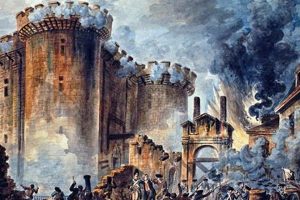
The event at the Bastille, a state prison in Paris, marked a pivotal moment in the French Revolution. This forceful seizure of the fortress on July 14, 1789, by revolutionary insurgents, while militarily insignificant in itself, carried immense symbolic weight. The Bastille represented royal authority and oppression, embodying the perceived injustices of the Ancien Rgime. Its fall signaled a direct challenge to the monarchy’s power.
The assault and capture of the Bastille had profound and far-reaching consequences. It demonstrated that the common people were willing to actively resist royal tyranny, inspiring revolutionary fervor throughout France and beyond. The event eroded the monarchy’s aura of invincibility and emboldened the National Assembly to pursue radical reforms. Furthermore, it spurred a wave of popular uprisings in the countryside, contributing to the dismantling of the feudal system and the establishment of a new political order.
The destruction of this infamous prison, therefore, became a powerful symbol of liberation and a defining moment in the fight for liberty, equality, and fraternity. It continues to be celebrated as a cornerstone of French national identity and a reminder of the struggle against despotic rule. The ensuing violence and upheaval, though complex and multifaceted, ultimately led to transformative changes in French society and politics.
Understanding its Legacy
Comprehending the significance of the Bastille’s storming necessitates an examination of its multifaceted impact on the French Revolution and subsequent historical developments. Several key points warrant careful consideration.
Tip 1: Recognize the Symbolism: The Bastille was more than just a prison; it represented the arbitrary power of the monarchy. Understanding this symbolic weight is crucial for grasping its importance.
Tip 2: Acknowledge the Catalyst Effect: The event ignited revolutionary fervor across France. Its influence extended beyond Paris, inspiring widespread uprisings and challenging the established order.
Tip 3: Assess the Impact on Royal Authority: The storming directly undermined the monarchy’s authority, demonstrating the populace’s willingness to actively resist. This erosion of power was instrumental in the revolution’s progress.
Tip 4: Consider the International Repercussions: The events in France resonated internationally, influencing revolutionary movements and inspiring calls for reform in other nations. Its impact transcended national borders.
Tip 5: Analyze the Role of Public Opinion: The public’s perception of the Bastille as a symbol of oppression was critical in galvanizing support for the revolution. Understanding the power of public sentiment is essential.
Tip 6: Evaluate the Long-Term Consequences: The storming paved the way for profound changes in French society, including the abolition of feudalism and the establishment of new political structures. Its legacy continues to shape French identity.
These considerations highlight the event’s complexity and its enduring significance as a turning point in European history. By analyzing these factors, a more nuanced understanding of its historical importance can be achieved.
Therefore, continuing to explore the French Revolution’s broader context will further illuminate the enduring legacy and complex repercussions of the Bastille’s seizure.

The assault on the Bastille and its subsequent capture directly and profoundly undermined the power and legitimacy of the French monarchy. The Bastille, a state prison, served as a stark symbol of the Crown’s capacity for arbitrary imprisonment and suppression of dissent. By successfully storming this fortress, the revolutionaries demonstrated that royal power was not absolute and could be challenged by the collective will of the people. This act of defiance significantly weakened the King’s perceived invincibility, fostering a climate of rebellion and encouraging further acts of resistance across the nation.
The practical significance of this undermining effect is evident in the events that followed. With the monarchy’s authority weakened, the National Assembly, emboldened by the popular uprising, gained the momentum necessary to pursue radical reforms. These reforms included the abolition of feudal privileges, the Declaration of the Rights of Man and of the Citizen, and ultimately, the establishment of a constitutional monarchy. Prior to the attack, such sweeping changes would have been inconceivable due to the King’s unassailable power. The storming thus acted as a crucial catalyst, transforming a simmering discontent into tangible political action and enabling the dismantling of the Ancien Rgime.
In conclusion, the undermining of royal authority was an intrinsic component of this event’s broader significance. It wasn’t merely a symbolic victory; it was a fundamental shift in the balance of power, creating the necessary conditions for the French Revolution to progress and ultimately reshape French society. Understanding this direct causal link between the Bastille’s fall and the weakening of monarchical power is essential for grasping the full historical weight and transformative impact of that pivotal day.
2. Symbol of Tyranny Destroyed
The destruction of the Bastille, a physical embodiment of monarchical tyranny, is inextricably linked to its overall historical importance. This act of destruction resonated deeply, exceeding the mere demolition of a building and instead becoming a potent symbol of liberation and the overthrow of oppression. The following facets detail how the destruction contributed to the event’s overall meaning.
- Elimination of Physical Oppression
The Bastille served as a prison, often holding political dissidents and those imprisoned by arbitrary royal decree. Its destruction physically removed a structure used for the direct suppression of individual liberties. This act signified a rejection of the King’s right to imprison citizens without due process and represented a tangible victory for personal freedom.
- Symbolic Defiance of Royal Power
The storming and destruction were a deliberate challenge to the King’s authority. The Bastille stood as a symbol of his power to control and punish, and its demise signaled a rejection of the monarchy’s legitimacy. This sent a clear message that the people were no longer willing to tolerate absolute rule and were prepared to take direct action to assert their rights.
- Inspiring Revolutionary Sentiment
The destruction of this oppressive symbol galvanized revolutionary sentiment across France and beyond. It demonstrated the possibility of overthrowing tyrannical regimes and inspired others to challenge established power structures. The event’s symbolic power fueled the revolutionary fervor and contributed to its spread throughout the country.
- Creation of a Lasting Legacy
The physical destruction of the Bastille ensured that it could no longer serve as a tool of oppression. More importantly, its dismantling created a powerful and enduring symbol of the struggle against tyranny. This legacy continues to inspire movements for freedom and justice around the world and serves as a reminder of the importance of resisting authoritarian rule.
The dismantling of this structure, therefore, transcended a mere act of violence. It resonated as a symbol, igniting a broader movement towards liberty and equality. This act remains a potent illustration of the collective will to dismantle oppressive systems, shaping the course of modern history.
3. Revolutionary fervor ignited

The storming of the Bastille acted as a potent catalyst, transforming simmering discontent into fervent revolutionary zeal. This surge in popular enthusiasm was instrumental in escalating the French Revolution and shaping its subsequent trajectory. The event provided a focal point for pre-existing grievances, galvanizing the populace and fueling a widespread desire for radical change.
- Demonstration of Popular Power
The successful assault on the Bastille, a symbol of royal authority, demonstrated to the French populace that the monarchy was not invincible and could be challenged. This realization empowered ordinary citizens, inspiring them to take direct action and demand political reform. The event served as a concrete example of the people’s ability to effect change, thereby boosting morale and encouraging further acts of rebellion.
- Unification of Disparate Groups
Prior to the storming, revolutionary sentiment existed in various forms across different social strata. The event at the Bastille served as a unifying force, bringing together disparate groups with shared grievances against the Ancien Rgime. Commoners, bourgeois intellectuals, and even some members of the clergy found common cause in the struggle against tyranny, creating a more cohesive and powerful revolutionary movement. This unified front amplified the demands for change and strengthened the resolve of the revolutionaries.
- Fueling the Spread of Revolutionary Ideas
News of the Bastille’s fall spread rapidly throughout France, disseminating revolutionary ideas and inspiring similar acts of rebellion in other cities and rural areas. The event became a symbol of hope and a rallying cry for those seeking to overthrow oppressive regimes. The spread of these ideas contributed to a broader awareness of the injustices of the Ancien Rgime and fueled a growing demand for liberty, equality, and fraternity. The press and emerging political clubs further amplified these messages, ensuring that revolutionary fervor reached even the most remote corners of the nation.
- Increased Participation in Revolutionary Activities
The ignited revolutionary fervor led to a significant increase in public participation in revolutionary activities. Citizens formed local militias, joined political clubs, and actively engaged in protests and demonstrations. This heightened level of engagement transformed the revolution from a movement led by a select few into a widespread popular uprising. The collective action of the people was crucial in sustaining the revolution and achieving its goals, including the abolition of feudalism and the establishment of a new political order.
These elements highlight how the storming of the Bastille transformed latent dissatisfaction into active revolutionary ardor. The event catalyzed popular mobilization, facilitated the spread of revolutionary ideology, and ultimately contributed to the dismantling of the Ancien Rgime. It remains a pivotal moment, illustrating the power of collective action in challenging and overthrowing oppressive structures.
4. Catalyst for wider revolt

The event at the Bastille holds profound historical importance, in part due to its function as a catalyst for wider revolt across France. While the storming itself involved a relatively small number of participants, its impact reverberated throughout the nation, igniting and amplifying pre-existing tensions and grievances against the Ancien Rgime. The fall of the Bastille acted as a signal, demonstrating the vulnerability of royal authority and emboldening populations in other regions to rise up against their local lords and representatives of the monarchy.
The “Great Fear,” a period of widespread panic and rural unrest that followed the event, exemplifies this catalytic effect. News of the Parisian uprising triggered rumors and anxieties among the peasantry, who feared aristocratic reprisals. This fear, coupled with long-standing economic hardship and resentment towards the feudal system, fueled attacks on manor houses and the destruction of records of feudal obligations. In essence, the storming of the Bastille provided the initial spark, while pre-existing socio-economic conditions served as the dry kindling that allowed the revolt to spread rapidly and extensively. Understanding this dynamic is crucial to grasp its full significance.
The transformation of localized grievances into a nationwide revolt directly contributed to the radicalization of the French Revolution. The initial demands for moderate reforms were soon overshadowed by calls for the abolition of the monarchy and the establishment of a republic. This escalation was in no small part due to the widespread popular mobilization ignited by the events in Paris. The wider revolt forced the National Assembly to confront the deep-seated inequalities within French society and to enact increasingly sweeping measures aimed at addressing the demands of the populace. Thus, the storming of the Bastilles importance lies not solely in the Parisian event, but its role in precipitating broader social and political upheaval across the entire nation.
5. Foundation for societal change

The event at the Bastille served as a foundational element for significant societal changes in France. Its importance extends beyond the immediate capture of a prison; it provided the impetus and the framework for dismantling the Ancien Rgime and constructing a new socio-political order. This connection is evident in the subsequent actions of the National Assembly, which were directly enabled by the shift in power dynamics following the storming. The attack demonstrated the vulnerability of royal authority, thus creating the necessary conditions for the Assembly to enact sweeping reforms that fundamentally altered French society.
Specifically, the abolition of feudalism, a cornerstone of the Ancien Rgime, was a direct consequence of the widespread peasant uprisings that followed the Bastille event. These uprisings, often violent and disruptive, pressured the National Assembly to address the deep-seated grievances of the peasantry. The Assembly’s decision to abolish feudal privileges on August 4, 1789, marked a radical departure from the existing social hierarchy and paved the way for a more egalitarian society. Furthermore, the Declaration of the Rights of Man and of the Citizen, adopted shortly thereafter, enshrined fundamental human rights and liberties, providing a philosophical framework for the new political order. These reforms, directly linked to the revolutionary fervor ignited by the storming, laid the groundwork for a society based on principles of equality, liberty, and popular sovereignty.
In summary, the storming of the Bastille’s relevance in history resides, not only within the symbolic act of capturing a prison, but predominantly in its crucial role as a catalyst for transformative societal change. It created the political space and the popular momentum necessary for the dismantling of the old order and the construction of a new one based on principles of individual rights and democratic governance. Understanding this connection underscores the event’s enduring importance as a pivotal moment in the history of France and as a powerful symbol of the potential for revolutionary change.
Frequently Asked Questions About the Storming of the Bastille’s Importance
The following questions address common inquiries concerning the significance of the storming of the Bastille, aiming to provide clarity on its multifaceted impact.
Question 1: Why is the storming of the Bastille considered a pivotal event in the French Revolution?
The storming, though militarily minor, symbolized a direct challenge to royal authority. Its success demonstrated the populace’s willingness to actively resist oppression, igniting revolutionary fervor and weakening the monarchy’s control.
Question 2: What role did the Bastille itself play in French society before its storming?
The Bastille functioned as a state prison, representing the arbitrary power of the monarchy to imprison individuals without due process. It served as a symbol of the Ancien Rgime’s oppressive policies and disregard for individual liberties.
Question 3: How did the storming of the Bastille influence events beyond Paris?
News of the successful storming spread rapidly throughout France, inspiring widespread uprisings and challenging the established order in other regions. It catalyzed the “Great Fear,” a period of rural unrest and peasant revolts against the feudal system.
Question 4: Did the storming of the Bastille immediately lead to the overthrow of the French monarchy?
While it did not immediately topple the monarchy, the storming significantly weakened its authority and emboldened the National Assembly to pursue radical reforms. It created a climate of rebellion and made the eventual overthrow of the monarchy more likely.
Question 5: What is the enduring symbolic meaning associated with the fall of the Bastille?
The event remains a powerful symbol of liberation, representing the triumph of the people over tyranny. It serves as a reminder of the importance of resisting oppressive regimes and fighting for freedom and equality.
Question 6: How does the storming of the Bastille continue to influence French national identity?
The storming of the Bastille is celebrated as a defining moment in French history, representing the nation’s commitment to liberty and its rejection of despotic rule. Bastille Day, commemorating the event, is a national holiday and a celebration of French national identity.
In conclusion, the responses highlight how this event acted as a crucial turning point in French history, profoundly shaping the trajectory of the revolution and impacting subsequent events.
Moving forward, further exploration into the French Revolution will build a deeper understanding of the complex repercussions and lasting influence of the seizure of the Bastille.
Conclusion
This exploration has sought to describe the significance of the storming of the Bastille, detailing its multifaceted impact on the French Revolution. The analysis has highlighted how this event, beyond its immediate military implications, served as a potent symbol of resistance against royal tyranny, igniting revolutionary fervor and undermining the authority of the monarchy. The assault acted as a catalyst for wider revolt across France, ultimately leading to the dismantling of the Ancien Rgime and paving the way for profound societal changes, including the abolition of feudalism and the enshrinement of human rights.
The fall of the Bastille remains a pivotal moment in the history of France, serving as a reminder of the enduring struggle for liberty and the transformative power of collective action. Continued reflection on this event and its broader context is essential for understanding the complexities of revolutionary movements and the ongoing pursuit of justice and equality in the modern world. The lessons learned from this historical event continue to resonate in contemporary struggles for freedom and self-determination across the globe.



![Bastille Storm's Impact: What Was the Outcome? [Explained] | Hubbastille: Explore the Fusion of Culture, Music & Creativity](https://hubbastille.com/wp-content/uploads/2026/01/th-33-300x200.jpg "Bastille Storm's Impact: What Was the Outcome? [Explained] Hubbastille: Explore the Fusion of Culture, Music & Creativity")