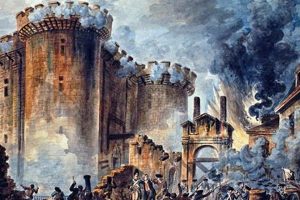
The events of July 14, 1789, at a Parisian fortress, represent a pivotal moment in the French Revolution. This event, though involving a relatively small-scale military engagement, quickly escalated into a symbolic act of defiance against royal authority and aristocratic oppression. The capture of the structure, which held only a handful of prisoners at the time, was less about liberating individuals and more about securing gunpowder and signaling open rebellion against the established order.
The importance of the incident lies primarily in its profound psychological impact. It demonstrated the vulnerability of the monarchy and emboldened the revolutionary fervor that was sweeping across France. The successful assault on a symbol of royal power shattered the aura of invincibility surrounding King Louis XVI and fueled the flames of popular unrest. This empowered the National Assembly, giving them increased legitimacy and momentum to pursue radical reforms. The subsequent dismantling of the fortress itself further served as a powerful visual representation of the crumbling old regime.
Therefore, this occurrence stands as a watershed moment, initiating a period of profound societal transformation. It marked the beginning of a trajectory toward the dismantling of feudal structures, the declaration of human rights, and the eventual establishment of a republic, forever altering the course of French history and inspiring revolutionary movements worldwide.
Understanding the Enduring Relevance
To grasp the magnitude, several key points should be considered.
Tip 1: Recognize Symbolic Significance: The location itself served as a representation of royal authority and the arbitrary power of the monarchy. Its capture signified a direct challenge to the established order, regardless of the limited number of prisoners held within.
Tip 2: Understand the Role of Popular Uprising: The event demonstrated the power of collective action. The people of Paris, through their direct involvement, proved capable of confronting and overcoming the forces of the monarchy, fostering a sense of empowerment.
Tip 3: Analyze the Catalyst for Change: The act provided the revolutionary movement with much-needed momentum. It galvanized public opinion, emboldened the National Assembly, and paved the way for radical political and social reforms.
Tip 4: Trace the Ripple Effect: This action triggered a series of events that ultimately led to the dismantling of the feudal system, the Declaration of the Rights of Man and of the Citizen, and the establishment of a republic. Its influence resonated far beyond the borders of France.
Tip 5: Appreciate the Enduring Legacy: It continues to serve as a potent symbol of resistance against oppression and a testament to the power of the people to effect profound change. Its memory inspires movements for social justice and political reform across the globe.
Tip 6: Distinguish Myth from Reality: While romanticized, it is important to understand the actual events. It was not a perfectly executed military operation, but rather a chaotic and desperate act fueled by a mixture of hope and fear.
By understanding these points, one can fully appreciate the multifaceted importance.
Considering these insights allows for a more nuanced and complete comprehension of its role in shaping modern political thought and revolutionary action.
1. Symbol of Royal Tyranny

The Bastille, prior to its storming, functioned as a potent symbol of royal tyranny in pre-revolutionary France. Its existence as a state prison, where individuals could be incarcerated based on royal decree (lettres de cachet) without due process, embodied the arbitrary and unchecked power of the monarchy. This association significantly amplified the event’s meaning beyond a mere prison break.
- Arbitrary Imprisonment
The Bastille primarily housed individuals deemed enemies of the state, political dissidents, and those who had fallen out of favor with the ruling elite. The lettres de cachet allowed for imprisonment without trial or legal recourse, highlighting the absence of justice and the vulnerability of citizens to the king’s whims. This fostered widespread resentment and fear.
- Fortress of Oppression
The physical structure of the Bastille, with its imposing walls, towers, and armed guards, served as a constant reminder of the monarchy’s military might and its willingness to use force to suppress dissent. Its location in the heart of Paris further emphasized the king’s control over the city and its inhabitants, acting as a visual deterrent to potential rebellion.
- Royal Authority Embodied
The governor of the Bastille, a direct representative of the king, held absolute authority within its walls. This figure symbolized the monarchy’s control over the judicial system and its ability to bypass established legal procedures. The storming thus became an act of defiance against this direct representation of royal power.
- Concentration of Power
The Bastille represented a concentration of power within the monarchy. Its existence illustrated the systemic imbalance of power between the king and the people, fueling demands for greater representation and accountability. The desire for a more equitable distribution of power was a central driving force behind the revolution.
The storming of a structure representing royal tyranny was itself a symbolic rejection of the entire system of absolute monarchy. It was less about the physical liberation of a few prisoners and more about challenging the ideology of unchecked authority and arbitrary rule. This transformation of the Bastille into a symbol of popular resistance is what cemented its enduring significance in the history of the French Revolution.
2. Catalyst for Revolution
The events at the Bastille on July 14, 1789, served as a pivotal impetus for the burgeoning French Revolution. While underlying socio-economic and political tensions had been simmering for years, the action provided the critical spark that transformed simmering discontent into open rebellion. It galvanized disparate groups and propelled the revolution into a new phase of radical change.
- Escalation of Popular Uprising
Prior to the event, popular unrest was largely confined to localized protests and scattered acts of defiance. The successful assault on the Bastille, however, demonstrated the vulnerability of royal power and inspired widespread uprisings throughout France. News of the event spread rapidly, emboldening citizens in other cities and rural areas to challenge local authorities and demand reforms. The incident thus acted as a catalyst, accelerating the momentum of the revolution.
- Undermining Royal Authority
The structure was a symbol of royal authority and the king’s ability to arbitrarily imprison his subjects. Its capture effectively undermined the perceived legitimacy and invincibility of the monarchy. The fact that the citizenry could successfully attack and seize a royal fortress emboldened the National Assembly and other revolutionary bodies to assert their authority and challenge the king’s power. This erosion of royal authority was a crucial step in the transition towards a more democratic form of government.
- Radicalization of Political Discourse
The act shifted the political discourse from calls for moderate reforms to demands for more radical change. The success fueled the belief that fundamental societal transformation was possible. This radicalization led to increased support for the abolition of feudal privileges, the establishment of a constitutional monarchy, and ultimately, the creation of a republic. The incident thus contributed to a more revolutionary political climate.
- Inspiration for Revolutionary Action
The events at the Bastille inspired revolutionary movements beyond France’s borders. News of the successful uprising resonated with populations suffering under oppressive regimes, demonstrating that even the most powerful institutions could be challenged and overthrown. The action became a symbol of resistance against tyranny, contributing to the spread of revolutionary ideals across Europe and the Americas. The act’s legacy as a catalyst for revolutionary action continues to influence political movements today.
The connection between the storming and its function as a catalyst for revolution stems from its symbolic power and its concrete demonstration of popular agency. It not only sparked immediate action but also fundamentally altered the political landscape, accelerating the trajectory towards radical societal change and inspiring revolutionary movements worldwide.
3. Popular Uprising's Power

The successful assault on the Bastille underscores the potency of collective action in challenging established authority and precipitating societal transformation. The event, more than a simple prison break, demonstrated the capacity of ordinary citizens to confront and dismantle symbols of oppression, fundamentally altering the course of the French Revolution.
- Demonstration of Collective Agency
Prior to the incident, the common populace was largely perceived as passive subjects of the monarchy. The storming shattered this perception, revealing the power of coordinated action. Citizens from various social strata united to challenge the established order, demonstrating that collective will could overcome the might of the state. This display of agency empowered individuals and fueled demands for greater political participation.
- Legitimization of Revolutionary Demands
The success of the act provided tangible evidence of the monarchy’s vulnerability and lent credibility to the revolutionary cause. The event validated the grievances of the Third Estate and strengthened their resolve to pursue radical reforms. The seizure of a symbol of royal authority amplified their demands for representation, justice, and an end to aristocratic privilege, forcing the monarchy to confront the growing power of the people.
- Empowerment of Marginalized Groups
The storming was not orchestrated by established political elites but rather by ordinary Parisians, including artisans, shopkeepers, and laborers. This demonstrated that political change could be driven from the bottom up, empowering marginalized groups and giving them a voice in shaping the future of the nation. It challenged the traditional power structures and paved the way for broader social and political inclusion.
- Inspiration for Future Revolutions
The success of the uprising served as an inspiration for revolutionary movements across the globe. It demonstrated that popular resistance could effectively challenge oppressive regimes and achieve meaningful political change. The event became a symbol of hope for those seeking liberation from tyranny, inspiring movements for social justice and national self-determination throughout the 19th and 20th centuries. It also offered a roadmap, however simplified, for how to effectively challenge the status quo through widespread, coordinated action.
The connection between popular uprising and the significance of the assault highlights the transformative potential of collective action. The event not only marked a turning point in the French Revolution but also continues to resonate as a testament to the power of ordinary citizens to challenge oppression and shape the course of history. Its legacy lies in its enduring demonstration of how organized, purposeful action can overcome even the most entrenched power structures.
4. Empowerment of the People

The assault on the Bastille directly correlates with the empowerment of the French populace. Prior to this event, the prevailing societal structure placed power almost exclusively in the hands of the monarchy and the aristocracy. Citizens, largely excluded from political decision-making, lacked the means to effectively challenge the ruling class. The storming represented a tangible shift in this dynamic, demonstrating to the people their collective capacity to influence the course of events.
The act of successfully seizing a symbol of royal authority emboldened ordinary citizens to demand greater participation in government and a more equitable distribution of power. It fostered a sense of collective identity and purpose, uniting individuals from diverse social backgrounds in a common cause. For instance, the formation of citizen militias following the incident highlights this newfound sense of agency, as individuals actively took responsibility for their own security and the defense of revolutionary ideals. This newfound power extended beyond the immediate aftermath, influencing the drafting of the Declaration of the Rights of Man and of the Citizen, a document enshrining fundamental rights and liberties previously denied to the majority of the population.
Understanding this connection is vital for comprehending the enduring importance. It reveals the transition from a system where power was concentrated in the hands of a few to one where citizens actively shaped their own destiny. This empowerment, while initially met with resistance and challenges, laid the foundation for a more democratic and representative society. The storming’s significance thus extends beyond the immediate event, underscoring the transformative potential of a populace recognizing and exercising its collective power.
5. Undermining Royal Authority

The assault on the Bastille carries significance, in large measure, due to its direct impact on royal authority. The event challenged the perceived invincibility of the monarchy and fundamentally altered the power dynamics within French society.
- Symbolic Defiance
The Bastille represented the king’s power to imprison subjects arbitrarily. Its capture was a direct act of defiance against this power. This symbolic challenge resonated deeply with the French population, signaling that the monarchy was not unassailable. The very act of attacking a royal fortress significantly weakened the king’s aura of authority.
- Loss of Control
The monarchy’s inability to effectively defend the Bastille demonstrated a loss of control over the capital and its own military forces. The fact that royal troops were unable or unwilling to suppress the uprising highlighted the extent of popular discontent and the monarchy’s declining grip on power. This public display of weakness fueled further rebellion.
- Empowerment of Revolutionary Forces
The successful assault emboldened the National Assembly and other revolutionary bodies to assert their authority. The event provided these groups with increased legitimacy and momentum, allowing them to challenge royal decrees and push for radical reforms. The weakening of royal authority directly strengthened the hand of those seeking to dismantle the old regime.
- Erosion of Legitimacy
The failure to protect the Bastille contributed to a broader erosion of the monarchy’s legitimacy in the eyes of the French people. The king’s perceived weakness and inability to maintain order led to widespread questioning of his right to rule. This decline in legitimacy paved the way for the eventual abolition of the monarchy and the establishment of a republic.
The undermining of royal authority was a critical factor in the unfolding of the French Revolution. By challenging the king’s power and eroding his legitimacy, the storming of the Bastille created the conditions necessary for the overthrow of the monarchy and the establishment of a new political order.
6. Declaration of Rights

The Declaration of the Rights of Man and of the Citizen, a foundational document of the French Revolution, holds a direct and significant relationship to the events at the Bastille. The storming, acting as a catalyst for radical change, created the environment in which the declaration could be conceived, drafted, and ultimately adopted. The following points elucidate this crucial connection.
- Legitimizing the Demand for Rights
The successful seizure of the fortress demonstrated the vulnerability of the monarchy and empowered the Third Estate to assert its demands for political and social reform. The act of rebellion legitimized the call for a formal declaration of rights, shifting it from a theoretical ideal to a practical necessity. It created a space where previously suppressed voices could articulate their grievances and propose concrete solutions.
- Embodying the Spirit of Liberty
The storming itself became a symbol of liberty and resistance against oppression, embodying the very principles that the Declaration sought to codify. The courage and determination displayed by the Parisians in challenging royal authority directly inspired the drafting of provisions guaranteeing individual freedoms, such as freedom of speech, religion, and assembly. The Declaration aimed to translate the spirit of rebellion into concrete legal protections.
- Shaping the Content of the Declaration
The experiences and grievances that fueled the assault on the Bastille directly influenced the content of the Declaration. The document addressed many of the injustices that had contributed to the revolutionary fervor, including arbitrary imprisonment, inequality before the law, and lack of representation. The Declaration sought to dismantle the structures of oppression that the Bastille had come to represent.
- Providing a Foundation for a New Order
The storming of the Bastille marked the beginning of the end of the ancien rgime and the dawn of a new political order. The Declaration provided the philosophical and legal framework for this new order, articulating the fundamental rights and liberties upon which a just and equitable society could be built. It served as a blueprint for a government based on the principles of popular sovereignty and the protection of individual rights.
The storming acted as the spark that ignited the French Revolution, while the Declaration provided a roadmap for the new society that would emerge from the ashes of the old. The events at the Bastille created the necessary conditions for the Declaration to be conceived and adopted, and the Declaration, in turn, sought to enshrine the principles of liberty, equality, and fraternity that had motivated the storming in the first place. The document’s lasting impact underscores the importance of understanding the relationship between revolutionary action and the codification of human rights.
7. Inspiration for Liberty
The storming of the Bastille, beyond its immediate impact on the French Revolution, serves as an enduring source of inspiration for movements pursuing liberty and self-determination across the globe. The event’s symbolic power transcends its historical context, representing the potential for oppressed peoples to challenge and overcome tyrannical rule.
- Symbol of Resistance to Oppression
The Bastille, as a state prison, became a symbol of arbitrary royal power. The storming transformed it into a symbol of resistance against oppression, illustrating that even seemingly impregnable structures of power can be challenged by collective action. This symbolic transformation inspires those fighting against unjust systems, offering a tangible example of successful defiance.
- Model for Revolutionary Action
While the details of the assault were chaotic and unplanned, the event provides a general model for revolutionary action. It demonstrates the potential for popular uprisings to destabilize authoritarian regimes and force concessions. This has influenced revolutionary movements throughout history, providing a source of strategic inspiration, though not necessarily a precise blueprint.
- Validation of Popular Sovereignty
The assault highlighted the power of the people to shape their own destiny, validating the principle of popular sovereignty. By directly challenging royal authority, the storming affirmed the idea that legitimate power derives from the consent of the governed. This validation has inspired movements advocating for democratic governance and the right of self-determination.
- Catalyst for Universal Rights
The subsequent Declaration of the Rights of Man and of the Citizen, inspired in part by the storming, established universal principles of liberty, equality, and fraternity. These principles have resonated globally, inspiring movements for human rights and social justice. The connection between the assault and the declaration demonstrates the potential for revolutionary action to lead to the articulation and protection of fundamental human rights.
The storming’s significance lies not only in its historical context but also in its enduring capacity to inspire those seeking liberty. It serves as a reminder that oppressive systems are not invincible and that collective action, driven by the pursuit of freedom, can effect profound societal change. Its power as a symbol and model continues to shape movements for liberation and self-determination around the world.
Frequently Asked Questions
The following addresses commonly asked questions concerning the historical importance of the July 14, 1789 event.
Question 1: Why is the storming considered so important despite the low number of prisoners held there?
The value lies in its symbolic impact, not the liberation of inmates. It represented a direct challenge to royal authority and sparked widespread revolutionary fervor throughout France.
Question 2: Was it a carefully planned military operation?
Contrary to some romanticized accounts, it was largely a spontaneous and disorganized event driven by desperation and a desire for gunpowder, not a meticulously planned assault.
Question 3: How did it contribute to the French Revolution’s success?
It provided the revolution with critical momentum, undermining the monarchy’s perceived invincibility and emboldening the National Assembly to pursue radical reforms.
Question 4: Did it influence other revolutionary movements worldwide?
Yes, the storming served as an inspiration for movements against oppression and autocracy globally, demonstrating the potential of popular uprisings to effect political change.
Question 5: Did the event lead directly to the Declaration of the Rights of Man and of the Citizen?
While not a direct cause, it created the environment in which the declaration could be conceived and adopted. The document reflected the spirit of liberty and resistance that fueled the uprising.
Question 6: What lasting impact does this event have today?
It remains a potent symbol of resistance against tyranny and a reminder of the power of ordinary citizens to challenge established authority and shape their own destiny. It continues to resonate in movements for social justice and political reform worldwide.
In conclusion, this event is more than just a historical footnote; its lasting impact shapes our understanding of resistance, rights, and the power of collective action.
Having explored these key aspects, the discussion now shifts to exploring further implications and related historical contexts.
Conclusion
The exploration has detailed “what is the significance of the storming of the bastille,” moving beyond a simple recounting of events to illuminate its profound and multifaceted impact. The analysis demonstrates that it was more than a prison break; rather, it served as a catalyst for the French Revolution, a symbol of resistance against tyranny, and a validation of popular sovereignty. The subsequent Declaration of Rights, the undermining of royal authority, and the empowerment of the French populace all stem, directly or indirectly, from this watershed moment.
Therefore, the storming warrants continued study and reflection. It remains a potent reminder of the enduring struggle for liberty and the capacity of collective action to shape the course of history. Its lessons, though rooted in the past, hold relevance for contemporary challenges to democratic principles and the pursuit of social justice globally. The memory of the Bastille serves as a call to vigilance in the protection of fundamental rights and the unwavering pursuit of a more just and equitable world.



![Bastille Storm's Impact: What Was the Outcome? [Explained] | Hubbastille: Explore the Fusion of Culture, Music & Creativity](https://hubbastille.com/wp-content/uploads/2026/01/th-33-300x200.jpg "Bastille Storm's Impact: What Was the Outcome? [Explained] Hubbastille: Explore the Fusion of Culture, Music & Creativity")