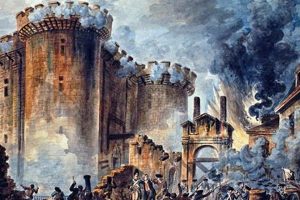
The seizure of the Bastille, a medieval fortress and prison in Paris, by a mob of Parisians on July 14, 1789, was a pivotal moment in the French Revolution. It represented a culmination of escalating tensions and widespread discontent within French society. The event symbolized the beginning of the end for the absolute monarchy of Louis XVI and the aristocratic privileges that had defined the Ancien Rgime.
Several factors contributed to the uprising. A severe economic crisis, marked by food shortages and soaring bread prices, fueled popular resentment toward the ruling class. The perception of governmental mismanagement and inequitable taxation further exacerbated the situation. Moreover, the dismissal of Jacques Necker, a popular finance minister perceived as sympathetic to the common people, ignited fears of a royal crackdown on reform efforts. The Bastille, viewed as a symbol of royal authority and oppression, became the focal point for this accumulated anger and frustration.
The action taken against the prison was not simply a spontaneous outburst. It was a deliberate attempt to seize gunpowder and weapons stored within its walls, resources deemed essential for protecting the city against potential royalist repression. The successful assault emboldened revolutionaries and signaled the monarchy’s vulnerability, thus galvanizing broader support for revolutionary ideals and accelerating the trajectory toward a more democratic France.
Understanding the Fall of the Bastille
Comprehending the events surrounding this historical turning point requires careful consideration of multifaceted factors. Analysis of these points enables a more informed perspective on the underlying causes and far-reaching consequences of the event.
Tip 1: Examine the Social and Economic Context: Investigate the prevailing social hierarchy and economic disparities within pre-revolutionary France. The vast gap between the privileged aristocracy and the impoverished commoners fueled significant resentment. High food prices, especially bread, contributed to widespread starvation and unrest.
Tip 2: Analyze the Role of Enlightenment Ideals: Understand the influence of Enlightenment philosophies emphasizing individual rights, liberty, and equality. These ideas challenged the legitimacy of the absolute monarchy and inspired calls for political reform.
Tip 3: Assess the Weaknesses of the Monarchy: Consider the leadership failures of Louis XVI and the perceived extravagance of the royal court. The monarchy’s inability to address the pressing economic and social problems contributed to its declining authority.
Tip 4: Research the Significance of Jacques Necker’s Dismissal: Evaluate the impact of the finance minister’s removal. It triggered fears of royalist suppression of reform efforts, escalating tensions and prompting citizens to take action.
Tip 5: Study the Symbolic Importance of the Bastille: Recognize that it was not merely a prison but a symbol of royal authority and oppression. Seizing the Bastille signified a direct challenge to the monarchy’s power and galvanized the revolutionary movement.
Tip 6: Investigate the Military Aspects of the Assault: Understand that the Parisians sought weapons and gunpowder stored within the Bastille to defend themselves against potential royalist counterattacks. This demonstrates that the actions were more than just a symbolic gesture of defiance.
Tip 7: Acknowledge the Broader Consequences: Appreciate that the capture of the Bastille served as a catalyst for widespread revolution. This victory signaled the monarchy’s vulnerability and encouraged further uprisings across France. The ramifications extended beyond France, influencing revolutionary movements worldwide.
By carefully considering these insights, a deeper appreciation can be gained for the complexities that precipitated the storming of the Bastille and its subsequent role in shaping the course of French and global history.
1. Royal Authority Symbol

The Bastille’s function as a representation of royal authority was a central reason for its selection as a target. It was not merely a prison; its imposing structure and historical association with royal decrees symbolized the King’s power and the arbitrary nature of justice under the Ancien Rgime. Political prisoners, though few in number at the time of the assault, had been held within its walls, reinforcing its image as a place of unjust confinement and a symbol of monarchical oppression. The act of attacking the fortress was, therefore, a direct challenge to the legitimacy and authority of the Crown. The very stones of the Bastille stood as a physical manifestation of royal power, and its destruction became a powerful symbolic act.
Examples of the Bastille’s symbolic function are evident in pre-revolutionary pamphlets and public discourse. It was frequently cited as an example of the King’s ability to imprison citizens without due process. Its military garrison further reinforced its status as an arm of royal power. This perception was not solely based on reality but on the accumulated resentment and anxieties of the Parisian populace, fueled by economic hardship and political exclusion. The practical significance of understanding this lies in recognizing that the attack was not simply a quest for weapons but a concerted effort to dismantle the symbols of oppression and reclaim control from the monarchy.
In summary, the Bastille’s role as a representation of royal authority was a critical factor motivating the Parisians to storm it. It encapsulated the grievances against the monarchy and provided a tangible target for revolutionary action. The successful assault delivered a powerful message: royal authority was no longer absolute and could be challenged by the will of the people. Understanding this connection is crucial for grasping the true depth and significance of this iconic event in French history. This act subsequently inspired similar challenges to established powers throughout Europe and the world.
2. Economic Hardship

Economic hardship in pre-revolutionary France significantly contributed to the unrest culminating in the seizure of the Bastille. Widespread poverty, coupled with rising food prices and inequitable taxation, fostered deep resentment among the Parisian populace, creating a volatile atmosphere conducive to revolutionary action. These economic pressures served as a primary catalyst for the events of July 14, 1789.
- Soaring Bread Prices
The price of bread, a staple food for the majority of Parisians, reached exorbitant levels in the years leading up to the revolution. Poor harvests and inefficient distribution systems resulted in widespread shortages, driving prices beyond the reach of many. This scarcity sparked food riots and fueled anger towards the monarchy, which was perceived as indifferent to the plight of the common people. The desperation caused by hunger played a direct role in motivating Parisians to take radical action.
- Unemployment and Poverty
Paris was rife with unemployment and poverty, particularly among the working class. Economic policies favored the aristocracy, leaving many Parisians without sufficient means to support themselves and their families. This economic insecurity led to social unrest and a willingness to challenge the established order. The promise of potential improvement, even through violent means, resonated with a population facing dire circumstances.
- Inequitable Taxation System
The French taxation system placed a disproportionate burden on the Third Estate, which included the commoners and bourgeoisie, while the nobility and clergy enjoyed significant exemptions. This perceived injustice further aggravated economic hardship and fueled resentment toward the privileged classes. The belief that the system was rigged against the common people added to the impetus for revolutionary change.
- Government Debt and Mismanagement
The French monarchy was deeply in debt, largely due to extravagant spending and costly wars. This financial crisis led to increased taxation and austerity measures that disproportionately affected the poor. Government mismanagement and a lack of effective economic policies exacerbated the existing hardships, contributing to the overall sense of frustration and desperation among the Parisian population.
The interplay of soaring bread prices, unemployment, an inequitable taxation system, and government mismanagement created a perfect storm of economic hardship in pre-revolutionary France. These factors directly influenced the actions of Parisians leading up to and during the assault. The hope for economic relief and a more just society were key motivators that prompted them to challenge royal authority. Therefore, economic hardship stands as a critical element in understanding the events surrounding the storming of the Bastille.
3. Political Discontent

Political discontent in pre-revolutionary France was a significant underlying factor that contributed directly to the populace’s decision to seize the Bastille. Widespread dissatisfaction with the absolute monarchy, lack of representation, and perceived injustice within the political system fueled a desire for change. This profound unease provided the ideological foundation for the uprising.
- Absence of Representation
The Estates-General, a representative assembly, had not been convened for over 175 years, denying the Third Estate (commoners) a meaningful voice in government. Decisions were made by the monarchy and the privileged classes (nobility and clergy) without the consent or consideration of the majority of the population. This lack of political participation fostered a sense of alienation and resentment among the commoners, who felt powerless to address their grievances through legitimate channels. This feeling further motivated direct action against symbols of royal authority.
- Abuse of Royal Power
The King possessed absolute authority, exercising unchecked power through royal decrees and lettres de cachet, which allowed for arbitrary arrest and imprisonment. This abuse of power, perceived as unjust and oppressive, generated widespread fear and distrust of the monarchy. The Bastille, a prison where individuals could be incarcerated without trial, became a potent symbol of this abuse, embodying the arbitrary and capricious nature of royal authority. The storming of the Bastille was a direct response to what was perceived as illegitimate authority.
- Influence of Enlightenment Ideals
Enlightenment philosophers advocated for individual rights, liberty, and equality, challenging the legitimacy of absolute monarchy and hereditary privilege. These ideals resonated with the educated members of the Third Estate, who increasingly questioned the traditional social and political order. The call for popular sovereignty and representative government provided a philosophical justification for revolution and emboldened citizens to demand political reform. Dissemination of enlightenment ideals created an intellectual framework for action.
- Failure of Reform Efforts
Attempts at political and economic reform by moderate figures like Jacques Necker were often thwarted by resistance from the privileged classes and the King himself. This failure to address the systemic problems facing France through peaceful means fueled a sense of desperation and convinced many that radical action was necessary to achieve meaningful change. The dismissal of Necker, in particular, served as a catalyst, signaling a return to authoritarian rule and prompting Parisians to take matters into their own hands.
The political discontent stemming from these factors created a fertile ground for revolution. The Bastille, as a symbol of royal authority and oppression, became a focal point for this discontent. The storming of the Bastille represented not only a desire for weapons and gunpowder but also a rejection of the existing political order and a demand for a more just and representative government. The cumulative impact of these issues contributed significantly to the decision by Parisians to challenge royal authority through direct action and ultimately sparked the French Revolution.
4. Seizure of Arms

The need to acquire weapons and gunpowder was a primary, practical motivation driving the assault on the Bastille. While the fortress held symbolic significance, the Parisians’ immediate concern centered on defending themselves against potential royalist repression. Rumors circulated that the King intended to use military force to suppress the growing unrest in Paris, making the acquisition of arms a crucial strategic imperative. The Bastille was known to store a significant quantity of gunpowder and weaponry, rendering it a vital target for those seeking to arm themselves and protect the city.
The Invalides, a military hospital, had already been raided earlier that day, yielding some arms, but the Parisians still lacked sufficient gunpowder to effectively defend against a potential royalist attack. The Bastille’s stores represented a critical resource for the revolutionaries. Eyewitness accounts from the time emphasize the insistent demands for gunpowder as a central reason for the siege. The governor of the Bastille initially resisted these demands, leading to escalating tensions and ultimately to the violent confrontation. The fact that the crowd was composed not only of political agitators but also of ordinary citizens seeking self-defense highlights the widespread fear of royalist reprisal. The capture of the gunpowder at the Bastille demonstrably increased the revolutionaries’ capacity to resist the monarchy and emboldened them to pursue further revolutionary actions.
In summary, the seizure of arms was not merely a secondary objective but an integral component of the decision to storm the Bastille. The Parisians acted out of a perceived necessity to defend themselves against potential royalist aggression, making the acquisition of weapons and gunpowder a strategic imperative. This motivation, coupled with the Bastille’s symbolic significance, explains the ferocity and determination with which the assault was carried out. Understanding this practical aspect provides critical insight into the motivations of the Parisian populace and the broader context of the French Revolution.
5. Catalyst for Revolution
The action undertaken by Parisians against the Bastille served as a significant catalyst, accelerating the French Revolution from a period of simmering discontent to open revolt. The event’s direct effect was to embolden revolutionary sentiment across France and demonstrate the monarchy’s vulnerability. It transformed localized grievances into widespread rebellion, thereby setting in motion a chain of events that irrevocably altered the course of French history.
The taking of the Bastille provided a tangible victory for the revolutionaries, fostering a sense of empowerment and demonstrating that the monarchy could be challenged. This success inspired similar uprisings in other cities and rural areas, as local populations sought to replicate the Parisian example and assert their own demands for reform. News of the event spread rapidly, fueling popular mobilization and undermining the authority of royal officials throughout the country. The event facilitated the formation of revolutionary militias and local governments, further weakening royal control. The storming also triggered a wave of emigration by aristocrats, weakening the monarchy politically and financially.
In summary, The act became a potent symbol of popular resistance and a rallying point for revolutionary forces. Its importance lies not only in its immediate consequences but also in its long-term impact on the French Revolution. It remains a powerful reminder of the capacity for collective action to challenge established power and transform society. Understanding it as a catalyst is vital for grasping the overall trajectory of the French Revolution and its influence on subsequent revolutionary movements globally.
Frequently Asked Questions
This section addresses common queries regarding the events of July 14, 1789, offering concise and fact-based answers to provide clarity on the historical context and motivations behind this pivotal moment in the French Revolution.
Question 1: Was the Bastille primarily stormed to free political prisoners?
The number of prisoners held within the Bastille at the time of its seizure was relatively small; it held seven prisoners. While freeing these prisoners was a symbolic act, the primary objective was to acquire gunpowder and weapons stored within the fortress to defend against potential royalist suppression of revolutionary activity.
Question 2: How significant was economic hardship in motivating the attack?
Economic hardship played a critical role. Soaring bread prices, widespread unemployment, and an inequitable taxation system created immense suffering among the Parisian populace. This economic desperation fueled resentment toward the monarchy and the privileged classes, driving many to participate in the assault.
Question 3: Did Enlightenment ideals influence the decision to storm the Bastille?
Enlightenment ideals advocating for individual rights, liberty, and equality profoundly influenced revolutionary sentiment. These philosophies challenged the legitimacy of absolute monarchy and inspired calls for political reform, providing an intellectual framework for challenging royal authority.
Question 4: What symbolic value did the Bastille hold?
The Bastille served as a potent symbol of royal authority and oppression. Its imposing structure and history as a royal prison embodied the arbitrary and unjust nature of the Ancien Rgime. Attacking it represented a direct challenge to the monarchy’s power and a symbolic act of defiance.
Question 5: Was the storming of the Bastille a spontaneous event?
While the immediate events leading to the attack may have appeared spontaneous, the action was rooted in years of accumulated grievances and growing revolutionary fervor. The dismissal of Jacques Necker, coupled with rumors of royalist repression, acted as a catalyst, prompting Parisians to take decisive action.
Question 6: What impact did the event have on the French Revolution?
The fall served as a catalyst for broader revolutionary action. It demonstrated the monarchy’s vulnerability, emboldened revolutionaries, and inspired similar uprisings throughout France. It remains a pivotal event, signaling the beginning of the end for the Ancien Rgime and ushering in a new era of political and social change.
In conclusion, it was driven by a combination of factors, including the pursuit of arms, economic despair, political ideals, and its symbolic representation. This multifaceted nature underscores the complexities of this pivotal historical event.
The subsequent section will discuss the long-term implications.
Conclusion
The examination of why Parisians stormed the Bastille reveals a confluence of factors that extended beyond a singular cause. The convergence of economic hardship, political disenfranchisement, the allure of Enlightenment ideals, and the practical need for weaponry culminated in a deliberate assault on a symbol of royal authority. The reduction of the prison represented not merely the liberation of a handful of inmates, but rather a decisive challenge to the legitimacy of the French monarchy and the established social order. Its fall served as a catalyst, galvanizing revolutionary action and igniting uprisings throughout France.
This analysis highlights the enduring significance of this pivotal event. The consequences reverberated throughout France and Europe, inspiring movements for liberty and self-determination. It is imperative to continue researching and understanding the intricate elements that precipitated this watershed moment, as it offers invaluable insight into the dynamics of revolution, the fragility of authoritarian regimes, and the enduring power of collective action in pursuit of fundamental rights and societal change.


![Bastille Storm's Impact: What Was the Outcome? [Explained] | Hubbastille: Explore the Fusion of Culture, Music & Creativity](https://hubbastille.com/wp-content/uploads/2026/01/th-33-300x200.jpg "Bastille Storm's Impact: What Was the Outcome? [Explained] Hubbastille: Explore the Fusion of Culture, Music & Creativity")