The celebrations held in the French capital on July 14th, commemorating the storming of the Bastille in 1789, offer a diverse range of spectacles and activities. These encompass military parades, fireworks displays, public concerts, and communal gatherings throughout the city. The day symbolizes national unity and the ideals of liberty, equality, and fraternity.
The annual commemoration serves as a significant marker of French national identity, fostering patriotism and civic pride. Beyond the patriotic aspect, the festivities draw substantial tourism, bolstering the local economy through increased patronage of hotels, restaurants, and other businesses. Historically, the event reinforces the values associated with the French Revolution, reminding citizens of their heritage and the ongoing pursuit of these ideals.
A detailed examination of the military parade route, the schedule of official ceremonies, prominent performance locations, and the timing of the iconic fireworks display follows. Insights into transportation considerations, anticipated crowd sizes, and recommended viewing locations will also be provided.
To ensure a seamless and fulfilling experience during the national holiday, consider the following guidelines for navigating the city and enjoying the scheduled activities.
Tip 1: Plan Transportation in Advance: Public transportation will experience significant congestion. Utilize the RATP website for real-time updates and consider alternative modes of transport, such as walking or cycling, where feasible.
Tip 2: Secure Viewing Spots Early: For optimal views of the military parade along the Champs-lyses or the fireworks display at the Eiffel Tower, arrive several hours prior to the scheduled start time. Popular locations fill up quickly.
Tip 3: Be Aware of Security Measures: Expect heightened security protocols, including bag checks and metal detectors, at major event locations. Allow ample time for entry and cooperate with security personnel.
Tip 4: Hydrate and Protect from the Sun: July weather can be warm. Carry water and apply sunscreen regularly, especially if spending extended periods outdoors.
Tip 5: Familiarize Yourself with Emergency Exits: In crowded areas, identify emergency exits and evacuation routes. Maintain awareness of your surroundings at all times.
Tip 6: Utilize Official Information Channels: Consult the official Paris tourism website and the Mairie de Paris website for the most accurate and up-to-date information on event schedules, road closures, and security advisories.
Tip 7: Pack Appropriately: Carry only essential items to minimize bag check delays and maintain mobility. Comfortable footwear is essential for extensive walking.
Adhering to these suggestions will contribute to a more enjoyable and secure experience during the national holiday, allowing for full appreciation of the commemorative events.
The subsequent section will address the cultural significance and historical context underpinning these celebrations.
1. Military Parade

The military parade is a cornerstone of the Parisian Bastille Day observances. Its presence as a key component is not coincidental; it serves as a direct representation of the nation’s armed forces and a reaffirmation of national sovereignty. The historical context originates from the French Revolution itself, with early commemorations incorporating military displays to symbolize the newly established republic’s strength and resolve. This tradition has evolved into a highly organized procession featuring various branches of the French military, including infantry, armored vehicles, and aerial demonstrations.
The impact of the military parade extends beyond mere spectacle. It provides an opportunity for the French President, as Commander-in-Chief, to review the troops and address the nation. Moreover, the parade showcases military capabilities and technological advancements, serving as a demonstration of national defense capabilities. For example, the participation of allied nations in the parade, as seen in recent years, signifies international partnerships and shared security interests. The planning and execution of the parade necessitate significant logistical coordination involving numerous government agencies and military units.
Understanding the military parade’s role clarifies the broader significance of the July 14th celebrations. While the day commemorates the storming of the Bastille and the ideals of liberty, equality, and fraternity, the parade acts as a potent reminder of the state’s capacity to protect these values. Despite potential debates surrounding the cost and symbolism of military displays, the parade remains a central element of the annual commemoration, reflecting a complex relationship between national identity, historical memory, and contemporary security concerns.
2. Fireworks Spectacle
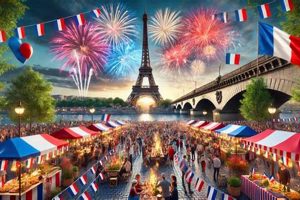
The fireworks spectacle serves as a visual culmination of the Parisian Bastille Day events, acting as a focal point for celebratory expression. Its prominence stems from the symbolic representation of triumph and liberation, aligning with the ideals of the French Revolution. The displays, typically launched from the Eiffel Tower or surrounding areas, transform the Parisian skyline into a canvas of light and color, drawing massive crowds and creating a shared experience of national unity. The fireworks spectacle, therefore, is not merely a visual display but a carefully orchestrated event designed to evoke patriotic sentiment and reinforce collective identity.
The selection of themes, music, and pyrotechnic techniques is a deliberate process, often incorporating historical narratives and contemporary artistic expressions. For example, recent shows have integrated sound and light displays that depict significant moments in French history, effectively transforming the fireworks into a storytelling medium. The practical implications of understanding this connection are significant for event organizers, security personnel, and city planners. Managing crowd control, ensuring public safety, and coordinating transportation logistics are all predicated on anticipating the large numbers drawn by the fireworks display. Local businesses also benefit from increased tourism and consumer spending associated with the event.
In summary, the fireworks spectacle is an integral component of the Parisian Bastille Day events, functioning as a potent symbol of national pride and a major driver of tourism. Recognizing its importance allows for effective planning and management of the celebrations, while also appreciating the cultural significance embedded within the display. Challenges persist in balancing security concerns with public access, and in mitigating the environmental impact of large-scale pyrotechnic displays. The continued success of the fireworks spectacle relies on careful consideration of these factors, ensuring that it remains a compelling and meaningful experience for all participants.
3. Public Concerts

Public concerts form an integral part of the Parisian Bastille Day events, serving as a means to engage the public and foster a sense of national unity. The inclusion of these concerts is not arbitrary; they are deliberately scheduled to provide free entertainment and encourage participation from individuals across diverse socio-economic backgrounds. The accessibility of these concerts, often held in parks or public squares, ensures that celebrations extend beyond formal parades and fireworks displays, offering a more inclusive and participatory experience. For example, the traditional concert at the Champ de Mars, preceding the fireworks display, attracts hundreds of thousands of attendees, creating a shared atmosphere of patriotic celebration. The effect of these concerts is to democratize the experience of Bastille Day, making it accessible to a broader segment of the population.
Beyond the immediate entertainment value, public concerts contribute to the cultural landscape of the celebrations. The selection of performers and musical styles often reflects the diversity of French culture, incorporating both traditional French music and contemporary genres. For instance, past concerts have featured collaborations between classical orchestras and popular musicians, appealing to a wide range of musical tastes. The practical consequence of understanding this cultural dimension lies in the opportunity for event organizers to curate concert programs that resonate with diverse audiences, thereby maximizing public engagement. Additionally, these concerts provide a platform for emerging artists to showcase their talents, contributing to the vitality of the French music scene.
In summary, public concerts are a crucial component of the Parisian Bastille Day events, serving as a catalyst for community engagement, cultural expression, and national unity. The challenge lies in maintaining the accessibility and inclusivity of these concerts while ensuring public safety and logistical efficiency. By recognizing the importance of these concerts, event organizers can optimize their programming and management strategies, ensuring that the celebrations remain a meaningful and enjoyable experience for all participants.
4. Communal Gatherings

Communal gatherings are an intrinsic element of the Parisian Bastille Day events, acting as a fundamental expression of national solidarity and civic engagement. These gatherings, often spontaneous or informally organized, augment the structured spectacles, providing spaces for citizens to connect and celebrate collectively. A primary effect is the fostering of a shared sense of belonging and national identity, transcending social and economic divides. For instance, picnics in parks, neighborhood celebrations, and impromptu gatherings in public squares are commonplace, amplifying the celebratory atmosphere. The significance of these gatherings lies in their ability to empower individuals to actively participate in the national holiday, rather than merely passively observing it. Without communal gatherings, the Parisian Bastille Day events would lose a vital dimension of citizen involvement and spontaneous celebration.
The organization of certain public spaces facilitates these gatherings, with local authorities often providing amenities such as stages for local bands, designated picnic areas, and enhanced security. This support underscores the recognition of the value of communal engagement during the celebrations. A real-world example includes the opening of numerous parks and squares to accommodate large crowds, complete with waste disposal facilities and first-aid stations. Furthermore, understanding the dynamics of these gatherings is crucial for urban planning and crowd management. Predicting the flow of people, anticipating potential risks, and ensuring adequate safety measures are all dependent on a thorough understanding of how and where these communal activities occur.
In conclusion, communal gatherings are indispensable to the Parisian Bastille Day events, serving as a catalyst for national unity, civic participation, and spontaneous celebration. The challenge remains in balancing the spontaneity of these gatherings with the need for public safety and logistical coordination. By recognizing and supporting these communal activities, authorities can enhance the overall experience of the celebrations, ensuring that the Parisian Bastille Day events remain a vibrant expression of national identity and collective spirit.
5. Historical Significance

The association between Parisian Bastille Day events and historical significance is inextricably linked to the storming of the Bastille on July 14, 1789. This event, symbolizing the end of royal absolutism and the beginning of the French Revolution, serves as the foundational cornerstone upon which all subsequent commemorations are built. The act of storming the Bastille itself, while strategically insignificant in military terms, possessed profound symbolic power. It represented the overthrow of arbitrary authority and the assertion of popular sovereignty. The ongoing celebrations, therefore, are not merely festive occasions; they function as annual reminders of the revolutionary ideals of liberty, equality, and fraternity that continue to shape French national identity. The historical significance serves as the primary cause for the events, with the celebrations being the direct effect of the desire to remember and honor this pivotal moment in French history.
The perpetuation of this historical narrative is achieved through various commemorative activities. The military parade, for example, echoes the revolutionary armies that defended the new republic. The singing of La Marseillaise, the French national anthem, evokes the revolutionary spirit and the call to arms. Even the fireworks display, while primarily a visual spectacle, can be interpreted as a symbolic representation of the revolutionary fervor that swept through France. The practical implication of recognizing this historical connection lies in understanding the motivations behind the celebrations and appreciating their significance for the French people. Tourism, a major economic driver for Paris, is also significantly impacted by this historical association, as visitors are drawn to witness and participate in the commemoration of such a historically important event. For instance, visitor numbers spike around July 14th each year.
In conclusion, the historical significance of the storming of the Bastille is not simply a backdrop to the Parisian Bastille Day events; it is the very essence of the commemoration. The events serve as a tangible link to the past, reinforcing national identity and reminding citizens of the revolutionary ideals that continue to shape France. Challenges exist in balancing the need to honor history with the demands of contemporary society, ensuring that the celebrations remain relevant and meaningful for future generations. The ongoing dialogue surrounding the interpretation and representation of this historical moment underscores its enduring significance in French society.
6. National Unity

National unity is a central theme interwoven throughout the Parisian Bastille Day events. The commemoration aims to reinforce a shared sense of identity and patriotism among the French populace, solidifying social cohesion through collective participation in nationally significant events.
- Symbolic Representation of Shared History
The Bastille Day celebration directly references the French Revolution, a pivotal moment in French history. Events such as the military parade and the singing of La Marseillaise serve as reminders of the collective struggles and triumphs that shaped the nation. Participation in these events fosters a sense of shared heritage and collective identity, strengthening the bonds between citizens.
- Inclusive Public Engagement
Bastille Day is characterized by numerous free public events, including concerts, fireworks displays, and communal gatherings. These events are intentionally accessible to individuals from all socioeconomic backgrounds, encouraging participation from a diverse cross-section of French society. This inclusivity promotes a sense of collective ownership and shared national pride.
- Demonstration of National Strength and Resilience
The military parade, a key component of the Bastille Day celebration, showcases the capabilities of the French armed forces. While the parade is a display of military power, it also functions as a symbol of national strength and resilience, reinforcing the idea of a unified nation capable of defending its interests. This demonstration of strength serves to foster a sense of security and confidence among citizens.
- Reinforcement of Republican Values
The Bastille Day events serve as an annual reaffirmation of the republican values of libert, galit, fraternit. These principles, central to French national identity, are celebrated and promoted through various commemorative activities. The emphasis on these shared values reinforces a sense of common purpose and collective responsibility among citizens.
The diverse elements of the Parisian Bastille Day events, from symbolic displays of national strength to inclusive public gatherings, coalesce to reinforce a sense of national unity. The annual commemoration serves as a powerful reminder of shared history, values, and aspirations, solidifying the bonds that unite the French nation. Other nations employ similar strategies on their national holidays to similar unifying effect.
7. Tourism Impact
The Parisian Bastille Day events exert a substantial influence on the tourism sector, transforming the city into a focal point for both domestic and international visitors. The convergence of historical significance, celebratory events, and cultural attractions results in a notable surge in tourism-related economic activity.
- Increased Accommodation Demand
The influx of tourists attending the Bastille Day events precipitates a significant increase in demand for accommodation. Hotels, hostels, and short-term rental properties experience higher occupancy rates and often implement premium pricing strategies. This heightened demand necessitates advance booking and careful planning for visitors seeking lodging during this period. For example, hotels near the Champs-lyses and Eiffel Tower are usually booked months in advance. This surge presents both opportunities and challenges for the hospitality industry, requiring efficient resource management and service delivery to cater to the increased demand.
- Elevated Revenue for Local Businesses
Retail establishments, restaurants, and souvenir shops situated in proximity to event venues witness a considerable rise in revenue. The influx of tourists translates to increased foot traffic and consumer spending, benefiting local businesses. For example, restaurants along the parade route typically offer special menus and extended hours to accommodate the anticipated crowds. This revenue boost provides a crucial economic stimulus, particularly for small and medium-sized enterprises that rely on seasonal tourism. Furthermore, it encourages investment in infrastructure and service enhancements to cater to the demands of a larger tourist population.
- Expansion of Cultural and Event-Based Tourism
The Bastille Day events solidify Paris’s reputation as a premier destination for cultural and event-based tourism. The combination of historical commemorations, artistic performances, and celebratory activities attracts visitors interested in experiencing French culture and heritage. This fosters a more diverse and sustainable tourism ecosystem. Museums, historical sites, and cultural institutions experience increased visitation, benefiting from the heightened awareness and interest generated by the celebrations. For example, the Louvre Museum often extends its opening hours during this period to accommodate the influx of visitors. This strengthens Paris’s position as a global cultural center and encourages ongoing investment in cultural preservation and promotion.
- Infrastructure Strain and Management Challenges
The surge in tourism associated with the Bastille Day events places significant strain on the city’s infrastructure, particularly transportation systems and public amenities. Increased demand for public transportation can lead to congestion and delays, requiring enhanced coordination and resource allocation. For example, the Paris Metro often implements additional services and security measures to manage the crowds. Effective crowd management strategies, traffic control, and public safety measures are essential to mitigate these challenges and ensure a positive experience for both visitors and residents. This requires collaboration between local authorities, transportation providers, and security agencies.
The multifaceted tourism impact of the Parisian Bastille Day events underscores its significance as a major economic and cultural driver. While the influx of visitors presents opportunities for revenue generation and cultural enrichment, it also necessitates careful planning and management to address infrastructure strain and ensure a sustainable tourism ecosystem. The effective leveraging of this tourism impact requires a strategic approach that balances economic benefits with the preservation of cultural heritage and the quality of life for Parisian residents. This can include investments in transportation infrastructure, enhanced security measures, and the promotion of sustainable tourism practices.
Frequently Asked Questions
This section addresses common inquiries regarding the annual Parisian Bastille Day events, providing concise and informative responses to facilitate informed planning and participation.
Question 1: What are the key events that comprise the Parisian Bastille Day celebrations?
The core events include the military parade along the Champs-lyses, the fireworks display typically launched from the Eiffel Tower, public concerts held at various locations throughout the city, and communal gatherings in parks and squares.
Question 2: Where can one find the official schedule for Parisian Bastille Day events?
The official schedule is generally released in late June or early July and is accessible through the Mairie de Paris website (paris.fr) and the Paris tourism website (en.parisinfo.com). These websites provide the most accurate and up-to-date information.
Question 3: Are the Parisian Bastille Day events free to attend?
Most of the events, including the military parade, public concerts, and fireworks display, are free and open to the public. However, some seated viewing areas for the parade may require tickets, and certain smaller events may have an admission fee.
Question 4: What are the transportation considerations during the Parisian Bastille Day events?
Public transportation is often heavily congested. It is recommended to plan transportation in advance, utilize the RATP website for real-time updates, and consider alternative modes of transport, such as walking or cycling, where feasible. Expect road closures in the vicinity of event locations.
Question 5: What security measures are in place during the Parisian Bastille Day events?
Heightened security protocols are typically implemented, including bag checks, metal detectors, and increased police presence. It is advisable to allow ample time for entry to event locations and cooperate with security personnel. Be aware of emergency exits and evacuation routes.
Question 6: How can one secure the best viewing spots for the military parade and fireworks display?
Prime viewing locations fill up quickly. It is recommended to arrive several hours prior to the scheduled start time to secure a favorable spot. Popular locations include the Champs-lyses for the parade and the Champ de Mars or areas along the Seine River for the fireworks display.
In summary, understanding the key events, accessing official schedules, planning transportation, and being aware of security measures are crucial for a successful experience during the Parisian Bastille Day events. Advance planning is strongly advised.
The subsequent section provides information on the economic impact and tourism aspects of the Parisian Bastille Day events.
Paris Bastille Day Events
This exploration has illuminated the multifaceted nature of Paris Bastille Day Events. These encompass commemorative military displays, vibrant public celebrations, and significant economic impacts driven by tourism. The events serve as a focal point for national unity, cultural expression, and historical reflection, deeply ingrained in the French national identity. The organization and management of these events present ongoing logistical and security challenges.
The continued success of Paris Bastille Day Events hinges on a balance between honoring historical significance, fostering community engagement, and adapting to contemporary societal needs. Careful consideration of these factors will ensure the enduring relevance and positive impact of this pivotal national celebration. Sustained investment in infrastructure, security, and cultural programming remains essential to maximizing the benefits and minimizing the potential drawbacks associated with these large-scale gatherings.