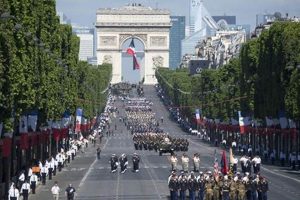
This annual Parisian event, held on July 14th, features a military parade and a spectacular aerial display. It commemorates the anniversary of the storming of the Bastille, a pivotal moment in the French Revolution, and celebrates French national identity. Aircraft from the French Air and Space Force, as well as sometimes those from allied nations, participate in the aerial spectacle.
The event provides a significant opportunity to showcase the capabilities of the French military and its international partners. It fosters national pride and provides a visual demonstration of the nation’s air power and technological prowess. The event also contributes to national unity by bringing together citizens and military personnel in a shared celebration.
The following discussion will delve into the specific aircraft typically featured, the historical background influencing the event’s evolution, and the logistical and security considerations necessary for its execution.
Observing the Parisian Aerial Commemoration
Optimal enjoyment of the annual French national day aviation display requires careful planning and awareness. Several factors contribute to a successful viewing experience.
Tip 1: Secure a Strategic Vantage Point: Prime viewing locations along the Champs-lyses and surrounding areas are in high demand. Arrive early, often several hours before the scheduled start, to secure a favorable position. Consider locations with unobstructed views of the sky and minimal ground-level obstacles.
Tip 2: Prioritize Public Transportation: Navigating Paris on July 14th can be challenging due to road closures and increased pedestrian traffic. Utilize the city’s extensive public transportation network, specifically the Metro and RER, to reach the viewing area. Plan your route in advance and be prepared for potential delays.
Tip 3: Familiarize Yourself with the Schedule: The detailed schedule of events, including the time of the aerial display, is typically released in the weeks leading up to the event. Consult official government websites and news sources to stay informed of any changes or updates to the program.
Tip 4: Understand Security Measures: Enhanced security protocols are in place for the event. Be prepared for bag checks and security screenings. Avoid bringing large bags or items that may be prohibited. Follow instructions from law enforcement personnel and security staff.
Tip 5: Protect Against the Elements: July in Paris can be warm and sunny. Wear appropriate clothing, including a hat and sunglasses, and apply sunscreen liberally. Bring water to stay hydrated throughout the day. Be prepared for potential changes in weather conditions, such as rain.
Tip 6: Consider Alternative Viewing Options: If securing a prime viewing location proves difficult, consider alternative options such as viewing from rooftops, balconies, or designated viewing areas outside the immediate vicinity of the Champs-lyses. Some locations may require advance reservations or tickets.
Careful planning and preparation significantly enhance the experience. Adhering to these guidelines ensures a safe and enjoyable observation of the national commemoration.
The subsequent sections will explore the historical and logistical aspects of the event in greater detail, providing a comprehensive understanding of the aerial display’s significance.
1. Military Aviation Showcase

The “Military Aviation Showcase” is an intrinsic element of the Bastille Day Air Show, serving as a prominent display of French air power and technological capabilities. It underscores the nation’s defense capabilities and highlights its commitment to national security. This showcase is meticulously planned and executed to maximize visual impact and communicate strategic messages.
- Aircraft Display and Operational Readiness
The air show features a diverse array of military aircraft, including fighter jets, transport planes, helicopters, and reconnaissance aircraft. Each aircraft’s presence underscores specific capabilities within the French Air and Space Force, projecting an image of comprehensive operational readiness. The selection of aircraft often reflects current geopolitical priorities and technological advancements within the military.
- Precision Flight Demonstrations
The event includes precision flight demonstrations performed by skilled pilots. These demonstrations showcase the agility, maneuverability, and technological sophistication of the aircraft, as well as the rigorous training and expertise of the pilots. These displays serve to inspire public confidence in the nation’s air defense capabilities and underscore the professionalism of the military personnel.
- Technological Advancement and Innovation
The air show presents an opportunity to exhibit recent advancements in aviation technology and military innovation. New aircraft, upgraded systems, and experimental technologies may be featured, providing a glimpse into the future of air warfare. This exposure serves to attract potential recruits to the military and highlights the importance of technological investment in national security.
- Strategic Messaging and International Cooperation
The “Military Aviation Showcase” can be used to convey strategic messages regarding France’s defense posture and its commitment to international alliances. The participation of aircraft from allied nations emphasizes international cooperation and solidarity. This visual representation of allied air power reinforces diplomatic ties and sends a clear message of collective defense capabilities.
In conclusion, the “Military Aviation Showcase” is not merely a spectacle but a calculated display of national power, technological advancement, and international cooperation. Integrated within the Bastille Day Air Show, it provides a critical platform for communicating strategic messages, fostering national pride, and showcasing the strength and readiness of the French Air and Space Force.
2. National Pride Symbol

The Bastille Day Air Show, conducted annually on July 14th, transcends mere entertainment; it operates as a potent symbol of national pride for France. The event serves as a visual manifestation of the nation’s history, military prowess, and technological advancement, fostering a sense of collective identity and patriotism.
- Historical Commemoration and National Identity
The day commemorates the storming of the Bastille, a pivotal event in the French Revolution, symbolizing the overthrow of tyranny and the establishment of democratic ideals. The air show, held on this historically significant date, reinforces these values and connects modern France to its revolutionary origins. The spectacle reinforces a collective narrative of resilience and national unity.
- Display of Military Capabilities
The aerial display serves as a prominent exhibition of the French Air and Space Force’s capabilities. Advanced aircraft, skilled pilots, and intricate flight formations visually represent the nation’s defense capabilities and technological sophistication. This demonstration of military strength contributes to a sense of national security and pride in the nation’s ability to protect its interests.
- Technological Prowess and Innovation
The inclusion of modern aircraft and cutting-edge aviation technology showcases France’s commitment to innovation and technological advancement. It reflects the nation’s aspirations to remain at the forefront of aerospace engineering and technological development. This display of national innovation fosters a sense of pride in the country’s scientific and industrial capabilities.
- Unifying National Spectacle
The event attracts large crowds of spectators, uniting citizens from diverse backgrounds in a shared celebration of national identity. Families, veterans, and tourists gather to witness the aerial display, fostering a sense of community and shared national pride. The event provides a common experience that transcends social and economic divisions, reinforcing a sense of collective belonging.
The Bastille Day Air Show functions as a multi-faceted symbol of French national pride. By commemorating historical events, showcasing military capabilities, displaying technological prowess, and unifying the nation, the event effectively reinforces a sense of collective identity and patriotism. Its enduring appeal lies in its ability to connect citizens to their shared history, present-day strength, and future aspirations.
3. Commemoration of history
The Bastille Day Air Show is intrinsically linked to the commemoration of French history, serving not merely as a display of aerial prowess, but as a symbolic representation of the nation’s revolutionary past and enduring values.
- Revolutionary Symbolism
The selection of July 14th as the event’s date directly commemorates the storming of the Bastille in 1789. This act, a cornerstone of the French Revolution, represents the overthrow of monarchical authority and the rise of republican ideals. The air show, therefore, is intentionally staged on a day deeply embedded in the nation’s collective memory, linking modern displays of strength to the foundational principles of liberty, equality, and fraternity.
- Military Heritage and National Identity
The presence of military aircraft in the air show connects the present-day armed forces to France’s long and often turbulent military history. Each aircraft, each precision maneuver, serves as a reminder of the sacrifices made to defend French sovereignty and uphold national values. The event reinforces a sense of continuity between past struggles and present-day commitments to national security.
- Visual Representation of National Values
The aerial displays often incorporate formations and maneuvers that symbolically represent French national identity. The tricolor flag, for example, is frequently evoked through the use of smoke trails and synchronized flight patterns. These visual cues are intended to resonate with spectators on an emotional level, reinforcing a sense of collective belonging and shared national purpose.
- Remembering Sacrifices and Honoring Veterans
The event provides an opportunity to remember the sacrifices made by those who fought to defend French values throughout history. Often, veterans are invited to participate in the celebrations, providing a tangible link to the past. The air show serves as a public acknowledgement of their service and sacrifice, ensuring that their contributions are not forgotten.
In essence, the Air Show transcends being just a showcase of military technology. It leverages the historical context of Bastille Day to infuse the event with deeper meaning. By visually linking the present-day air force with the revolutionary origins of the nation, it reinforces a sense of national pride, commemorates past sacrifices, and underscores the enduring values that define French identity.
4. Technological Advancement Display
The Bastille Day Air Show serves as a prominent platform for showcasing France’s technological advancements in the aerospace sector. The event deliberately features cutting-edge aircraft and aviation technologies, demonstrating the nation’s investment in research, development, and innovation. The display functions as a tangible representation of France’s industrial capabilities and its position within the global technological landscape. The inclusion of advanced aircraft, such as the Rafale fighter jet or the Airbus A400M transport aircraft, directly reflects the nation’s commitment to modernizing its armed forces and maintaining a competitive edge in the aerospace industry. The synchronized flight formations and aerial maneuvers exhibited during the air show require sophisticated avionics and control systems, further highlighting the underlying technological prowess.
The “Technological Advancement Display” at the Bastille Day Air Show is not limited to aircraft hardware. It also encompasses software and operational technologies. For example, the precision navigation systems used in formation flying and the advanced communication networks that coordinate the air show demonstrate the integration of complex digital systems. These elements contribute to the overall spectacle while underlining France’s capacity for innovation in areas such as artificial intelligence, data analytics, and cybersecurity. Moreover, the presence of prototypes or experimental aircraft at the air show can serve as a “proof of concept,” attracting investment and fostering further technological development within the industry. The air show also showcases the advancements in sustainable aviation, such as biofuels and electric propulsion, reflecting the growing focus on environmental responsibility within the aerospace sector.
The understanding that “Technological Advancement Display” is a core component of the Bastille Day Air Show has practical significance for both the French government and the aerospace industry. For the government, it provides a means of projecting national strength and attracting foreign investment. For the industry, it serves as a marketing opportunity and a catalyst for innovation. Challenges remain in ensuring that the “Technological Advancement Display” accurately reflects France’s technological capabilities without compromising national security. The strategic balance between showcasing innovation and protecting sensitive information is a critical consideration in planning and executing the air show.
5. International Collaboration
International collaboration is an integral component of the Bastille Day Air Show, extending beyond mere symbolic gestures to encompass practical military and diplomatic objectives. The inclusion of aircraft and personnel from allied nations serves multiple purposes, contributing to both the event’s spectacle and the reinforcement of strategic partnerships. The annual event offers a high-profile opportunity to demonstrate interoperability and mutual support between participating countries. Historically, nations such as the United States, the United Kingdom, and Germany have participated, showcasing their advanced aerial assets alongside French counterparts. This visible collaboration fosters trust and strengthens diplomatic ties.
The practical significance of this international aspect extends to joint training exercises and the standardization of military procedures. The air show provides a framework for informal exchanges and networking between military personnel from different nations, contributing to a shared understanding of operational doctrines and technological capabilities. Furthermore, the presence of foreign dignitaries and military observers underscores the commitment of participating nations to collective security and defense. The event also serves as a platform for discussing potential future collaborations in aerospace research and development, furthering technological advancements that benefit all involved. For instance, joint displays featuring aircraft from different nations demonstrate the seamless integration of their respective technologies and personnel.
While the international element of the Bastille Day Air Show offers numerous benefits, it also presents certain challenges. Logistical coordination, security protocols, and diplomatic sensitivities require careful management to ensure the event proceeds smoothly. The selection of participating nations and the types of aircraft displayed are often subject to political considerations and strategic objectives. Despite these challenges, the commitment to international collaboration remains a core element of the Bastille Day Air Show, underscoring its importance as a diplomatic and military platform. The continued success of this collaboration serves as a testament to the enduring strength of international alliances and the shared commitment to global security.
6. Public engagement opportunity

The Bastille Day Air Show presents a significant public engagement opportunity, fostering national unity and promoting understanding of the French military and aerospace industries. The event provides a direct interface between the citizenry and the institutions responsible for national defense. This interface, in turn, cultivates support for military programs and enhances recruitment efforts. The spectacle of the aerial display generates interest in aviation careers and encourages younger generations to consider service in the armed forces. The public display also serves as an implicit form of civic education, informing citizens about the capabilities and roles of their national defense apparatus. This can lead to a more informed electorate capable of engaging in constructive dialogue about military spending and national security policy.
The event facilitates tangible engagement through various means. Static displays of aircraft and equipment allow the public to interact directly with military hardware. Interactions with service members provide an opportunity for citizens to ask questions and gain firsthand insights into military life. These interactions foster a sense of connection and shared purpose. Furthermore, the air show often features educational exhibits highlighting the history of French aviation and the technological innovations driving the aerospace industry. These exhibits contribute to a broader understanding of the nation’s contributions to scientific and technological progress. The dissemination of information through brochures, websites, and social media platforms further extends the reach of the event and encourages ongoing engagement.
In conclusion, the Air Show’s value as a public engagement opportunity lies in its ability to connect citizens with their military and aerospace institutions in a meaningful and accessible way. This connection strengthens national unity, promotes informed civic discourse, and fosters support for national defense initiatives. While security concerns and logistical challenges must be addressed to ensure a safe and successful event, the benefits of this public engagement are substantial. Future iterations of the air show can further enhance engagement by incorporating interactive simulations, virtual reality experiences, and expanded educational programming, ensuring its continued relevance as a national celebration and a public education platform.
Frequently Asked Questions
The following questions and answers address common inquiries regarding the aerial component of the July 14th celebrations in Paris.
Question 1: What is the primary purpose of the aviation display on Bastille Day?
The display serves multiple purposes: commemorating French history, showcasing the French Air and Space Force’s capabilities, fostering national pride, demonstrating technological advancements, and reinforcing international partnerships.
Question 2: Which types of aircraft typically participate in the Bastille Day aviation display?
Aircraft from the French Air and Space Force, including fighter jets (e.g., Rafale), transport planes (e.g., Airbus A400M), helicopters, and patrol aircraft, participate. Aircraft from allied nations may also be included.
Question 3: Is the aviation display open to the public, and is there a cost for attendance?
The aviation display is generally open to the public and free of charge. However, securing a viewing location near the Champs-lyses requires arriving early due to large crowds.
Question 4: What security measures are in place during the aviation display?
Enhanced security measures, including bag checks and security screenings, are implemented to ensure public safety. Attendees are advised to follow instructions from law enforcement personnel.
Question 5: How can the public obtain information about the specific timing and route of the aircraft during the display?
Official government websites and news sources typically publish the schedule and route details in the weeks leading up to the event. Consult these resources for accurate and up-to-date information.
Question 6: Does inclement weather affect the aviation display?
Adverse weather conditions, such as heavy rain or strong winds, may result in the modification or cancellation of portions of the aviation display. Official announcements will be made if such circumstances arise.
The Bastille Day aviation display is a complex event involving multiple logistical and security considerations. Staying informed about these aspects contributes to a more enjoyable and safe viewing experience.
The subsequent section will delve into the logistical and organizational aspects surrounding this Parisian tradition.
Bastille Day Air Show
The preceding analysis has explored the Bastille Day Air Show as a multifaceted event that extends beyond a mere aerial spectacle. It encompasses historical commemoration, a showcase of military and technological capabilities, a symbol of national pride, a demonstration of international collaboration, and an opportunity for public engagement. Each of these aspects contributes to the event’s significance within the broader context of French national identity and strategic objectives.
Continued observation of the Bastille Day Air Show provides valuable insights into evolving geopolitical strategies, technological advancements, and the enduring importance of national unity. The event’s future iterations will likely reflect ongoing developments in aerospace technology, shifting international alliances, and the evolving relationship between the military and the citizenry. Its continued execution serves as a reminder of France’s commitment to its history, its values, and its role on the global stage.