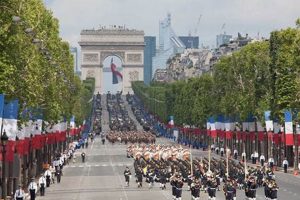
The former prison, once a symbol of royal authority, no longer stands. However, its legacy persists as a potent idea and an area of significant activity in contemporary Paris. Today, the location is primarily recognized as a public square, Place de la Bastille, a major transportation hub and a site for demonstrations and celebrations. Its physical presence is marked by the Colonne de Juillet, commemorating the July Revolution of 1830.
The enduring significance of the area stems from its historical association with the French Revolution. The storming of the structure on July 14, 1789, ignited a period of profound social and political upheaval. The location serves as a reminder of the struggle for liberty and equality, making it a symbolically charged space for expressions of popular will and political activism. It also represents a pivotal shift in power dynamics, from the monarchy to the people.
This contemporary relevance frames its role in modern urban life. The square now functions as a central point for various activities, including cultural events, political gatherings, and everyday commerce. Understanding the area’s history and present-day function is vital for appreciating its layered meaning within the broader Parisian context.
Visiting the location, once the site of a pivotal historical event, requires awareness of its layered historical significance and its present-day urban function. These tips aim to guide responsible and informed engagement with the area.
Tip 1: Acknowledge the Historical Context: Before visiting Place de la Bastille, familiarize yourself with the events surrounding the storming of the structure and its broader implications for the French Revolution. The Colonne de Juillet serves as a physical reminder of this historical weight.
Tip 2: Be Mindful of Public Demonstrations: The area remains a frequent site for political demonstrations and gatherings. Be aware of scheduled events and exercise caution, respecting the rights of assembly while maintaining personal safety.
Tip 3: Utilize Public Transportation: The area is a major transportation hub, served by multiple Metro lines. Utilizing public transport is generally the most efficient way to access and navigate the location, particularly during peak hours or scheduled events.
Tip 4: Explore the Surrounding Neighborhoods: Extend your exploration beyond the immediate square to discover the diverse neighborhoods that surround the location. The Marais district, for example, offers a blend of historical architecture, cultural attractions, and culinary experiences.
Tip 5: Research Local Events: The location often hosts public events, concerts, and festivals. Prior to your visit, research local event listings to enhance your experience and avoid potential disruptions caused by large crowds.
Tip 6: Respect Memorials and Monuments: The Colonne de Juillet and other nearby memorials are sites of historical significance and deserve respectful observation. Avoid defacing or vandalizing these landmarks.
Understanding the historical, social, and practical aspects of the location allows for a more meaningful and responsible engagement with this important Parisian space. These considerations promote a greater appreciation for its multifaceted role in the city’s narrative.
By carefully considering these aspects, visitors can ensure a respectful and enriching experience when exploring the heart of revolutionary history in its current form.
1. Place de la Bastille

Place de la Bastille, situated at the former site of a notorious prison, is a pivotal point for understanding the concept of “bastille modern day.” It serves as more than just a geographical location; it’s a dynamic intersection of historical memory, political expression, and urban activity, shaping its present-day identity.
- Site of Commemoration and Protest
Place de la Bastille regularly hosts commemorations of the French Revolution, including Bastille Day celebrations. Simultaneously, it functions as a significant space for political protests and demonstrations. This duality highlights its continued role as a stage for public expression, echoing the revolutionary spirit while addressing contemporary societal concerns. Examples include labor union rallies and demonstrations against government policies, showcasing its modern-day function as a platform for dissenting voices.
- Transportation Hub and Urban Center
As a major transportation hub with multiple metro lines converging at its location, Place de la Bastille facilitates the daily movement of countless individuals. Its transformation from a site of confinement to a center of connectivity underscores its integration into the modern urban fabric of Paris. The presence of shops, cafes, and businesses further contributes to its identity as a bustling urban center, reflecting its adaptation to contemporary needs.
- Colonne de Juillet
Standing prominently in the center of Place de la Bastille, the Colonne de Juillet commemorates the July Revolution of 1830. This monument acts as a constant reminder of past struggles for freedom and democracy. Its presence serves as a focal point for reflection on historical events and their relevance to present-day values. The column reinforces the area’s symbolic importance as a site of political and social change.
- Symbolic Resonance in Contemporary Society
The name “Bastille” continues to carry significant symbolic weight in contemporary society, representing concepts such as freedom, revolution, and the overthrow of oppressive regimes. Its use in political discourse and popular culture reflects its enduring association with these ideals. The location’s symbolic power makes it a potent symbol in discussions about social justice, political change, and the ongoing pursuit of liberty.
In summary, Place de la Bastille’s multifaceted nature as a site of historical memory, a transportation hub, and a focal point for political expression underscores its integral role in defining “bastille modern day.” Its ongoing evolution reflects the dynamic interplay between its historical legacy and its contemporary function as a vital urban space.
2. Colonne de Juillet

The Colonne de Juillet (July Column), prominently situated in Place de la Bastille, is inextricably linked to an understanding of the area in the modern era. The column serves as a physical and symbolic representation of the July Revolution of 1830, an event that, while distinct from the 1789 storming, profoundly shaped subsequent French political and social developments. Its presence underscores the location’s ongoing significance as a site of revolutionary memory and a testament to the enduring pursuit of liberty.
As a component of the contemporary landscape, the Colonne functions as a focal point, anchoring the square’s historical narrative. For example, during Bastille Day celebrations, the column often serves as a backdrop for official ceremonies and public gatherings, reinforcing its role as a visual reminder of revolutionary ideals. Furthermore, its presence can influence the interpretation of political demonstrations that occur in the Place, adding a layer of historical context to contemporary expressions of dissent. The practical significance of understanding this connection lies in appreciating how historical symbols shape present-day perceptions and inform civic discourse.
In conclusion, the Colonne de Juillet is not merely a historical artifact but a living component of “bastille modern day.” Its presence continually reminds observers of the revolutionary heritage associated with the area. Recognizing this connection is crucial for comprehending the location’s multifaceted identity as a site of historical memory, political expression, and urban activity, ultimately contributing to a more nuanced understanding of its contemporary significance.
3. Public Demonstrations

Public demonstrations are an integral and enduring facet of the area’s contemporary identity. The historical associations with revolution and popular uprising have cemented it as a prime location for expressing political dissent and social activism. These demonstrations range from organized labor rallies to protests against government policies, effectively transforming the public space into a dynamic forum for airing grievances and advocating for change. This consistent use of the site as a platform for public expression directly reflects its legacy as a symbol of popular sovereignty and challenges to established authority, significantly contributing to what constitutes “bastille modern day.” The frequency and nature of these events underscore the area’s continued relevance as a potent symbol within the French political landscape. For example, large-scale demonstrations against pension reforms have recently taken place, illustrating its enduring role in contemporary social movements.
The practical significance of recognizing the link between public demonstrations and the site’s modern identity lies in understanding the complexities of urban space and political expression. Awareness of scheduled demonstrations is crucial for navigating the area effectively, particularly for residents, commuters, and tourists. Furthermore, understanding the historical context of these demonstrations provides valuable insight into the underlying social and political issues driving the protests. By recognizing the area as a legitimate space for public dissent, one can better appreciate the dynamics of democratic participation and the ongoing dialogue between citizens and the state. Analyzing the rhetoric and demands of demonstrators in this location offers crucial data for understanding shifts in public opinion and emerging social concerns.
In conclusion, public demonstrations are not merely incidental occurrences but a defining characteristic of the area in the modern era. They underscore its continued significance as a symbol of popular expression and a locus of political activism. Acknowledging this connection is vital for understanding the multifaceted nature of the area and appreciating its complex role in shaping contemporary French society. Challenges include managing public safety during large events and ensuring the right to protest is balanced with the needs of other urban stakeholders, highlighting the ongoing need for thoughtful urban planning and responsible civic engagement.
4. Transportation Hub

The transformation of the area into a significant transportation hub profoundly influences its contemporary function and character, solidifying its role in the current urban landscape. This facet of the location, while seemingly disparate from its revolutionary past, directly contributes to its modern identity.
- Convergence of Metro Lines
Several Metro lines converge at the site, facilitating the daily movement of countless individuals across Paris. This accessibility has transformed the area from a peripheral location to a central node within the city’s transportation network. The presence of multiple lines ensures that it remains a crucial point of connection for commuters, tourists, and residents alike, contributing to the area’s economic activity and social interaction.
- Bus Network Integration
Beyond the Metro system, an extensive bus network serves the location, further enhancing its connectivity to surrounding neighborhoods. This integration of bus routes provides access to areas not directly served by the Metro, broadening the reach of the transportation hub and solidifying its importance in the city’s overall transportation infrastructure. The efficient coordination of bus and Metro services enhances the overall accessibility and usability of the area for a wide range of travelers.
- Impact on Economic Activity
The high volume of daily commuters and travelers passing through the area fuels economic activity in the surrounding businesses. Shops, cafes, and restaurants thrive on the constant flow of people, benefiting from the increased visibility and accessibility afforded by the transportation hub. This economic activity, in turn, contributes to the area’s vibrancy and attractiveness as a destination, further reinforcing its integration into the fabric of modern Parisian life.
- Urban Development and Infrastructure
The development of the transportation hub has spurred significant urban development in the surrounding area. Infrastructure improvements, such as pedestrian walkways, bicycle lanes, and public spaces, have been implemented to accommodate the increased flow of people and enhance the overall user experience. These developments reflect a concerted effort to integrate the transportation hub seamlessly into the urban environment, ensuring its accessibility and functionality for all members of the community.
In summary, the evolution into a vital transportation hub profoundly impacts how the area functions and is perceived today. This transformation illustrates how historical sites can adapt and evolve to meet the changing needs of a modern city, while simultaneously retaining their symbolic significance. The efficient integration of various transportation modes, coupled with its impact on economic activity and urban development, solidifies its integral role within the broader Parisian context.
5. Historical Symbolism
The historical symbolism associated with the site profoundly shapes its modern identity. The storming of the structure in 1789 represents a pivotal moment in the French Revolution, signifying the overthrow of royal authority and the rise of popular sovereignty. This event imbued the location with a powerful symbolic charge, transforming it into a potent emblem of liberty, equality, and fraternity. As a result, it continues to serve as a focal point for national identity and a reminder of the enduring values associated with the Revolution.
The continued significance of the historical symbolism is evident in various aspects of contemporary life. For instance, Bastille Day celebrations held annually on July 14 reinforce the site’s association with revolutionary ideals and national pride. Political demonstrations frequently take place at the site, leveraging its historical significance to amplify messages of social justice and political change. The symbolic power of the location also influences artistic and cultural representations, with numerous works of literature, art, and film referencing the events of 1789 and its enduring legacy. It serves as a tangible link to the past, shaping perceptions and influencing contemporary discourse on issues of freedom and democracy. Understanding this symbolism provides insights into the motivations behind public gatherings, political rhetoric, and cultural expressions linked to the location.
The challenge lies in reconciling the romanticized historical narrative with the complexities of the French Revolution and its subsequent history. A nuanced understanding requires acknowledging both the progressive ideals and the problematic aspects of the Revolution, including periods of violence and instability. Ultimately, grasping the enduring historical symbolism associated with the site is crucial for comprehending its contemporary relevance as a space of collective memory, political expression, and urban activity within the broader context of modern France.
6. Urban Integration
The incorporation of the area into the broader urban fabric of Paris is a defining characteristic of the “bastille modern day.” What was once a symbol of separation and confinement has been transformed into a central node within the city, reflecting a complex interplay of historical memory, contemporary functionality, and urban planning.
- Transportation Infrastructure
The site’s integration into the Parisian transportation network is paramount. Multiple Metro lines converge beneath Place de la Bastille, facilitating the movement of countless individuals daily. This transformation from a symbol of isolation to a hub of connectivity underscores its crucial role in the city’s circulatory system. The area serves as a vital interchange for commuters, tourists, and residents alike, influencing its economic activity and social interactions.
- Commercial Activity and Public Spaces
The surrounding area thrives with commercial activity, including shops, restaurants, and cafes that cater to the diverse needs of the urban population. Public spaces, such as pedestrian walkways and open plazas, encourage social interaction and contribute to the area’s livability. This blend of commercial and recreational spaces reflects a deliberate effort to integrate the location into the everyday lives of Parisians, ensuring its relevance beyond its historical significance.
- Residential Neighborhoods
The location is bordered by vibrant residential neighborhoods, each with its own unique character. The Marais district, for example, features historical architecture, cultural attractions, and residential areas. This proximity to residential zones ensures that the location remains an active and engaged part of the community, fostering a sense of local identity and contributing to the overall diversity of the city’s urban landscape.
- Architectural Integration
Modern architectural designs have been integrated with historical elements to create a cohesive urban environment. The Opra Bastille, a modern opera house, stands in close proximity to the Place, representing a deliberate fusion of contemporary culture and historical memory. This architectural juxtaposition underscores the area’s evolution over time, highlighting its ability to accommodate new developments while respecting its historical legacy. The design choices aim to create a harmonious urban landscape that reflects the city’s dynamic and ever-evolving identity.
These facets of urban integration highlight the extent to which the area has been successfully woven into the tapestry of modern Parisian life. Its function as a transportation hub, a commercial center, and a residential area, combined with its architectural integration, ensures its enduring relevance as a dynamic and vibrant space within the city. This transformation exemplifies the ability of historical sites to adapt and evolve, retaining their symbolic significance while meeting the needs of a modern urban environment.
Frequently Asked Questions
This section addresses common inquiries regarding the historical site, clarifying its current state and its ongoing significance within the contemporary urban landscape.
Question 1: What physical remnants of the original structure exist today?
Virtually no physical remains of the original structure are present on the site. The location is primarily marked by Place de la Bastille, a public square. Some stones from the original construction are believed to have been used in the construction of the Pont de la Concorde.
Question 2: How is Place de la Bastille used in the present day?
Place de la Bastille functions as a major transportation hub, a site for public gatherings and demonstrations, and a venue for cultural events. Its use reflects its transformation from a symbol of oppression to a space for public expression.
Question 3: What is the significance of the Colonne de Juillet located on the site?
The Colonne de Juillet commemorates the July Revolution of 1830. It serves as a reminder of subsequent struggles for liberty and democratic ideals, distinguishing it from the events of 1789.
Question 4: Why is the area frequently used for political demonstrations?
Its historical association with revolution and popular uprising makes it a symbolic location for expressing political dissent and advocating for social change. The site’s legacy as a space for challenging established authority contributes to its continued use for public demonstrations.
Question 5: How has the urban development around Place de la Bastille shaped its modern identity?
The development of transportation infrastructure, commercial enterprises, and public spaces has integrated the area into the fabric of modern Parisian life. This integration underscores its transformation from a secluded prison to an active urban center.
Question 6: How does the area balance its historical significance with its contemporary urban functions?
The location maintains its historical significance through memorials like the Colonne de Juillet and its continued association with revolutionary ideals. Simultaneously, its function as a transportation hub, commercial center, and public space reflects its adaptation to the needs of a modern city. The blend of historical memory and contemporary activity defines its unique character.
In essence, “bastille modern day” represents a complex interplay of historical symbolism, urban development, and contemporary social and political activity. Its ongoing evolution reflects the dynamic relationship between its past and its present.
The next section will delve into resources for further exploration of its modern context.
Bastille Modern Day
This exploration has detailed the multifaceted nature of “bastille modern day.” The transformation from a symbol of royal oppression to a public space of diverse functions has been examined. The enduring impact of revolutionary history, the area’s role as a major transportation hub, its significance as a site for public demonstration, and its integration into the urban landscape of Paris have all been considered. The Colonne de Juillet stands as a constant reminder of past struggles, while the bustling activity around it reflects the dynamism of contemporary urban life.
As an area of historical and social importance, continued observation and analysis are warranted. Understanding its evolution can provide insights into the complex interplay between history, memory, and urban development. The ongoing social and political activities held there will shape its future identity, underscoring the importance of sustained engagement with its multifaceted nature.

![Buy Doom Days Bastille Vinyl: Collector's Edition [Rare] | Hubbastille: Explore the Fusion of Culture, Music & Creativity](https://hubbastille.com/wp-content/uploads/2026/05/th-83-300x200.jpg "Buy Doom Days Bastille Vinyl: Collector's Edition [Rare] Hubbastille: Explore the Fusion of Culture, Music & Creativity")