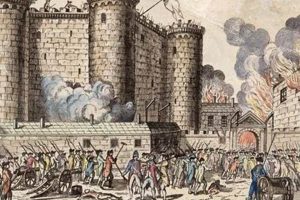
Victor Hugo’s novel and subsequent musical, Les Misrables, while set against a backdrop of political unrest in France, does not primarily revolve around the events of Bastille Day. The narrative focuses on the June Rebellion of 1832, an uprising triggered by economic hardship and political discontent following the Bourbon Restoration. The story follows the life of Jean Valjean and other characters impacted by social injustice in 19th-century France, a period characterized by significant societal change.
The significance lies in its portrayal of the socio-political climate of France during the early 19th century. It offers a critical perspective on themes of poverty, justice, redemption, and revolution. It exposes the struggles of the lower classes and the deep-seated inequalities that fueled revolutionary sentiment, while demonstrating the possibility of individual moral transformation. The historical context is key to understanding the motivations and actions of the characters within the narrative.
Therefore, despite not being specifically about the storming of the Bastille, the work provides insight into the conditions that led to multiple revolutionary movements in France, including the one depicted within its pages. These movements, though separated by time, shared common roots in social injustice and the desire for a more equitable society.
Examining Les Misrables in Relation to Bastille Day
This section provides guidance for understanding the connection, or lack thereof, between Victor Hugo’s Les Misrables and the events of Bastille Day. It aims to clarify the historical context and thematic relevance without conflating distinct periods in French history.
Tip 1: Differentiate Historical Events: Distinguish between the Storming of the Bastille (1789) and the June Rebellion (1832). Les Misrables primarily portrays the latter, a distinct uprising with its own specific causes and consequences.
Tip 2: Focus on the Socio-Political Context: Analyze Les Misrables within the broader context of 19th-century France. The novel reflects the social and political inequalities that persisted after the French Revolution, leading to subsequent unrest.
Tip 3: Understand Thematic Relevance: Explore how themes of revolution, social justice, and poverty connect to both Bastille Day and the June Rebellion. While Les Misrables isn’t directly about Bastille Day, it embodies the revolutionary spirit and societal critiques that fueled both events.
Tip 4: Investigate the Bourbon Restoration: Research the political climate of the Bourbon Restoration (1814-1830). This period saw the return of the monarchy and a resurgence of conservative forces, contributing to the discontent that triggered the June Rebellion.
Tip 5: Analyze Hugo’s Literary Intentions: Consider Victor Hugo’s intent in depicting the June Rebellion. His aim was to critique social injustices and highlight the plight of the marginalized, not necessarily to provide a historical account of Bastille Day.
Tip 6: Avoid Oversimplification: Refrain from assuming a direct causal link between Bastille Day and the events depicted in Les Misrables. While the French Revolution laid the groundwork for later uprisings, each event had its own specific set of circumstances.
These tips emphasize the importance of understanding the nuances of French history and literature. A critical approach to Les Misrables allows for a deeper appreciation of its themes and its relationship to the revolutionary spirit that shaped France.
The examination of Les Misrables through the lens of Bastille Day, while initially misleading, provides an opportunity to explore the complexities of French history and the enduring themes of social justice and revolution.
1. Historical Disassociation

The question of whether Les Misrables is about Bastille Day necessitates a clear understanding of historical disassociation. The narrative and the events of July 14, 1789, are separated by time, political context, and specific societal grievances. Recognizing this disconnect is crucial for accurately interpreting Hugo’s work and its relationship to French revolutionary history.
- Temporal Separation
The Storming of the Bastille occurred in 1789, marking the beginning of the French Revolution. Les Misrables, however, is primarily set during the June Rebellion of 1832, a later uprising under the July Monarchy. This temporal gap of over four decades implies different immediate causes and objectives for each event, preventing a direct equivalence between the narrative and Bastille Day.
- Distinct Socio-Political Climates
The socio-political landscape of France in 1789, characterized by an absolute monarchy and widespread feudalism, differed significantly from that of 1832. The Bourbon Restoration, which followed the Napoleonic era, brought its own set of political and social tensions, leading to the June Rebellion. Consequently, Les Misrables reflects a distinct set of societal problems than those directly associated with the initial revolution.
- Narrative Focus and Scope
Hugo’s Les Misrables focuses on the plight of the marginalized and the themes of redemption, justice, and social inequality in 19th-century France. While the broader historical context of the French Revolution informs the novel, it is not the central subject. The narrative centers on characters affected by poverty and injustice during the Bourbon Restoration, not the events leading up to or directly involving Bastille Day.
- Misinterpretations and Oversimplifications
Equating Les Misrables with Bastille Day leads to an oversimplification of both the historical events and the novel’s themes. Such a comparison disregards the nuances of the June Rebellion and the specific socio-political conditions that shaped it. It risks misrepresenting the historical accuracy of both events and the novel’s portrayal of its own particular historical moment.
The historical disassociation between Les Misrables and Bastille Day stems from temporal differences, distinct political contexts, and the narrative focus of Hugo’s work. Recognizing these distinctions prevents misinterpretations and allows for a deeper appreciation of the complex social and political forces at play in 19th-century France.
2. Revolution's enduring spirit

The enduring spirit of revolution forms a critical undercurrent in understanding the relationship, or lack thereof, between Les Misrables and the events surrounding Bastille Day. Though the novel does not directly depict the storming of the Bastille, it embodies the ideals and the underlying social tensions that ignited the French Revolution and persisted throughout the 19th century. The desire for liberty, equality, and fraternity, born during the initial revolutionary period, continued to inspire subsequent uprisings, including the June Rebellion depicted in Hugo’s work. The narrative serves as a testament to the ongoing struggle against injustice and oppression, reflecting a continuous cycle of resistance rooted in the same fundamental principles that fueled the storming of the Bastille.
Practical examples of this enduring spirit are evident in the recurring themes of social justice, resistance to tyranny, and the fight for human dignity portrayed in the novel. The characters’ struggles mirror the broader societal conflicts of the time, demonstrating how the revolutionary ideals continued to resonate with the disenfranchised. Furthermore, the novel’s portrayal of revolutionary figures, albeit fictionalized, draws parallels to historical figures associated with Bastille Day, reinforcing the sense of continuity in the pursuit of social and political transformation. Understanding this connection is essential for interpreting the significance of the June Rebellion within the larger context of French revolutionary history.
In summary, while Les Misrables is not directly about Bastille Day, it is intrinsically linked to the enduring spirit of revolution that originated with that event. The novel underscores the persistence of social inequalities and the ongoing struggle for a more just society. The challenges lie in recognizing the distinct historical contexts while acknowledging the shared ideological roots. This understanding is crucial for appreciating the novel’s thematic depth and its contribution to the broader discourse on revolution and social change.
3. Social injustice portrayal
The depiction of social injustice in Les Misrables provides a crucial lens through which to examine its relationship to the historical context of Bastille Day, even though the novel does not directly portray the events of 1789. The work serves as a commentary on the enduring inequalities that persisted in French society, leading to subsequent revolutionary movements.
- Poverty and Marginalization
Les Misrables vividly portrays the grinding poverty and marginalization experienced by a significant portion of the French population in the 19th century. Characters like Fantine, driven to extreme measures by economic desperation, illustrate the systemic failures that trapped individuals in cycles of poverty. While Bastille Day symbolized a break from aristocratic privilege, the novel reveals that socioeconomic disparities continued to fuel social unrest.
- Legal and Judicial Inequality
The character of Jean Valjean exemplifies the inequities within the legal and judicial systems. His harsh sentence for stealing a loaf of bread underscores the disproportionate punishment meted out to the poor and the lack of opportunities for rehabilitation. This portrayal challenges the notion that the French Revolution brought about true equality before the law and highlights the need for continued reform.
- Exploitation of Labor
The novel exposes the harsh working conditions and exploitation prevalent in factories and other industries during the early 19th century. Child labor, long hours, and low wages contributed to widespread suffering and discontent. While the revolution aimed to abolish feudal obligations, new forms of economic exploitation emerged, contributing to social tensions and ultimately sparking further uprisings.
- Thematic Continuation
Hugo’s depiction of social injustice acts as a thematic bridge between the ideals of the French Revolution, as epitomized by Bastille Day, and the realities of 19th-century France. Despite the initial revolutionary fervor, the novel demonstrates that the goals of equality and justice remained elusive, necessitating further struggle and resistance. The continued presence of social injustice serves as a poignant reminder of the incomplete nature of the revolutionary project.
The social injustices depicted in Les Misrables, while not directly linked to Bastille Day, underscore the enduring challenges of creating a truly equitable society. The novel offers a critical perspective on the legacy of the French Revolution, revealing the persistence of inequalities and the ongoing need for social reform. This portrayal is crucial for understanding the broader historical context in which later revolutionary movements, like the June Rebellion, arose.
4. Nineteenth-century France

Nineteenth-century France serves as the historical backdrop against which the inquiry “is Les Misrables about Bastille Day” can be critically examined. Understanding the social, political, and economic forces prevalent during this era is essential for differentiating the historical context of the novel from the events of 1789.
- Post-Revolutionary Social Stratification
Despite the ideals of liberty, equality, and fraternity championed during the French Revolution, 19th-century France witnessed persistent social stratification. The Bourbon Restoration saw the re-emergence of aristocratic influence, creating tensions with the burgeoning middle class and the impoverished working class. This social hierarchy, distinct from the pre-revolutionary order, directly informs the themes of injustice and inequality depicted in Les Misrables, although it is temporally removed from Bastille Day.
- The Rise of Industrial Capitalism
The Industrial Revolution transformed the French economy during the 19th century, leading to the growth of factories and urban centers. This economic shift resulted in new forms of labor exploitation and widespread poverty, as exemplified by the conditions endured by characters in Les Misrables. These socio-economic conditions, while a consequence of the revolution’s aftermath, were not directly connected to the specific events of Bastille Day but fueled later uprisings, including the June Rebellion.
- Political Instability and Uprisings
The 19th century was a period of political instability in France, marked by regime changes and social unrest. The Bourbon Restoration, the July Revolution of 1830, and the subsequent June Rebellion of 1832 all reflect the ongoing struggle between conservative and liberal forces. Les Misrables captures this atmosphere of political turmoil, focusing on the June Rebellion as a consequence of unresolved social and economic issues, distinct from the initial revolutionary fervor of 1789.
- Literary and Artistic Movements
The 19th century saw the rise of Romanticism and Realism in French literature and art. Writers like Victor Hugo used their works to critique social injustices and expose the harsh realities of poverty and oppression. Les Misrables exemplifies this literary trend, offering a social commentary on the plight of the marginalized in 19th-century France. This literary context helps to understand Hugo’s artistic intentions, highlighting his focus on contemporary social issues rather than a direct retelling of Bastille Day.
In summary, the examination of 19th-century France reveals a complex interplay of social, economic, and political forces that shaped the context of Les Misrables. While the novel embodies the revolutionary spirit, it primarily reflects the challenges and inequalities of a later period, distinct from the events of Bastille Day. Understanding this historical backdrop is crucial for accurately interpreting the novel’s themes and its relationship to French revolutionary history.
5. Later June Rebellion

The June Rebellion of 1832, depicted in Les Misrables, is not directly about Bastille Day (1789). However, understanding the former illuminates the question of the latter’s relevance to the novel. The June Rebellion, a consequence of social and political unrest under the July Monarchy, occurred decades after the storming of the Bastille. While the French Revolution, initiated by the events of Bastille Day, aimed to establish a more equitable society, the June Rebellion reveals the persistence of inequalities and the ongoing struggle for republican ideals in 19th-century France. The narrative of Les Misrables emphasizes the socio-economic conditions that fueled the later rebellion, rather than focusing on the initial revolutionary act.
The significance of the June Rebellion within the context of “is Les Misrables about Bastille Day” is twofold. First, it demonstrates the long-term impact of the French Revolution’s unfulfilled promises. Despite the overthrow of the monarchy, social injustice and political oppression remained prevalent, leading to further uprisings. Jean Valjean’s story, for instance, illustrates the harsh realities of the justice system and the limited opportunities for social mobility. Second, the June Rebellion underscores the cyclical nature of revolution and resistance. The ideals of liberty, equality, and fraternity, central to the French Revolution, continued to inspire subsequent generations to fight for a more just society. Les Misrables therefore captures the enduring legacy of the French Revolution, even while focusing on a later historical moment. For instance, the student revolutionaries in the novel advocate for similar principles to those that motivated the storming of the Bastille, showcasing a continuity of revolutionary thought.
In conclusion, while Les Misrables does not directly portray Bastille Day, the June Rebellion serves as a crucial element in understanding the novel’s engagement with the broader themes of revolution and social justice in France. The later rebellion exemplifies the ongoing struggle to realize the ideals of the French Revolution and underscores the persistent inequalities that fueled social unrest throughout the 19th century. Recognizing this distinction clarifies that Les Misrables is not about the specific events of 1789, but rather about the enduring impact of those events and the continued fight for a more equitable society in the decades that followed.
Frequently Asked Questions
This section addresses common questions regarding the relationship between Victor Hugo’s Les Misrables and the historical events of Bastille Day, clarifying their distinct contexts.
Question 1: Does Les Misrables depict the Storming of the Bastille?
No, Les Misrables does not depict the Storming of the Bastille. The novel’s primary focus is the June Rebellion of 1832, a later uprising in 19th-century France.
Question 2: What historical period does Les Misrables portray?
Les Misrables portrays France during the Bourbon Restoration and the July Monarchy, periods following the initial French Revolution and the Napoleonic era.
Question 3: Does the French Revolution influence the events in Les Misrables?
Yes, the ideals and consequences of the French Revolution, initiated by the Storming of the Bastille, serve as a backdrop to the social and political issues explored in Les Misrables. The novel illustrates the incomplete realization of revolutionary goals.
Question 4: What are the main themes of Les Misrables?
The main themes of Les Misrables include social injustice, poverty, redemption, and the struggle for equality. These themes reflect the socio-political context of 19th-century France.
Question 5: Is Jean Valjean involved in the Storming of the Bastille?
There is no indication within the narrative of Les Misrables that Jean Valjean participated in the Storming of the Bastille. His story begins later in the 19th century.
Question 6: How does Les Misrables relate to French revolutionary history?
Les Misrables relates to French revolutionary history by showcasing the enduring social and political tensions that persisted after the initial revolution, leading to subsequent uprisings like the June Rebellion. The novel offers a critical perspective on the legacy of the French Revolution.
These FAQs clarify the historical context and thematic focus of Les Misrables, distinguishing it from the specific events surrounding Bastille Day.
The next section will further examine the lasting impact of the themes explored in Les Misrables.
Conclusion
The examination of the query “is Les Misrables about Bastille Day” reveals a nuanced relationship between Victor Hugo’s narrative and the historical event. While the novel does not directly depict the Storming of the Bastille, it is undeniably informed by the enduring legacy of the French Revolution. The exploration emphasizes the distinction between the events of 1789 and the later June Rebellion of 1832, the primary setting of the novel, while acknowledging the shared roots of social and political discontent. The thematic focus on social injustice, poverty, and revolution in Les Misrables underscores the lasting impact of the ideals born during the initial revolutionary period.
Understanding the historical context and thematic depth of Les Misrables allows for a richer appreciation of its significance. A critical examination of the novel, divorced from simplistic associations with Bastille Day, encourages a deeper engagement with the complex socio-political forces shaping 19th-century France. Further exploration of this era is encouraged to illuminate the persistent struggles for equality and justice that continue to resonate across time.