The physical vestiges linked to the infamous Parisian fortress, once a symbol of royal authority and later the spark of revolutionary fervor, are notably scant in the modern cityscape. This specific location in Frances capital, forever etched in history, now primarily exists as a place of remembrance and symbolic importance, rather than tangible remnants.
The site’s significance lies less in surviving architecture and more in its potent historical context. The storming of this structure on July 14, 1789, remains a pivotal moment in the French Revolution, ultimately contributing to the overthrow of the monarchy. Its demolition shortly thereafter signaled a deliberate erasure of oppressive rule, transforming the area into a public square.
Today, the legacy associated with that pivotal event shapes urban planning, memorial construction, and collective memory regarding this location. The area continues to be a focal point for demonstrations, celebrations, and reflections on liberty and its enduring relevance in French society.
Insights into Understanding Historical Absence
Investigating the topic requires appreciating what is absent. Few structural elements of the former site still stand. The approach involves understanding its history, not just observing present-day physical structures.
Tip 1: Prioritize Archival Research: Primary source documents from the period of the French Revolution provide invaluable context. Consult historical records, letters, and eyewitness accounts to understand the sociopolitical climate surrounding its destruction.
Tip 2: Examine Cartographic Records: Maps from the 18th century offer a visual representation of the fortresss original layout and surrounding urban fabric. Compare historical maps to contemporary city plans to identify changes and understand the sites evolution.
Tip 3: Analyze Symbolic Representations: The former site became a potent symbol in revolutionary iconography. Study artwork, propaganda, and literature from the period to understand how the site was used to convey political messages.
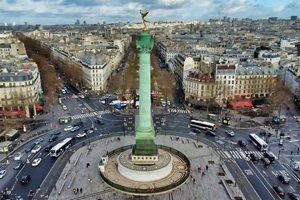
Tip 4: Visit the Site: While physical remnants are limited, experiencing the Place de la Bastille provides a sense of scale and location. Observe the layout of the square, the July Column, and the surviving section of the fortress outline.
Tip 5: Contextualize with the French Revolution: Understanding the broader historical narrative of the French Revolution is essential. Study the causes, events, and consequences of the revolution to appreciate the former site’s central role.
Tip 6: Consider the Ideological Shift: The demolition was a deliberate act meant to erase a symbol of oppression. Analyze the reasoning behind this decision and its implications for the new republic.
Tip 7: Reflect on Memory and Memorialization: The site now functions as a place of memory and public assembly. Explore how it has been memorialized and used for political demonstrations throughout history.
A nuanced understanding necessitates combining historical research, geographical analysis, symbolic interpretation, and on-site observation.
By appreciating this layered approach, a more holistic grasp of the sites enduring significance can be achieved.
1. Symbolism over substance

The phrase “symbolism over substance” gains profound relevance when examining the historical site in Paris. The lack of substantial physical remnants necessitates a shift in focus towards the symbolic weight the location carries within French collective memory.
- The Demolition as Symbolic Act
The deliberate destruction of the fortress immediately following its storming exemplifies the prioritization of symbolism. The act was not merely about dismantling a structure but eradicating a visible symbol of royal oppression. The empty space that remained became a stage for the ideals of the revolution.
- The Place de la Bastille as a Stage for Political Expression
The location continues to function as a gathering point for political demonstrations and celebrations. The physical space itself is less significant than its role as a venue for enacting and expressing political beliefs. The act of gathering there, regardless of the physical surroundings, imbues the location with symbolic meaning.
- The July Column as a Symbolic Marker
The construction of the July Column at the center of the Place serves as a constant reminder of revolutionary ideals. Its presence reinforces the locations symbolic function, transforming the physical structure into a representation of liberty and national identity. The column itself, as a physical object, is less important than what it represents.
- Absence as a Symbol
The very absence of substantial ruins contributes to the locations symbolic power. The open space serves as a reminder of what was deliberately destroyed, emphasizing the triumph of revolutionary ideals over the old regime. The lack of a tangible fortress reinforces the symbolic victory achieved during the revolution.
The Parisian location epitomizes the dominance of symbolism over substance. The historical events associated with the site, coupled with the deliberate erasure of the physical structure, have transformed it into a potent symbol of revolutionary ideals, liberty, and national identity, overshadowing any remaining physical presence. The emphasis is unequivocally on the intangible historical weight carried by the site rather than its tangible vestiges.
2. Revolutionary ideals

The storming of the Parisian fortress in 1789 directly embodies revolutionary ideals, particularly the rejection of monarchical authority and the pursuit of liberty. The structure, serving as a state prison, symbolized the arbitrary power of the French monarchy. Its capture by revolutionary forces marked a critical step toward dismantling the old regime and establishing a society founded on principles of equality and freedom. The event, though centered on a physical location, derives its profound meaning from these ascendant political and social concepts. The action exemplified a willingness to confront oppressive systems directly, a core tenet of revolutionary thought. The destruction of the structure further cemented its symbolic importance, signaling an irreversible break with the past.
The site’s subsequent transformation into a public square reinforced the association with these ideals. The space became a venue for celebrating the revolution and expressing civic identity. Commemorative monuments, such as the July Column, were erected to honor those who fought for liberty. The conscious effort to repurpose the site as a space for public gathering and political discourse reflects a commitment to realizing the revolutionary vision of a society governed by the people. The site, in effect, was transformed from a symbol of oppression to a symbol of liberation and popular sovereignty. The lack of tangible remains serves as a continual reminder of this transition, highlighting the triumph of ideas over material power.
The enduring significance of the location lies not in its physical presence but in its representation of revolutionary ideals. The area continues to function as a focal point for political demonstrations and celebrations, demonstrating the ongoing relevance of these principles in French society. The absence of the original structure serves as a powerful reminder of the transformative potential of revolutionary action and the enduring importance of liberty, equality, and fraternity. The site remains a potent symbol for those seeking to challenge injustice and promote social change.
3. Public memorialization

The concept of public memorialization assumes particular significance when considered in relation to the former site in Paris. The scarcity of physical remnants compels a reliance on symbolic representation and commemorative practices to preserve its historical importance. These memorialization efforts serve to keep alive the memory of the events that transpired there and the revolutionary ideals that it embodies.
- The July Column as a Central Memorial
The July Column, erected in the center of the Place de la Bastille, stands as a primary example of public memorialization at the site. This monument commemorates the July Revolution of 1830 and serves as a symbolic representation of liberty. The column’s presence transforms the square into a tangible reminder of revolutionary action and its legacy, compensating for the absence of the original structure. It functions as a focal point for national identity and historical reflection.
- The Place de la Bastille as a Site of Commemorative Events
The square regularly hosts commemorative events and demonstrations, particularly on Bastille Day (July 14th), the anniversary of the storming of the fortress. These events involve public gatherings, parades, and speeches that reinforce the site’s connection to revolutionary history. The active use of the space for commemorative purposes serves to perpetuate its symbolic meaning across generations.
- The Outlined Foundation Stones
While most of the original fortress was destroyed, the outline of some of the foundation stones is marked in the paving of the Place. This subtle memorialization allows visitors to visualize the former scale of the building. The outline provides a physical connection to the past, however minimal, assisting people in imaging the historical event.
- Symbolic Naming and Urban Planning
The decision to maintain the name “Place de la Bastille” and the integration of the sites history into subsequent urban planning decisions serve as subtle but pervasive forms of memorialization. These choices ensure that the events connected to that Parisian location remain central to the city’s identity and collective memory, subtly perpetuating the message for each generation of visitors.
These various forms of public memorializationfrom the grand July Column to the subtle outline of foundation stonescollectively contribute to the enduring significance of the area. They bridge the gap left by the absence of the original structure, ensuring that the ideals and events connected to the location remain a vital part of French historical consciousness. The site, though largely devoid of physical remnants, serves as a powerful testament to the importance of memory and the enduring impact of revolutionary ideals.
4. Historical absence

The concept of historical absence is central to understanding the legacy of the fortress in Paris. The demolition of the structure shortly after its storming created a void in the physical landscape. This intentional erasure was not merely a pragmatic act of removing a defunct building but a deliberate effort to eliminate a symbol of monarchical power. The resulting absence, therefore, becomes a crucial element in interpreting the site’s enduring significance. The destruction represents a conscious decision to prioritize the ideals of the revolution over the preservation of a tangible historical artifact. The empty space left behind becomes a stage for collective memory and political expression, transforming the site into a potent symbol of change.
The practical significance of recognizing this historical absence lies in the understanding that the location’s importance derives not from what remains physically but from what has been deliberately removed. Visitors approaching the Place de la Bastille should not expect to find extensive ruins; instead, they encounter a space that compels them to engage with history through imagination and reflection. The lack of substantial physical evidence forces an active participation in reconstructing the past, prompting consideration of the events that transpired and their ongoing relevance. The July Column, erected in the center of the Place, serves as a reminder of this historical disruption, symbolizing the triumph of revolutionary ideals over the old regime. The area, defined by what is missing, becomes a canvas upon which historical narratives are projected.
In summary, the historical absence linked to the former structure is not simply a matter of physical loss but a defining characteristic of the Parisian location. This absence underscores the power of symbolic representation and the transformative potential of revolutionary action. Understanding the site requires acknowledging what has been deliberately erased and appreciating the enduring impact of this absence on collective memory and political identity. The concept serves as a reminder that history is not always found in tangible remains but can be powerfully conveyed through the void left by their deliberate removal. The challenge lies in interpreting the historical narrative embedded in the absence itself.
5. Site's transformation

The metamorphosis of the area in Paris, once occupied by a formidable structure, reflects a profound shift in political and social values, fundamentally altering its physical and symbolic significance. The relationship between the former imposing structure and its current iteration as a public square highlights the enduring power of revolutionary ideals and the intentional erasure of oppressive regimes.
- From Fortress to Public Space
The most significant transformation is the shift from a heavily fortified prison, symbolizing royal authority, to an open public square. This change represents the overthrow of the monarchy and the embrace of popular sovereignty. The physical space was deliberately opened to the public, allowing citizens to gather, express their opinions, and celebrate revolutionary achievements. This change marked a deliberate rejection of the past and an embrace of a new political order.
- Demolition as Symbolic Act
The dismantling of the former structure shortly after its capture was not merely a practical measure but a symbolic act of defiance. The destruction signified the rejection of monarchical power and the triumph of revolutionary ideals. The empty space left behind became a canvas for constructing a new national identity, free from the oppression of the past. This act transformed the area from a symbol of fear to a symbol of hope and liberation.
- Construction of Memorials and Monuments
The subsequent construction of memorials and monuments, such as the July Column, further solidified the site’s transformation. These structures serve as reminders of revolutionary events and ideals, reinforcing the area’s role as a space for national remembrance. The memorials actively shape the public perception of the site, turning a former symbol of oppression into a celebration of liberty and self-governance.
- Urban Integration and Continued Commemoration
The integration of the area into the broader urban fabric of Paris, alongside the continued hosting of commemorative events and political demonstrations, ensures the ongoing relevance of the site’s transformation. These ongoing activities maintain the connection to revolutionary history and the ideals of liberty and equality, ensuring the story endures for future generations.
The site’s journey from a symbol of royal authority to a space of public gathering and commemoration underscores the power of revolutionary action and the enduring importance of memory. The current state reflects a deliberate effort to erase the vestiges of oppression and create a space dedicated to liberty and equality. The limited tangible associated with that location are superseded by its potent symbolism and its ongoing role in shaping French national identity.
Frequently Asked Questions
The following addresses common inquiries regarding the current state and historical context of the former fortress site in Paris.
Question 1: What physical elements of the fortress remain visible at the Place de la Bastille today?
Very little of the original structure remains. Some foundation stones are marked in the paving, providing a general outline. A few stones from the structure are on display at the nearby Muse Carnavalet.
Question 2: Why was the fortress destroyed so soon after the storming?
The demolition was a deliberate political act, intended to erase a symbol of royal authority and oppression. The revolutionaries sought to create a clean slate upon which to build a new society based on principles of liberty and equality.
Question 3: How does the July Column relate to the Parisian site?
The July Column, located in the center of the Place, commemorates the July Revolution of 1830. While not directly related to the storming, it serves as a reminder of the ongoing struggle for liberty and the enduring legacy of revolutionary ideals.
Question 4: What is the significance of the Place de la Bastille today?
The Place de la Bastille remains a symbolically important site, serving as a focal point for political demonstrations, celebrations, and national commemorations. It embodies the spirit of revolution and the ongoing pursuit of liberty.
Question 5: Can one visit the former site?
Yes, the Place de la Bastille is a public square accessible to all. While the fortress itself is gone, visitors can experience the space and reflect on its historical significance. The area is served by the Bastille metro station.
Question 6: Are there any museums or archives dedicated to the history of the area?
The Muse Carnavalet in Paris contains some artifacts and historical documents related to the former structure. Archival materials can also be found in the Bibliothque Nationale de France and other historical institutions.
Understanding that little physical structure remains clarifies that the historical significance of that area in Paris centers on symbolic representation and the enduring legacy of revolutionary ideals.
The following section will explore the enduring legacy of the location in contemporary French society.
Concluding Observations
The preceding exploration has underscored that physical vestiges linked to the location are notably scant. The area’s significance resides instead in its potent symbolic value as a watershed moment in French history and a catalyst for revolutionary ideals. The deliberate erasure of the physical structure transformed the space into a public forum for collective memory and political expression, a space that continues to resonate within French society.
The limited tangible at the Parisian location necessitates a concentrated focus on historical context, symbolic interpretation, and public memorialization to fully comprehend its enduring importance. Continued engagement with the area’s narrative ensures that the revolutionary ideals it embodies remain a vibrant force in shaping both national identity and the pursuit of liberty.