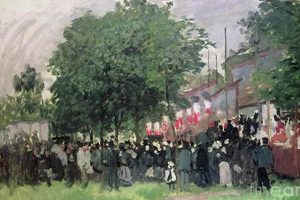
Bastille Day, observed annually on July 14th, commemorates a pivotal event in the French Revolution. Celebrations across France, and within French communities globally, involve a variety of activities that reflect both the historical significance and the contemporary spirit of the occasion. These commonly feature military parades, public concerts, firework displays, and communal meals.
The holiday represents the values of liberty, equality, and fraternity. Its importance lies in serving as a reminder of the struggle for democracy and the establishment of a republican government in France. The day fosters national unity and provides an opportunity for citizens to express their patriotism. The historical context centers on the storming of the Bastille prison in 1789, a symbolic act of defiance against royal authority.
Traditional and modern observances vary, reflecting regional customs and evolving interpretations of national identity. Examining the specifics of these celebrations reveals much about French culture and the ongoing relevance of the Revolution’s ideals.
Observing Bastille Day
Engagement with Bastille Day festivities allows for a deeper understanding of French history and culture. These suggestions offer avenues for meaningful participation, whether in France or abroad.
Tip 1: Attend a Military Parade: Observe the formal military processions that typically occur in major cities. These parades showcase the French armed forces and are a significant display of national pride.
Tip 2: Enjoy a Public Concert: Many cities and towns host free concerts in public spaces. These events provide an opportunity to experience French music and culture in a communal setting.
Tip 3: View Fireworks Displays: Spectacular fireworks displays are a hallmark of Bastille Day celebrations. Viewing these displays offers a visual spectacle commemorating the holiday.
Tip 4: Partake in Communal Meals: Many communities organize picnics or open-air feasts. Sharing a meal with others fosters a sense of community and commemorates the spirit of unity.
Tip 5: Visit Historical Sites: Consider visiting historical sites related to the French Revolution, such as the Place de la Bastille or the Conciergerie. These locations offer a tangible connection to the past.
Tip 6: Learn About French History: Prior to or during the day, take time to learn about the events surrounding the storming of the Bastille and its significance in French history. A deeper understanding enriches the experience.
Tip 7: Support Local French Businesses: Patronizing French restaurants, bakeries, or shops provides a way to support the community and enjoy authentic French products and cuisine.
Engagement with these observances promotes a broader appreciation for French culture and history. Participation can vary according to individual interest and available resources.
Understanding the historical context and the diverse ways it is commemorated provides a meaningful framework for observing the day. This understanding enriches one’s appreciation for the national holiday.
1. Parades
Military parades form a core element of Bastille Day observances across France, serving as a potent symbol of national unity, military strength, and historical commemoration. These parades are not merely displays of armed forces; they represent a tangible link to the values and sacrifices associated with the French Revolution.
- Symbolic Representation of National Strength
The military parade showcases the technological capabilities and personnel readiness of the French armed forces. It serves as a visual assertion of national sovereignty and a deterrent to potential adversaries. For instance, the annual parade on the Champs-lyses in Paris features various branches of the military, including infantry, armored vehicles, and aerial displays.
- Commemoration of Historical Events
The parade route often passes by significant historical landmarks related to the French Revolution, such as the Place de la Bastille. The presence of military units during the parade is a symbolic reminder of the struggle for liberty and the defense of national values. The event is carefully choreographed to evoke a sense of historical continuity.
- Display of National Unity
The parade includes representatives from diverse units within the French military, reflecting the composition of French society. It fosters a sense of collective identity and patriotism among both participants and spectators. Civilians often line the streets to witness the parade, demonstrating their support for the armed forces and the nation.
- International Collaboration
In some years, the parade features participation from allied nations, underscoring France’s role in international security and cooperation. This symbolizes the importance of diplomacy and shared values in maintaining global stability. Invited foreign military units march alongside French troops, signifying mutual respect and shared commitment to peace.
Military parades are an integrated component of Bastille Day celebrations. They epitomize national pride, commemorate historical struggles, and project an image of strength and unity, serving as a focal point for national identity.
2. Concerts

Concerts represent a significant facet of Bastille Day celebrations, providing a communal and accessible means of participating in the national holiday. These musical performances contribute to the festive atmosphere and offer an avenue for expressing national identity and shared cultural values.
- Promotion of National Identity and Cultural Heritage
Bastille Day concerts often feature French music, both traditional and contemporary. These performances showcase the nation’s rich musical heritage and promote a sense of cultural pride. For example, free concerts in public squares may include renditions of the “Marseillaise” or performances by popular French artists.
- Facilitating Communal Gathering and Celebration
Public concerts provide a space for citizens to gather and celebrate collectively. These events transcend social barriers and create a sense of unity among attendees. Families, friends, and strangers come together to enjoy the music and festivities, fostering a sense of community.
- Accessibility and Inclusivity
Many Bastille Day concerts are offered free of charge, making them accessible to a wide range of individuals regardless of socioeconomic status. This inclusivity ensures that the celebrations are available to all citizens, promoting a sense of shared ownership of the national holiday.
- Diversification of Celebratory Activities
Concerts provide a contrast to more formal events, such as military parades, and offer a more relaxed and entertaining means of participating in Bastille Day. The inclusion of concerts diversifies the holiday’s activities and appeals to a broader range of interests and preferences. Concerts are often followed by fireworks displays, extending the evening’s entertainment.
Concerts are an integral part of the Bastille Day experience, enriching the holiday with music, community engagement, and cultural expression. Their accessibility and communal nature contribute to the overall celebratory atmosphere, reinforcing national identity and shared values.
3. Fireworks
Fireworks displays are a major component of Bastille Day celebrations, representing a visual culmination of the day’s festivities and symbolizing the liberation and triumph of the French Revolution. Their prominence stems from a long-standing tradition of using light and spectacle to commemorate significant events, and they serve as a powerful unifying force, drawing communities together in shared awe and national pride. For example, the annual fireworks display over the Eiffel Tower in Paris is a globally recognized spectacle, attracting millions of spectators and symbolizing France’s cultural influence.
The practical significance of understanding the connection between fireworks and the national holiday lies in appreciating their deliberate symbolic value. The colors, patterns, and scale of the displays are often carefully chosen to evoke feelings of patriotism, joy, and remembrance. Municipalities and event organizers invest considerable resources in creating these displays to maximize their emotional impact and to reinforce the values associated with the holiday. Moreover, the event promotes tourism and economic activity in the regions where celebrations are held, as evidenced by the influx of visitors to cities with large-scale firework events.
In essence, fireworks on Bastille Day are more than mere entertainment; they are a carefully orchestrated expression of national identity and a symbolic reaffirmation of the Revolution’s ideals. The widespread participation in viewing these displays underscores their importance as a shared cultural experience, contributing significantly to the collective memory and the ongoing celebration of French national values. The careful planning and execution of these events reflect the deliberate effort to ensure their lasting impact on the populace.
4. Feasting
Feasting constitutes a prominent aspect of Bastille Day celebrations, deeply interwoven with the holiday’s historical and cultural significance. Communal meals and picnics serve as more than mere sustenance; they function as symbolic acts of unity and shared national identity. This practice is rooted in the revolutionary period itself, where public gatherings and collective consumption of food were integral to fostering solidarity and a sense of collective purpose. For instance, community-organized feasts often feature traditional French cuisine, showcasing regional specialties and reinforcing a shared culinary heritage. This tradition mirrors historical accounts of citizens gathering in public spaces following the storming of the Bastille, sharing food and celebrating their newfound liberty.
The practical significance of understanding this connection lies in recognizing feasting as an active participation in the celebration. Families, friends, and communities come together to prepare and share meals, reinforcing social bonds and commemorating the values of liberty, equality, and fraternity. The act of sharing food mirrors the ideals of communalism that underpinned the French Revolution. Furthermore, local economies often benefit from increased patronage of restaurants, bakeries, and markets, as individuals and groups prepare for these celebratory meals. Events often feature demonstrations of culinary expertise, such as baking competitions, and highlight agricultural achievements through showcasing of regional food products.
In summary, feasting on Bastille Day transcends mere consumption; it embodies a profound connection to the holiday’s historical and cultural roots. By participating in communal meals, individuals actively engage in celebrating French national identity and the values of unity and equality. This understanding highlights the intentionality behind these culinary customs and their integral role in the comprehensive Bastille Day experience, ensuring a continuation of the traditional observation.
5. Remembrance

Remembrance, in the context of Bastille Day, manifests as a crucial component of the national holiday’s observances. Activities undertaken during this day serve not only to celebrate the storming of the Bastille but also to commemorate the sacrifices and ideals associated with the French Revolution. The connection stems from a desire to acknowledge the historical significance of the event and its lasting impact on French identity. Acts of remembrance include memorial services, visits to historical sites, and moments of silence. These activities promote a deeper understanding of the revolutionary period and its relevance to contemporary society. For instance, ceremonies held at the Place de la Bastille honor those who fought for liberty and equality, serving as a tangible link between the past and the present.
The practical applications of this understanding are multifaceted. Remembrance activities foster national unity by providing a shared experience of historical reflection. They also serve as a form of civic education, informing younger generations about the struggles and triumphs that shaped the nation. Preservation efforts aimed at maintaining historical sites associated with the Revolution contribute to the tangible remembrance of these events. Furthermore, artistic and literary works often draw inspiration from the French Revolution, reinforcing its cultural significance and perpetuating its memory. An example includes the annual concert at the foot of the Eiffel Tower, frequently showcasing music and performances that evoke themes of liberty and national pride.
In conclusion, remembrance is inextricably linked to Bastille Day celebrations, providing a framework for understanding the historical context and its enduring significance. The challenge lies in ensuring that these commemorative activities remain relevant and engaging for future generations, fostering a continuous appreciation for the values and sacrifices that shaped the French Republic. This ongoing connection guarantees that Bastille Day remains more than a mere celebration; it serves as a profound act of national remembrance.
6. Celebrations

The act of celebration is intrinsically linked to Bastille Day observances, forming the core of what individuals and communities engage in on July 14th. Celebrations, in this context, are not merely frivolous activities but rather deliberate acts of commemorating historical events, reaffirming national values, and fostering social cohesion. The storming of the Bastille on July 14, 1789, serves as the historical impetus for these celebrations, which manifest in various forms, from formal military parades to informal communal gatherings. The importance of celebrations as a component of Bastille Day lies in their capacity to translate historical narratives into tangible experiences, allowing participants to connect with the past in a meaningful way. For instance, public concerts and fireworks displays serve as collective expressions of joy and national pride, visually and aurally reinforcing the ideals of liberty, equality, and fraternity.
The practical significance of understanding this connection is apparent in the planning and execution of Bastille Day events. Municipalities and organizers invest significant resources in creating celebrations that resonate with the public and promote a sense of national unity. These celebrations, in turn, generate economic activity through tourism and local commerce, as individuals travel to participate in festivities and patronize local businesses. Furthermore, the celebrations provide opportunities for cultural exchange and intercultural understanding, particularly in regions with diverse populations. For example, community-organized festivals often showcase traditional French cuisine, music, and dance, promoting cultural awareness and appreciation.
In essence, celebrations constitute the active embodiment of Bastille Day’s historical and cultural significance. The challenge lies in ensuring that these celebrations remain relevant and inclusive, reflecting the evolving demographics and values of French society. Preserving the historical context while embracing contemporary expressions of national identity is crucial for maintaining the integrity and purpose of Bastille Day celebrations, ensuring they continue to serve as a unifying force for future generations.
Frequently Asked Questions About Bastille Day Activities
This section addresses common inquiries concerning the various ways individuals and communities engage with Bastille Day, clarifying the purpose and significance of these activities.
Question 1: Is attending a military parade mandatory for French citizens?
Attendance at a military parade is not mandatory. It is an optional activity for those who wish to observe and participate in the national holiday.
Question 2: Are fireworks displays the only form of public entertainment available on Bastille Day?
No. Various forms of public entertainment are available, including concerts, street performances, and communal meals. Fireworks displays represent one aspect of a broader range of celebratory activities.
Question 3: Is it necessary to speak French to participate in Bastille Day celebrations?
Speaking French is not a prerequisite for participating in Bastille Day celebrations. While knowledge of the language may enhance the experience, many events are accessible and enjoyable for individuals regardless of their linguistic abilities.
Question 4: Are Bastille Day celebrations limited to France?
Bastille Day celebrations are not limited to France. French communities and cultural organizations around the world also commemorate the holiday with various events and activities.
Question 5: Is participation in Bastille Day events limited to individuals of French descent?
Participation in Bastille Day events is not limited to individuals of French descent. All are welcome to partake in the celebrations and commemorate the historical significance of the holiday.
Question 6: What is the historical significance of participating in communal meals on Bastille Day?
Participating in communal meals on Bastille Day symbolizes unity and shared identity. It reflects the spirit of communalism that underpinned the French Revolution and provides an opportunity to connect with others in a convivial setting.
Participation in Bastille Day activities is diverse and inclusive, reflecting the national holiday’s significance as a celebration of liberty, equality, and fraternity.
This understanding facilitates a more meaningful engagement with the holiday’s historical and cultural context, leading to a greater appreciation for French national identity.
Bastille Day Observances
This exploration has detailed what people do on Bastille Day, ranging from formal military parades and public concerts to communal feasts and acts of remembrance. These diverse activities serve as avenues for both commemoration and celebration, reflecting the historical significance and enduring values associated with the French Revolution. Understanding these activities allows for a deeper appreciation of French national identity and the continuing legacy of the Revolution’s ideals.
As societies evolve, traditions are subject to change and reinterpretation. Maintaining a connection to the past while adapting to contemporary contexts is crucial for ensuring that Bastille Day remains a meaningful and relevant celebration for future generations. The commitment to preserving historical understanding and fostering inclusivity is essential for safeguarding the holiday’s enduring significance.