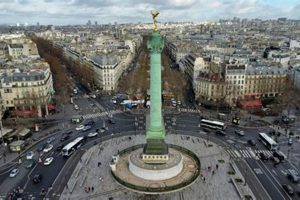
Bastille Day, celebrated annually on July 14th, commemorates a pivotal moment in French history and offers a vibrant array of events throughout the capital. The day marks the anniversary of the storming of the Bastille in 1789, a key event during the French Revolution. Planning activities in advance is advisable, given the large crowds expected at popular events.
Observing this national holiday provides an opportunity to experience French culture and patriotism. The celebrations showcase military prowess, national pride, and the spirit of liberty. Participation in the day’s events allows individuals to connect with the historical significance and contemporary relevance of the holiday, fostering an appreciation for French heritage.
The following sections detail prominent events and activities that typically characterize the celebrations, providing insights into planning an itinerary and making the most of the holiday experience. These include details on the military parade, fireworks displays, and various cultural festivities occurring throughout the city.
Bastille Day in Paris
Navigating the Bastille Day celebrations in Paris requires preparation and awareness. The following tips offer practical advice for maximizing enjoyment and minimizing potential inconveniences during this popular event.
Tip 1: Secure Accommodation Well in Advance: Demand for lodging during the holiday is high. Booking accommodation several months prior to July 14th is strongly recommended to ensure availability and favorable rates.
Tip 2: Plan Transportation Strategically: Public transportation will be crowded. Utilize the metro system for navigating the city, but anticipate delays. Consider walking shorter distances to avoid congestion.
Tip 3: Arrive Early for Key Events: The military parade and fireworks display attract large crowds. Arriving several hours in advance is necessary to secure a good viewing spot. Areas along the Champs-lyses and the Champ de Mars will be particularly congested.
Tip 4: Be Aware of Security Measures: Increased security presence is standard procedure. Expect bag checks and potential delays at public events. Adhere to all instructions from security personnel.
Tip 5: Pack Essentials Appropriately: Carry water, sunscreen, and comfortable shoes, especially if planning to spend extended periods outdoors. A small backpack for essentials will be beneficial. Be mindful of pickpockets in crowded areas and keep valuables secure.
Tip 6: Explore Alternative Viewing Locations: If avoiding large crowds is a priority, consider alternative viewing locations for the fireworks display. Parks and bridges further from the Eiffel Tower may offer less crowded vantage points.
Tip 7: Familiarize Yourself with Event Schedules: Obtain a detailed schedule of events beforehand, including parade routes, fireworks timings, and museum opening hours. This will facilitate effective itinerary planning.
By implementing these suggestions, visitors can enhance their experience of the Bastille Day celebrations while mitigating potential challenges. Careful planning is key to a successful and enjoyable holiday.
The subsequent section provides details on specific events and their respective logistical considerations.
1. Military Parade

The military parade stands as a central event during the Bastille Day celebrations in Paris, embodying a significant aspect of French national identity and offering a spectacle of military precision and technological prowess for observers. Understanding its components and logistics is crucial for those considering attendance.
- Route and Timing
The parade typically commences in the morning, proceeding down the Champs-lyses from the Arc de Triomphe to the Place de la Concorde. The timing is precise, with various units and aircraft passing predetermined points at specific intervals. Spectators must arrive well in advance to secure a viewing spot along the route due to significant crowd density.
- Participating Units
The parade showcases a diverse range of military units, including infantry, cavalry, and motorized divisions. Representation from different branches of the French Armed Forces is common, along with participation from foreign allied forces. Each unit’s uniform and equipment contribute to the overall visual display.
- Aerial Display
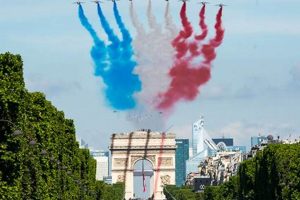
The aerial component of the parade involves flyovers by military aircraft, including fighter jets, transport planes, and helicopters. The Patrouille de France, the French Air Force’s aerobatic demonstration team, typically performs a precision display, leaving trails of blue, white, and red smoke the colors of the French flag.
- Presidential Review
The President of the Republic, as head of state and commander-in-chief, presides over the parade, typically positioned at the Place de la Concorde. The event serves as a demonstration of the armed forces’ commitment to national defense and a symbol of civilian control over the military.
Given the parade’s prominence, attending requires strategic planning. Understanding the route, timing, participating units, and security arrangements will enable visitors to optimize their experience and appreciate the event’s significance within the broader context of Bastille Day observations.
2. Eiffel Tower Fireworks

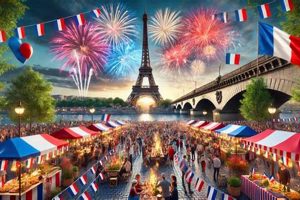
The Eiffel Tower fireworks display represents a culminating spectacle of the Bastille Day celebrations in Paris, attracting large crowds and serving as a focal point for national revelry. Its significance in shaping the overall Bastille Day experience necessitates a detailed examination.
- Central Event and Symbolism
The fireworks display transcends mere pyrotechnics; it is a symbolic representation of national unity and celebration of French identity. The Eiffel Tower, as a globally recognized landmark, becomes the canvas for a choreographed light show reflecting themes of liberty, equality, and fraternity, key tenets of the French Republic. It solidifies itself as a central activity during the Bastille Day festivities.
- Logistical Considerations and Viewing Locations
Attending the Eiffel Tower fireworks requires strategic planning. Prime viewing locations, such as the Champ de Mars, are extremely crowded, necessitating early arrival. Alternative viewing locations include parks and bridges along the Seine River, offering varying perspectives and degrees of congestion. Transportation planning is crucial, given potential disruptions to public transport due to road closures and crowd management.
- Choreography and Artistic Design
The fireworks display is a meticulously planned artistic performance. It involves a synchronization of pyrotechnics, music, and light effects to create a cohesive and emotionally resonant experience. The choreography often incorporates contemporary themes and historical references, adding layers of meaning and enhancing the spectacle’s impact. This art is important for the Bastille day attendees.
- Safety and Security Measures
Due to the large crowds, stringent safety and security measures are implemented. Security checkpoints, bag inspections, and restricted access zones are standard protocols. Adherence to official guidelines and awareness of surroundings are essential for ensuring personal safety and contributing to a secure environment. Security presence is heavy, but it facilitates a secure environment, which allows Bastille day enthusiasts to enjoy themselves.
The Eiffel Tower fireworks are inextricably linked to the Bastille Day experience in Paris. Effective planning and informed decision-making regarding viewing locations, transportation, and security protocols will significantly enhance one’s ability to appreciate this central and symbolic component of the national celebration.
3. Museum Visits
Museum visits represent a significant, though often overlooked, component of planned activities during the Bastille Day celebrations in Paris. The holiday’s historical context, deeply rooted in the ideals of the French Revolution, finds tangible expression within the collections and exhibits housed in the city’s numerous museums. This connection elevates museum visits beyond simple tourism, positioning them as opportunities for deeper engagement with the historical narrative of the day.
Many Parisian museums offer free admission or special exhibitions on July 14th, directly linking themselves to the national holiday and facilitating greater public access to cultural heritage. For instance, the Muse du Louvre has, in past years, granted free entry, allowing visitors to contemplate artworks created during or influenced by the revolutionary period. Similarly, the Muse Carnavalet, dedicated to the history of Paris, offers particularly relevant insights into the events surrounding the storming of the Bastille. Understanding that these cultural institutions align their offerings with the holiday enhances the experience and provides a more profound appreciation of its significance.
The strategic inclusion of museum visits within a Bastille Day itinerary offers a respite from the crowded outdoor celebrations and provides a contemplative counterpoint to the more boisterous festivities. Furthermore, it acknowledges and reinforces the importance of historical memory and cultural preservation in the context of national identity. While the military parade and fireworks capture the spectacle of the holiday, museum visits provide the historical depth and intellectual engagement necessary for a comprehensive understanding of Bastille Day’s enduring legacy. Thus, a thoughtful inclusion of such visits is not merely a pastime, but an integral component of experiencing and understanding Bastille Day in Paris.
4. Picnics
Picnics represent a significant, yet often understated, aspect of the Bastille Day experience in Paris. They provide an opportunity for individuals and families to engage in communal celebration while enjoying the city’s parks and green spaces, contributing to the festive atmosphere pervasive throughout the holiday.
- Strategic Location Selection
The selection of a picnic location on Bastille Day requires careful consideration. Popular parks, such as the Champ de Mars near the Eiffel Tower or the Jardin du Luxembourg, offer proximity to key events and iconic landmarks. However, these locations are subject to substantial crowds, necessitating early arrival to secure a suitable spot. Alternative locations, like the Parc des Buttes-Chaumont or the Bois de Vincennes, may provide a more relaxed environment, though situated further from central festivities.
- Culinary Provisions
The composition of a Bastille Day picnic is a matter of personal preference, though certain culinary traditions are commonly observed. Baguettes, cheeses, charcuterie, and wine are staples, reflecting French gastronomy. Portable and non-perishable items are particularly suitable, given the potential for extended periods outdoors and limited access to refrigeration. Preparing and transporting the picnic provisions requires advance planning to ensure a seamless and enjoyable experience.
- Communal Gathering and Social Interaction
Picnics on Bastille Day often serve as a focal point for social interaction and communal gathering. Families, friends, and acquaintances converge in parks to share food, conversation, and the spirit of celebration. The act of picnicking fosters a sense of unity and collective identity, aligning with the holiday’s themes of national pride and civic engagement. The relaxed and informal setting encourages interactions among individuals who might not otherwise connect.
- Alternative to Crowded Events
Picnics offer a viable alternative to the densely populated events, such as the military parade and fireworks display. For individuals seeking a less congested and more intimate experience, a picnic provides an opportunity to celebrate Bastille Day while avoiding the challenges associated with large crowds. It allows for a more personalized and contemplative engagement with the holiday’s themes and atmosphere.
The integration of picnics into Bastille Day plans offers a versatile and customizable approach to celebrating the holiday. It addresses the diverse needs and preferences of individuals, ranging from those seeking proximity to central events to those prioritizing a more tranquil and intimate experience. The selection of location, provisions, and social context determines the overall impact of the picnic on one’s Bastille Day experience, solidifying its relevance and underlining its flexibility within the scope of planned activities.
5. Concerts

Concerts constitute a significant element of planned activities during Bastille Day in Paris, offering diverse musical experiences that contribute to the overall celebratory atmosphere. The availability of concerts, ranging from classical performances to contemporary music events, aligns with the holiday’s objective of fostering national unity and cultural expression. The presence of concerts effectively broadens the appeal of Bastille Day, attracting a wider range of attendees with differing artistic preferences. For example, free concerts are frequently held at the Champ de Mars, directly preceding the fireworks display, effectively integrating live music into the broader spectacle and enhancing the audience experience. Other venues across the city also host performances, demonstrating the pervasive nature of musical celebrations throughout the holiday.
The importance of concerts as a component of Bastille Day lies in their ability to create a shared emotional experience. Live music possesses the capacity to evoke feelings of patriotism, joy, and communal solidarity, thereby reinforcing the holiday’s underlying themes. Furthermore, the inclusion of diverse musical genres caters to a wide spectrum of tastes, ensuring that a large segment of the population can find an appealing avenue for participation. The practical significance of understanding this connection resides in the ability to effectively plan a Bastille Day itinerary that incorporates musical events, thus optimizing one’s engagement with the holiday’s multifaceted character. For instance, individuals interested in classical music could attend a concert at a historic church, while those preferring contemporary music could seek out open-air performances in public spaces.
In summary, concerts serve as a vital and versatile component of Bastille Day in Paris, contributing significantly to the holiday’s festive environment and cultural inclusivity. The strategic integration of musical events into planned activities enhances the overall Bastille Day experience and facilitates a deeper engagement with the holiday’s underlying themes of national unity and cultural expression. While logistical challenges, such as crowd management and event access, exist, the benefits of incorporating concerts into Bastille Day plans outweigh these considerations, reinforcing the integral role of live music in shaping the holiday’s character.
6. Bal des Pompiers

The Bal des Pompiers (Firemen’s Ball) represents a unique and deeply ingrained tradition within the Bastille Day celebrations in Paris, offering a distinctive cultural experience that departs from more formal events and provides an opportunity for interaction with local communities.
- Historical Origins and Evolution
The Bal des Pompiers originated in the early 20th century as informal gatherings organized by fire stations to raise funds and foster camaraderie within the community. Over time, these events evolved into larger, more public celebrations held on the eve of Bastille Day and often continuing into the holiday itself. Their enduring popularity has solidified their position as an integral aspect of the Bastille Day festivities.
- Location and Accessibility
Fire stations throughout Paris participate in the Bal des Pompiers, transforming their premises into impromptu dance venues. The accessibility of these events varies; some fire stations offer free admission, while others may charge a nominal entry fee. The decentralized nature of the Bal des Pompiers ensures that celebrations occur throughout the city, providing opportunities for participation regardless of location.
- Atmosphere and Entertainment
The atmosphere at a Bal des Pompiers is typically informal and festive, characterized by music, dancing, and convivial interaction. Entertainment often includes live bands or DJs playing a mix of popular music. The events attract a diverse crowd, encompassing both locals and tourists, contributing to a sense of shared celebration.
- Community Engagement and Cultural Significance
The Bal des Pompiers fosters a sense of community engagement and offers a unique opportunity to interact with members of the Parisian fire service. These events provide a platform for celebrating civic pride and appreciating the contributions of first responders. Their continued popularity reflects the enduring cultural significance of these events within the broader context of Bastille Day celebrations.
The Bal des Pompiers, therefore, represents a compelling addition to planned activities on Bastille Day, offering a distinct cultural experience that complements more formal events and allows for authentic interaction with Parisian communities. Its decentralized nature and informal atmosphere contribute to the overall vibrancy of the Bastille Day celebrations, solidifying its position as a noteworthy and engaging aspect of the holiday experience.
7. River Cruises

River cruises on the Seine offer a unique perspective on the Bastille Day celebrations in Paris, providing a vantage point distinct from the crowded streets and parks. These cruises allow individuals to observe key events, such as the fireworks display at the Eiffel Tower, from a less congested environment, mitigating the challenges associated with ground-level viewing. The controlled setting of a river cruise also contributes to a more structured experience, offering amenities and services that are not readily available in public spaces. Booking river cruises as a Bastille Day activity directly addresses the logistical complexities of navigating the city during peak tourist season.
Several river cruise operators offer specialized Bastille Day packages, which often include dinner, live music, and prime viewing locations for the fireworks. These packages streamline the planning process, providing a comprehensive experience that encompasses dining, entertainment, and optimal viewing opportunities. For instance, certain cruises coordinate their routes to coincide with the timing of the fireworks, ensuring passengers have unobstructed views. The cost of these cruises varies depending on the package, but they generally offer a higher degree of comfort and convenience compared to attempting to secure a comparable viewing position on land. The strategic positioning on the river can also minimize exposure to potential safety concerns related to large crowds.
In conclusion, river cruises present a viable and attractive option for experiencing Bastille Day in Paris, offering a distinct perspective on the celebrations and mitigating logistical challenges associated with ground-level viewing. These cruises, particularly those offering specialized packages, streamline the planning process and provide a comprehensive experience that encompasses dining, entertainment, and optimal viewing opportunities. The controlled setting and enhanced amenities contribute to a more comfortable and secure environment, enhancing the overall enjoyment of the holiday.
Frequently Asked Questions About Bastille Day in Paris
The following addresses common inquiries regarding the Bastille Day celebrations in Paris, offering clarity on logistics, events, and related considerations.
Question 1: Are there restrictions on accessing the Champs-lyses during the military parade?
Access to the Champs-lyses is generally open to the public, but security checkpoints and crowd control measures are implemented. Early arrival is strongly advised to secure a viewing location. Certain areas may be restricted due to security concerns or VIP access.
Question 2: Is it necessary to purchase tickets for the Eiffel Tower fireworks display?
Viewing the Eiffel Tower fireworks display from public areas, such as the Champ de Mars, is free of charge. However, access to certain areas may be restricted due to capacity limitations. Purchasing tickets for private events or river cruises offering views of the fireworks is an alternative option.
Question 3: Are museums typically open on Bastille Day?
Museum opening hours on Bastille Day vary. Some museums offer free admission or special exhibitions, while others may have reduced hours or remain closed. Consulting individual museum websites for specific information is recommended.
Question 4: What is the dress code for the Bal des Pompiers?
The dress code for the Bal des Pompiers is generally casual. Comfortable clothing and footwear are advisable, given the informal atmosphere and potential for dancing.
Question 5: What are the transportation options for navigating Paris on Bastille Day?
Public transportation, including the metro and buses, operates on Bastille Day, but anticipate increased congestion and potential delays. Walking may be a viable option for shorter distances. Taxi services may be limited due to road closures and traffic.
Question 6: Are there designated picnic areas in Parisian parks on Bastille Day?
Designated picnic areas may not be formally established in all Parisian parks on Bastille Day. However, picnicking is generally permitted in most parks, subject to standard regulations regarding waste disposal and noise levels. Check local park guidelines for specific restrictions.
The above provides clarification on frequently encountered concerns, assisting in effective planning for Bastille Day in Paris. These details can enhance the visitor experience.
The subsequent section provides a summary of these points. It also suggests additional resources.
Concluding Guide to Bastille Day Experiences in Paris
This exploration of what to do on Bastille Day in Paris has detailed prominent events, logistical considerations, and alternative activities available during the national holiday. From attending the military parade and fireworks display to exploring museums and enjoying picnics, diverse options cater to varying interests and preferences. Emphasis has been placed on the importance of advance planning, awareness of security measures, and strategic navigation of the city to optimize the holiday experience.
Ultimately, experiencing Bastille Day in Paris presents a unique opportunity to engage with French history, culture, and national identity. By carefully considering the information provided and tailoring an itinerary to individual interests, one can effectively participate in and appreciate the significance of this national celebration. Further research into specific events and venues is encouraged to refine preparations and ensure a memorable and meaningful experience.