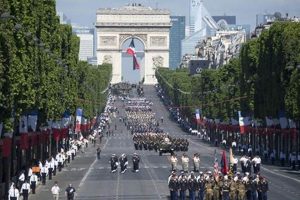
The French National Day, commemorating a pivotal moment in French history, occurs annually on July 14th. This date marks the anniversary of the Storming of the Bastille, a significant event during the French Revolution. Celebrations are held across France and in French communities worldwide.
The holiday symbolizes liberty, equality, and fraternity the core values of the French Republic. It provides an opportunity to reflect on the nation’s history, cultural heritage, and democratic ideals. Celebrations typically include military parades, fireworks displays, concerts, and public gatherings, fostering a sense of national unity and pride.
Understanding the date of this important observance facilitates participation in commemorative events and provides context for appreciating French culture and history. Planning for travel, attending local festivities, or simply learning more about this national holiday are all enhanced by knowing its fixed date each year.
Tips for Planning Around the French National Day
Effective planning is essential when considering travel to France or participation in local French cultural events around the time of the French National Day. Understanding the implications of this national holiday on local services and activities is crucial.
Tip 1: Booking Accommodations: Secure accommodations well in advance. The French National Day is a popular time for both domestic and international travel, leading to increased demand and potentially higher prices for lodging.
Tip 2: Transportation Considerations: Plan for potential disruptions in transportation. While major routes generally remain open, increased traffic congestion and potential delays in public transportation services are common, particularly in major cities like Paris.
Tip 3: Event Scheduling: Consult local event listings to identify parades, fireworks displays, and other public celebrations. Confirm timings and locations in advance, as schedules may be subject to change.
Tip 4: Business Hours: Be aware that many businesses, including government offices, banks, and some retail establishments, may be closed on the National Day. Plan accordingly for essential services and purchases.
Tip 5: Restaurant Reservations: If planning to dine out, make reservations well in advance. Restaurants, especially those with views of fireworks displays, tend to be fully booked on the evening of July 14th.
Tip 6: Security Precautions: Be mindful of security measures at large public gatherings. Expect bag checks and potentially increased security presence, and follow instructions from local authorities.
Tip 7: Cultural Sensitivity: Demonstrate respect for French culture and traditions. A basic understanding of the holiday’s significance and appropriate etiquette enhances the experience.
Proactive planning ensures a seamless and enjoyable experience during this significant cultural celebration. Consideration of these factors contributes to a well-prepared visit or participation in related events.
This information provides a framework for navigating the French National Day effectively, promoting a greater appreciation for the associated historical and cultural context.
1. Annual recurrence

The annual recurrence of Bastille Day is inextricably linked to the question “when is bastille day this year.” This recurring nature is not merely a calendrical event; it anchors national identity and shapes cultural practice in France and Francophone communities globally. The fixed annual date allows for consistent planning and sustained communal remembrance.
- Predictability and Planning
The annual nature of Bastille Day ensures its predictability, facilitating long-term planning for both official government celebrations and private observances. Tourism industries, event organizers, and local businesses rely on this fixed date to coordinate logistics, marketing campaigns, and resource allocation. Its fixed point yearly allows planning for businesses as well.
- Sustained Cultural Memory
The annual repetition reinforces collective memory and strengthens national identity. The yearly observance provides an opportunity to revisit historical narratives, celebrate cultural heritage, and reaffirm democratic values. This recurring cycle aids in the transmission of cultural knowledge across generations, ensuring the historical significance remains relevant.
- Economic Impact
The annual Bastille Day celebrations generate significant economic activity. Tourism, hospitality, and retail sectors benefit from increased demand for services and products during the period surrounding the event. Additionally, the government invests in infrastructure and security measures to support the celebrations, contributing to economic stimulation.
- Social Cohesion
The annual recurrence promotes social cohesion by providing a shared experience for citizens and communities. Public gatherings, parades, and fireworks displays foster a sense of unity and belonging. These collective activities reinforce social bonds and contribute to a stronger sense of national identity through consistent shared observances.
In summary, the annual recurrence is a vital component of Bastille Day, providing a structured framework for planning, remembering, and celebrating French history and culture. This consistent yearly observance strengthens national identity and fosters economic and social benefits, solidifying its importance in the French calendar and collective consciousness.
2. July Fourteenth

The phrase “July Fourteenth” directly answers the query “when is bastille day this year.” This date represents the specific day each year on which the French National Day is celebrated. The connection is not arbitrary; it stems from the historical event that Bastille Day commemorates: the Storming of the Bastille on July 14, 1789. Without this date, the query remains unanswered and the historical event lacks its calendrical anchor. Therefore, “July Fourteenth” is not simply a date; it’s the cornerstone of the entire observance.
The practical significance of understanding this connection is multi-faceted. For event organizers, “July Fourteenth” dictates the timing for parades, fireworks displays, and other public celebrations. For tourists, it determines the dates for travel planning to participate in or witness these events. Businesses also adapt their operations, anticipating increased demand or adjusting for closures related to the holiday. In educational contexts, “July Fourteenth” serves as a concrete reference point for teaching and learning about French history and the French Revolution. For example, a history class might explore the causes and consequences of the Storming of the Bastille, using “July Fourteenth” as the temporal marker around which to structure the lesson.
In conclusion, “July Fourteenth” is not merely a component of the response to “when is bastille day this year”; it is the essential element that provides the answer. Its practical significance extends across various sectors, from tourism and education to event planning and business operations. The understanding of this date’s importance provides an anchor point for understanding French history and culture.
3. Revolution anniversary

The phrase “Revolution anniversary” directly correlates with the query “when is bastille day this year.” This connection underscores the fundamental reason for the holiday’s existence: it commemorates a pivotal event within the French Revolution. To understand the timing, one must acknowledge the historical significance of the anniversary it represents.
- Commemoration of the Storming of the Bastille
The “Revolution anniversary” refers specifically to the anniversary of the Storming of the Bastille on July 14, 1789. This event, in which Parisian citizens stormed a medieval fortress used as a state prison, symbolized the overthrow of royal authority and the beginning of the French Revolution. The query is answered by referencing this particular event.
- Symbolic Importance of the Date
The date of the anniversary, July 14th, has become inextricably linked with the ideals of liberty, equality, and fraternity. The “Revolution anniversary” is not merely a historical marker; it is a symbolic representation of the values the French Revolution sought to establish. Knowing the date allows for understanding and participating in events symbolizing these ideals.
- National Identity and Unity
The annual observance of the “Revolution anniversary” fosters a sense of national identity and unity. The holiday serves as a reminder of the shared history and values that bind French citizens together. Celebrations, parades, and public gatherings reinforce these collective bonds, and knowing the date allows citizens to partake in expressing national unity.
- Educational and Historical Context
The “Revolution anniversary” provides an opportunity for educational institutions to teach about the French Revolution, its causes, and its consequences. Understanding the historical context allows for a deeper appreciation of the holiday’s significance. Its link to “when is bastille day this year” allows for historical lessons to be attached to a date and time, and for the celebration to be attached to its context.
The relationship between “Revolution anniversary” and “when is bastille day this year” is one of cause and effect. The date is significant because it commemorates the anniversary of a revolutionary event. The holiday would not exist without the underlying historical context, reinforcing the interconnectedness between the date and the event it signifies.
4. National celebration

The designation “National celebration” is inherently linked to “when is bastille day this year.” This label underscores the nationwide significance of the event, transforming a historical anniversary into a focal point of French identity and collective consciousness. The date provides the framework around which the national celebration is organized.
- Public Holiday Status
As a “National celebration,” Bastille Day is a designated public holiday in France. This status mandates the closure of many businesses and government offices, emphasizing the day’s importance. The annual recognition influences economic activity and social patterns, serving as a calendrical marker impacting various facets of national life.
- Official Commemorative Events
The “National celebration” entails formally organized events by the French government. These typically include military parades, speeches by national figures, and officially sanctioned fireworks displays. These events serve to commemorate the historical events and reinforce national unity through shared experiences. Determining the date is crucial for coordinating and executing these national events.
- Cultural Expression and Festivities
The “National celebration” transcends official events, encompassing various cultural expressions and festivities. These range from local community gatherings to musical performances and historical reenactments. The nationwide celebration provides a platform for showcasing French culture and heritage. The fixed date enables planning for cultural events to occur simultaneously and effectively.
- Promotion of National Identity
The label “National celebration” is integral to promoting and reinforcing French national identity. Through shared traditions, symbols, and historical references, the holiday fosters a sense of belonging and collective purpose. The annual observance of this event reinforces shared values and strengthens social cohesion. Knowing when it is fosters this promotion and shared experience.
In summary, the description of Bastille Day as a “National celebration” highlights its multifaceted role in French society. From its status as a public holiday influencing economic and social patterns to its function as a platform for cultural expression and national identity promotion, the date of this observance profoundly impacts the French populace.
5. Fixed date
The characteristic of a “Fixed date” is central to understanding “when is bastille day this year.” This immutability provides predictability and shapes expectations regarding the annual observance. The unchanging date allows for planning and anticipation, solidifying the event’s place in the national consciousness.
- Calendrical Certainty
The fixed nature of the date ensures that Bastille Day is consistently observed on July 14th each year. This certainty allows for advanced planning of events, travel, and commemorations. For example, governmental bodies, tourism agencies, and private businesses can accurately schedule activities and allocate resources, knowing the date remains constant. This calendrical certainty ensures the event can be accurately scheduled with confidence and precision.
- Historical Anchoring
The fixed date serves as a stable point of reference for recalling the historical event it commemorates, the Storming of the Bastille in 1789. The date becomes synonymous with the event, aiding in collective memory and historical awareness. For instance, when discussing the French Revolution, the mention of “July 14th” immediately evokes the pivotal moment it represents.
- Ritualistic Observance
The fixed date facilitates the establishment of traditions and rituals associated with the celebration. These annual observances, such as military parades and fireworks displays, contribute to the cultural significance of the day. Because it repeats on the same day yearly, these observances can be planned in advance and executed, with traditions associated with it. These traditions become ingrained with national and local customs and beliefs that people pass down generationally, fostering social cohesion.
- Educational Utility
The fixed date simplifies educational efforts related to French history and culture. Students can readily associate Bastille Day with a specific point in time, facilitating learning and understanding. The fixed nature enables educators to incorporate the event into curricula and timelines, making it easier to contextualize the historical significance.
The significance of the “Fixed date” is, therefore, fundamental to the conceptualization and practical application of “when is bastille day this year.” It provides structure, predictability, and historical grounding, shaping the way the event is remembered, celebrated, and understood.
6. Always yearly

The descriptor “Always yearly” in conjunction with “when is bastille day this year” highlights the inherent cyclical nature of the observance. This characteristic establishes a predictable framework for anticipation, planning, and commemoration. The annual recurrence is not merely a temporal repetition but a consistent renewal of historical memory and national identity.
- Predictable Cycle of Observance
The “Always yearly” aspect ensures that Bastille Day occurs without fail within the annual calendar. This predictability is crucial for stakeholders, including government entities, tourism agencies, and educational institutions, which depend on a consistent schedule for planning events, allocating resources, and disseminating information. This fixed annual cadence allows for long-term strategies and sustained engagement with the holiday’s significance.
- Reinforcement of National Identity
The “Always yearly” recurrence strengthens the holiday’s role in reinforcing French national identity. The annual celebration becomes a recurring touchstone for collective memory, historical awareness, and shared values. The repeated observance fosters a sense of continuity and unity among citizens, reminding them of the foundational principles upon which the nation was built.
- Sustained Economic Impact
The “Always yearly” nature of Bastille Day contributes to its sustained economic impact. The annual event stimulates tourism, hospitality, and retail sectors, generating revenue and employment opportunities. The predictable timing allows businesses to anticipate increased demand and adjust their operations accordingly, contributing to economic stability and growth.
- Facilitation of Intergenerational Transmission
The “Always yearly” cycle facilitates the intergenerational transmission of cultural knowledge and traditions. The annual celebration provides a recurring opportunity for families and communities to share stories, customs, and values associated with the French Revolution. This sustained transmission ensures that the holiday’s significance is preserved and passed on to future generations, fostering cultural continuity.
In summary, the attribute “Always yearly” is fundamental to understanding the broader implications of “when is bastille day this year.” The predictable, recurring nature of the holiday shapes its role in national identity, economic activity, and cultural transmission, solidifying its significance within the French cultural landscape. The cyclical repetition ensures that the historical memory and cultural significance are perpetuated from one year to the next.
Frequently Asked Questions about the French National Day
This section addresses common inquiries regarding the French National Day, offering concise and informative answers to enhance understanding of this significant cultural event.
Question 1: What is the specific date of the French National Day?
The French National Day is celebrated annually on July 14th.
Question 2: What historical event does the French National Day commemorate?
It commemorates the Storming of the Bastille, a pivotal event of the French Revolution, which occurred on July 14, 1789.
Question 3: Is the French National Day a public holiday in France?
Yes, it is a designated public holiday, resulting in the closure of many businesses and government offices.
Question 4: What are some common ways the French National Day is celebrated?
Typical celebrations include military parades, fireworks displays, concerts, and public gatherings throughout France.
Question 5: Does the French National Day have any significance beyond France?
Yes, it is also celebrated in French communities around the world and serves as a symbol of liberty and national pride.
Question 6: Are there any travel considerations to keep in mind when planning to visit France around the French National Day?
It is advisable to book accommodations and transportation well in advance due to increased demand and potential disruptions. Also, note that some businesses may be closed.
The French National Day is a significant event rooted in historical importance and celebrated with a variety of festivities. Knowledge of the date and associated customs facilitates a greater appreciation for French culture.
The following section provides additional insights into the historical context of the holiday.
Conclusion
The inquiry “when is bastille day this year” serves as an entry point to understanding a complex historical, cultural, and national phenomenon. This exploration has clarified that the answer July 14th is not merely a calendrical notation. It is the anchor for a national celebration, a remembrance of revolutionary ideals, and a facilitator of economic and social activity. The fixed and annual nature of this date ensures its enduring significance within French society and its global diaspora.
Continued recognition of this date encourages a deeper appreciation for the values it represents and the history it commemorates. By understanding the significance tied to July 14th, individuals can meaningfully engage with French culture and contribute to the ongoing dialogue surrounding liberty, equality, and national identity.