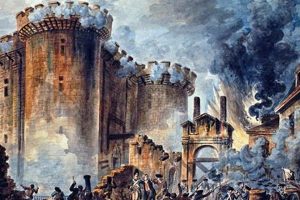
The event in question refers to a pivotal moment in the French Revolution. It involved an armed uprising by Parisians against the Bastille, a medieval fortress and prison that symbolized royal authority. The siege, which occurred on July 14, 1789, represented a dramatic escalation of popular discontent and marked the beginning of widespread revolutionary activity.
Its significance lies in its catalytic effect on the revolution. It demonstrated the power of popular revolt against the monarchy and inspired revolutionary fervor throughout France. The capture of the Bastille provided revolutionaries with weapons and ammunition, further fueling their cause. The event is often viewed as a symbolic triumph over tyranny and oppression, solidifying the resolve of those seeking political and social reform.
Following this symbolic victory, the revolution gained momentum, leading to further challenges to the established order. Key developments that ensued included the Declaration of the Rights of Man and of the Citizen and the eventual abolition of feudalism, radically reshaping French society and governance.
Understanding the Historical Context of the Bastille Event
Analyzing the historical event requires a comprehensive understanding of its preceding factors and immediate consequences. A nuanced perspective necessitates a structured approach, considering key elements that defined this pivotal moment in French history.
Tip 1: Examine Pre-Revolutionary France: Grasp the socio-economic disparities, political tensions, and intellectual currents prevalent in France prior to 1789. Royal extravagance, coupled with widespread poverty and Enlightenment ideals, fueled popular discontent.
Tip 2: Analyze the Role of the Bastille: Investigate the Bastille’s significance as a symbol of royal authority and oppression. While it housed a relatively small number of prisoners at the time of the event, its symbolic weight was immense.
Tip 3: Investigate the Immediate Causes: Investigate the immediate triggers that propelled Parisians to action, including rumors of royal troops mobilizing against the National Assembly and the dismissal of Jacques Necker, a popular minister.
Tip 4: Evaluate the Event’s Progression: Chronicle the unfolding of the event itself, from the initial gathering of crowds to the storming of the fortress. Note the role of individuals and the strategies employed by both attackers and defenders.
Tip 5: Consider the Aftermath: Analyze the consequences of the event, including its impact on revolutionary fervor, the establishment of the Paris Commune, and the subsequent course of the French Revolution.
Tip 6: Interpret the Symbolic Significance: Acknowledge the enduring symbolic representation of the event as a victory over tyranny and an assertion of popular sovereignty. This event became a rallying cry for revolutionary movements worldwide.
Tip 7: Differentiate Fact from Myth: Critically assess historical accounts, distinguishing factual events from romanticized narratives that have become associated with the event. Avoid perpetuating inaccuracies or exaggerations.
Careful examination of these elements provides a more accurate understanding of the historical event and its place in the broader context of the French Revolution.
By adhering to these guidelines, a clearer and more insightful understanding of the event will emerge.
1. Royal Authority Symbol

The Bastille, prior to its assault, functioned as a potent representation of royal authority, deeply intertwined with the grievances and aspirations of the French populace. Its image as a symbol of monarchical power is inextricable from the significance of the attack on July 14, 1789.
- Physical Manifestation of Royal Power
The Bastille served as a tangible expression of royal power. Its imposing structure, visible from across Paris, physically manifested the monarchy’s capacity to imprison and control its citizens. The act of besieging this structure was a direct challenge to the Crown’s visible dominion.
- Bastille as a State Prison
The Bastille’s role as a state prison, though holding relatively few inmates at the time of the siege, epitomized arbitrary justice under the ancien rgime. Individuals could be incarcerated based on lettres de cachet, royal orders that bypassed standard legal procedures. The Bastille, therefore, embodied the King’s unchecked power.
- Symbolic Target for Revolutionaries
For revolutionaries, the Bastille’s symbolism superseded its practical function. Its capture represented a dismantling of royal authority and a rejection of the system that upheld it. The decision to storm the fortress was driven by a desire to strike a decisive blow against the old order.
- Undermining of Legitimacy
The successful storming of the Bastille significantly undermined the monarchy’s legitimacy. It demonstrated the vulnerability of royal power to popular uprising and emboldened revolutionaries to pursue further challenges to the existing regime. The event exposed the fragility of royal control and signaled a shift in the balance of power.
In conclusion, the Bastille’s identity as a “Royal Authority Symbol” was not merely a descriptive label but an integral component of “what was the storming of Bastille.” The assault on this symbol galvanized the revolution by challenging the very foundation of monarchical rule, illustrating the potent connection between physical structures and the ideas they represent within a revolutionary context.
2. Popular Uprising

The event was fundamentally an act of popular uprising, stemming from deep-seated socio-economic grievances and political frustrations among the Parisian populace. Widespread famine, economic hardship, and perceived injustices under the monarchy fueled a collective discontent that ultimately manifested in open rebellion. This uprising, while initially spontaneous, rapidly gained momentum as citizens united against perceived tyranny and oppression. The storming was not simply an isolated incident; it represented the culmination of escalating tensions between the common people and the ruling elite. The actions of ordinary citizens artisans, merchants, and laborers demonstrated their collective will to challenge the established order, underscoring the importance of popular participation in shaping historical events.
The practical significance of understanding the “Popular Uprising” aspect within the context of the event lies in recognizing the power of collective action in driving societal change. The success of the storming served as an inspiration for further revolutionary actions throughout France and beyond, proving that organized and determined civilian movements could dismantle even the most formidable structures of power. For instance, the establishment of revolutionary communes and the formation of the National Guard were direct consequences of this popular mobilization, reflecting the newfound agency claimed by the people. Understanding these dynamics offers insights into contemporary social movements and the potential for civic engagement to effect meaningful political transformation.
In summary, the connection between popular uprising and the storming underscores the critical role of grassroots movements in revolutionary processes. The widespread discontent and collective action of the Parisian populace were the driving forces behind this pivotal moment. Analyzing this connection provides valuable lessons about the potential of popular movements to challenge entrenched power structures and shape the course of history, highlighting the transformative impact of unified citizen action.
3. July 14, 1789

July 14, 1789, marks the precise date upon which the Parisian populace stormed the Bastille. This date is not merely a historical marker; it is inextricably linked to the event, forming an essential element in understanding its significance and implications. Its designation as a national holiday in France underscores its cultural and political importance.
- Commencement of Direct Action
July 14, 1789, signifies the beginning of direct, armed action against royal authority. Prior to this date, discontent had been simmering, manifested in pamphlets, speeches, and the formation of the National Assembly. The events of July 14 represent a shift from passive resistance to active rebellion, altering the trajectory of the French Revolution.
- Symbolic Ignition of Revolution
This specific date serves as a symbolic ignition point for the broader French Revolution. While underlying causes had been brewing for years, the storming galvanized popular sentiment and fueled revolutionary fervor. The events of July 14, 1789, provided a concrete instance of popular triumph over royal power, inspiring similar actions throughout the country.
- Altered Power Dynamics
The date marks a decisive shift in the balance of power between the monarchy and the people. The successful assault on the Bastille demonstrated the vulnerability of royal forces and emboldened revolutionaries to demand further concessions. The storming irrevocably altered the political landscape, setting the stage for subsequent events such as the Declaration of the Rights of Man and of the Citizen.
- Enduring Historical Commemoration
The enduring commemoration of July 14 as Bastille Day highlights its lasting impact on French national identity. The date serves as a reminder of the struggle for liberty and equality, reinforcing the values of the French Republic. Celebrations and historical narratives surrounding this date contribute to a collective memory of the revolution and its ideals.
In essence, “July 14, 1789,” transcends a mere calendar entry, embodying the transformative power of popular action and the dawn of a new era in French history. The date encapsulates the spirit of resistance, the pursuit of liberty, and the profound impact of a single event on the course of a nation.
4. Revolutionary Catalyst
The storming acted as a significant trigger, accelerating the pace and expanding the scope of the French Revolution. Its impact extended far beyond the physical capture of the fortress, igniting revolutionary fervor and setting in motion a series of events that reshaped French society and governance.
- Empowerment of the Third Estate
The successful assault emboldened the Third Estate, the commoners who comprised the vast majority of the French population. It demonstrated that they could challenge and overcome the authority of the monarchy and the privileged classes. This empowerment led to increased demands for political representation and social reform.
- Escalation of Political Unrest
The event triggered widespread unrest and rebellion throughout France. News of the storming spread rapidly, inspiring similar uprisings in other cities and rural areas. Local populations seized control of government buildings and established revolutionary committees, further eroding royal authority.
- Radicalization of Revolutionary Goals
The act contributed to a radicalization of revolutionary goals. Initially, many reformers sought only moderate changes to the existing political system. However, the success of the storming demonstrated the potential for more radical transformations, leading to demands for the abolition of the monarchy and the establishment of a republic.
- Inspiration for Global Revolutionary Movements
The news of the storming resonated far beyond France, inspiring revolutionary movements in other parts of the world. The event became a symbol of popular resistance against tyranny and a model for those seeking political and social change. It contributed to the spread of revolutionary ideas and the rise of nationalism in Europe and the Americas.
Consequently, the event stands as a crucial turning point in the French Revolution. It not only symbolized the rejection of royal authority but also catalyzed a series of events that propelled the revolution forward, radicalized its goals, and inspired similar movements worldwide. Its role as a revolutionary catalyst is undeniable and fundamental to understanding its historical significance.
5. Search for Arms
The “Search for Arms” constitutes a primary motivation driving the crowd towards the Bastille. Popular unrest, fueled by economic hardship and political frustration, led Parisians to seek weaponry to defend themselves and further their revolutionary objectives. This quest for armaments directly contributed to the escalation of tensions and the eventual attack on the fortress.
- Rumors of Royal Armament Buildup
Widespread rumors circulated among the populace regarding the King’s deployment of troops around Paris, suggesting a potential crackdown on the National Assembly and the burgeoning revolutionary movement. This perceived threat prompted citizens to seek arms as a means of self-defense against potential royal aggression. These fears intensified the determination to secure weapons and ammunition.
- The Invalides Raid
Prior to targeting the Bastille, the Parisian crowd raided the Htel des Invalides, a military hospital, successfully acquiring a quantity of firearms. However, they lacked gunpowder and ammunition necessary to effectively utilize these weapons. This deficiency served as a critical factor in redirecting their attention towards the Bastille, believed to contain a substantial store of gunpowder.
- The Bastille as an Arsenal
The Bastille was perceived, accurately or not, as a repository of arms and ammunition. While primarily a prison, the fortress also served as a storage facility for gunpowder, a vital resource for revolutionary activity. This belief fueled the conviction among the crowd that seizing the Bastille would provide them with the means to defend themselves and advance their cause.
- Equipping the National Guard
The newly formed National Guard, a citizen militia intended to maintain order and protect revolutionary gains, lacked sufficient arms and ammunition. The search for arms, culminating in the attack on the Bastille, aimed to equip the National Guard, enabling it to effectively counter any potential royalist counter-revolution. Arming this militia was viewed as essential to securing the revolution’s future.
The quest for arms stands as an integral component of “what was the storming of Bastille.” The Parisian crowd’s desperate search for weaponry, driven by fear and revolutionary zeal, transformed a simmering political crisis into an armed assault. The capture of the Bastille, fueled by the need for gunpowder, proved to be a watershed moment, accelerating the French Revolution and altering the course of French history.
6. Symbolic Victory

The characterization of the storming as a “Symbolic Victory” encapsulates a crucial dimension of its historical importance. Beyond the immediate tactical gains achieved, the event resonated deeply within the collective consciousness, representing the triumph of popular will over monarchical authority. This symbolic dimension shaped the subsequent course of the French Revolution and continues to inform interpretations of the event to this day.
- Overthrow of Royal Despotism
The Bastille, while housing few prisoners at the time of the event, stood as a potent symbol of royal despotism and arbitrary imprisonment. Its capture represented a direct challenge to the King’s unchecked power and the system of lettres de cachet. This act signaled the end of an era of absolute monarchical rule and the ascendancy of popular sovereignty, demonstrating the vulnerability of even the most imposing symbols of authority to popular uprising.
- Empowerment of Revolutionary Sentiment
The successful storming galvanized revolutionary sentiment across France and beyond. News of the event inspired similar uprisings in other cities and rural areas, emboldening citizens to challenge local authorities and demand political reforms. The image of the Bastille’s fall became a rallying cry for revolutionaries, representing the possibility of overcoming entrenched power structures and achieving liberty.
- Reconfiguration of Public Perception
The event dramatically altered public perception of the monarchy and the revolutionary movement. The monarchy, previously viewed as an unassailable institution, was now seen as vulnerable and fallible. Conversely, the revolutionary movement gained legitimacy and momentum, attracting wider support from various segments of society. The symbolic victory thus contributed to a shift in public opinion, creating a more favorable environment for radical change.
- Foundation of Revolutionary Mythology
The storming became a cornerstone of revolutionary mythology, shaping the narrative of the French Revolution for generations to come. The event was romanticized and idealized, becoming a symbol of courage, sacrifice, and the triumph of good over evil. This mythological construction served to legitimize the revolution and inspire future generations to strive for freedom and equality. The symbolic victory continues to resonate within the cultural and political landscape of France and beyond.
These facets of the “Symbolic Victory” element inextricably connect to the essence of the storming. The act represented far more than a mere military engagement; it symbolized the dismantling of an oppressive regime, the empowerment of a disenfranchised population, and the birth of a new political order predicated on the principles of liberty, equality, and fraternity. Its lasting impact on revolutionary thought and political symbolism underscores its enduring significance in the annals of history.
7. Political Prisoner Release
While often romanticized, the liberation of political prisoners from the Bastille, though a tangible outcome, was not the primary driver of the event, nor did it represent its most significant consequence. Accounts reveal that only seven prisoners were held within the Bastille’s walls on July 14, 1789. These included four forgers, one count imprisoned for incest, and two individuals deemed insane. The limited number and the nature of their offenses suggest that the release of these specific individuals held minimal direct political impact. The importance of this aspect resides instead in its symbolic weight; the act of freeing prisoners, regardless of their status, served to underscore the revolutionaries’ rejection of arbitrary detention and the abuse of power under the monarchy. For instance, the very act of unlocking the cells and leading the prisoners out was seen as a potent symbol of liberation from tyranny, even if the prisoners themselves were not prominent political figures.
The practical significance of understanding the “Political Prisoner Release” component lies in discerning the difference between immediate outcomes and long-term symbolic ramifications. While the liberation of the prisoners did not directly translate into significant political capital or strategic advantage for the revolutionaries, it contributed to the broader narrative of oppression overthrown and freedom achieved. This narrative became a powerful tool for mobilizing support and consolidating the revolution’s legitimacy. As an example, revolutionary pamphlets and artwork frequently highlighted the image of liberated prisoners to evoke emotional responses and garner public sympathy, emphasizing the alleged cruelty and injustice of the ancien rgime. The focus on political prisoner release became a useful device for propaganda, regardless of the actual circumstances of those freed.
In summary, while the immediate impact of the release of political prisoners on July 14, 1789, may appear limited upon closer examination, its symbolic value within the narrative of the French Revolution is undeniable. It contributed significantly to the perception of the event as a triumph over tyranny and a victory for individual liberty. The strategic use of this symbolism underscores the importance of understanding the interplay between real events and their constructed meanings in shaping historical outcomes. The actual reality of the prisoner release, therefore, pales in comparison to its manufactured significance.
Frequently Asked Questions About the Bastille Event
This section addresses common inquiries and misconceptions surrounding the historical event of the Parisian populace against the Bastille on July 14, 1789. The goal is to provide clear, concise, and factual answers based on established historical understanding.
Question 1: What precisely was the Bastille, and what purpose did it serve?
The Bastille was a medieval fortress located in Paris. Constructed initially as a defensive structure, it evolved into a state prison, primarily used to house individuals detained by royal decree. It served as a symbol of royal authority and arbitrary justice under the ancien rgime.
Question 2: What were the immediate causes that precipitated the Bastille event?
Several factors contributed to the events of July 14, 1789. These included widespread famine and economic hardship, rumors of royal troops massing to suppress the National Assembly, and the dismissal of Jacques Necker, a popular finance minister. These circumstances heightened tensions and fueled popular unrest.
Question 3: How many prisoners were actually held in the Bastille at the time of the assault?
Contrary to popular perception, only seven prisoners were incarcerated within the Bastille on July 14, 1789. Their offenses ranged from forgery to insanity, and none were prominent political figures. The significance of the event lies not in the liberation of a large number of prisoners but in its symbolic challenge to royal authority.
Question 4: What was the primary objective of the crowd that attacked the Bastille?
The primary objective of the crowd was to acquire arms and gunpowder, essential resources for defending themselves against perceived royal aggression and furthering their revolutionary aims. The Bastille was believed to contain a significant store of gunpowder, making it a strategic target for the armed populace.
Question 5: What impact did the event have on the course of the French Revolution?
The event acted as a catalyst, accelerating the pace and expanding the scope of the French Revolution. It emboldened the Third Estate, inspired revolutionary fervor throughout France, and led to the radicalization of revolutionary goals. The capture of the Bastille became a potent symbol of popular resistance against tyranny, inspiring revolutionary movements worldwide.
Question 6: Is July 14th still commemorated in France, and what does it represent?
July 14th, known as Bastille Day, remains a national holiday in France. It commemorates the storming of the Bastille and serves as a symbol of national unity, liberty, and the triumph of popular sovereignty. The date is celebrated with parades, fireworks, and other festivities, reinforcing the ideals of the French Republic.
In summary, understanding the event requires recognizing its complexities, distinguishing between factual events and popular myths, and appreciating its lasting impact on French history and political thought. The day’s significance extends far beyond a mere historical event.
Further exploration can now delve into specific figures associated with that day, as well as the various interpretations of its impact over time.
Concluding Analysis
This exploration of what was the storming of Bastille reveals a complex event, deeply rooted in the social, economic, and political tensions of pre-revolutionary France. It highlights the significance of popular uprising against royal authority, fueled by a desperate search for arms and culminating in a symbolic victory that catalyzed the French Revolution. The key takeaways emphasize that this event was a revolutionary catalyst: Royal Authority Symbol, Popular Uprising, July 14, 1789, Search for Arms, Symbolic Victory and Political Prisoner Release.
The events that unfolded on that day in July have left a lasting legacy, shaping French national identity and inspiring movements for liberty and equality around the world. Continued critical examination of historical accounts, separating fact from romanticized narratives, is essential for a comprehensive and nuanced understanding of this pivotal moment in modern history.

![Bastille Storm's Impact: What Was the Outcome? [Explained] | Hubbastille: Explore the Fusion of Culture, Music & Creativity](https://hubbastille.com/wp-content/uploads/2026/01/th-33-300x200.jpg "Bastille Storm's Impact: What Was the Outcome? [Explained] Hubbastille: Explore the Fusion of Culture, Music & Creativity")