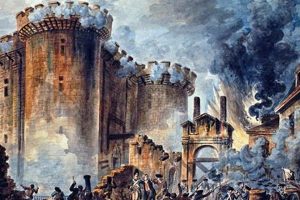
The pivotal event that occurred on July 14, 1789, in Paris involved the seizure of a medieval fortress and prison. This action, undertaken by an armed mob, symbolized popular resistance against royal authority and the injustices of the Ancien Rgime. The event has since become an iconic representation of the French Revolution.
This act of defiance held immense significance as it demonstrated the people’s willingness to challenge the established order and directly confront the symbols of oppression. Its reverberations extended far beyond the walls of the fortress, igniting revolutionary fervor across France and contributing to the dismantling of the monarchy. Furthermore, it became a potent symbol of liberty and popular sovereignty, inspiring movements for political change worldwide.
The main body of this article will delve into the causes leading up to this critical juncture, examine the specifics of the event itself, analyze its immediate and long-term consequences, and discuss its enduring legacy in shaping modern concepts of freedom and democratic governance.
Guidance Derived from the Bastille Event
The event on July 14, 1789, offers multiple valuable lessons applicable to the study of social movements and political change.
Tip 1: Understand the Significance of Symbols: The fortress represented royal authority. Its targeting highlights the power of symbols in galvanizing popular action against perceived oppression.
Tip 2: Analyze Socio-Economic Disparities: Pent-up frustrations related to food shortages and inequitable social structures fueled the populace’s discontent. Examine underlying inequalities to anticipate potential unrest.
Tip 3: Recognize the Role of Ideas: Enlightenment ideals of liberty, equality, and fraternity provided the ideological justification for challenging the existing power structure. Ideas can be powerful catalysts for change.
Tip 4: Appreciate the Impact of a Catalyst: While underlying causes were present, the dismissal of a popular minister and the perceived threat of royal military action served as immediate triggers. Identifying catalysts is crucial in understanding the timing of events.
Tip 5: Assess the Power of Collective Action: The success of the armed mob in overcoming the garrison demonstrated the potential of coordinated popular action to overthrow established authority. Collective action can significantly alter power dynamics.
Tip 6: Acknowledge the Potential for Unintended Consequences: The initial event set in motion a series of radical transformations, including the Reign of Terror, demonstrating that even movements with noble intentions can lead to unforeseen and undesirable outcomes.
Tip 7: Study the Long-Term Legacy: The event remains a powerful symbol of revolution and the pursuit of liberty, shaping political discourse and inspiring movements for change across the globe. Its long-term legacy continues to resonate today.
These points underscore the importance of understanding the historical context, motivations, and consequences associated with moments of significant social and political upheaval. Careful analysis provides valuable insights into the dynamics of power, the role of ideas, and the enduring quest for justice.
The concluding section of this article will further explore the multifaceted implications and lasting impact of this pivotal moment in history.
1. Royal Authority Symbol
The fortress, a prominent structure in Paris, served as a tangible representation of royal authority and the monarchical system in pre-revolutionary France. Its function and perception made it a focal point of popular discontent and a primary objective during the initial stages of the French Revolution. The act of seizing it was not merely a tactical maneuver but a symbolic blow against the ruling power.
- Bastille’s Physical Presence and Function
The fortress was a substantial physical structure that dominated the Parisian landscape. Originally built as a defensive fortification, it later served primarily as a state prison. While by 1789 it held relatively few prisoners, its imposing presence served as a constant reminder of the king’s power to incarcerate individuals arbitrarily, often without due process. This tangible representation of unchecked power fueled resentment among the populace.
- Symbol of Arbitrary Justice
The fortress became synonymous with arbitrary justice and the lettres de cachet, royal orders that allowed for imprisonment without trial. Although the actual use of lettres de cachet had declined by the late 18th century, their historical association with the prison contributed to its image as a symbol of oppression and the denial of individual rights. The perceived injustice perpetuated by the institution amplified popular animosity.
- Royal Garrison and Military Might
The structure was defended by a royal garrison, further reinforcing its status as a symbol of royal military power. The presence of soldiers and weaponry within its walls underscored the king’s ability to enforce his will upon the population. Attacking it was, therefore, not only an attempt to liberate prisoners but also a direct challenge to the military authority of the monarchy and its control over the city of Paris.
- Psychological Impact on the Population
Beyond its physical and functional attributes, the prison exerted a significant psychological impact on the Parisian population. It instilled a sense of fear and intimidation, serving as a constant reminder of the consequences of dissent or opposition to the crown. Overcoming this psychological barrier through a direct assault on the structure was a crucial step in empowering the populace and initiating the revolutionary process.
The convergence of these factors its physical presence, association with arbitrary justice, military defense, and psychological impact solidified the fortress’s role as a central symbol of royal authority. The event, therefore, transcended a mere prison break; it was a deliberate and symbolic act of defiance against a system perceived as oppressive and unjust. The subsequent demolition of the structure further underscored its rejection by the revolutionary forces and its replacement with new symbols of liberty and popular sovereignty.
2. Popular Uprising Trigger

The incident on July 14, 1789, did not occur in a vacuum; it was the culmination of various socio-political tensions that had been building for years. While the underlying causes of the French Revolution were complex and multifaceted, several immediate factors served as the direct impetus for the assault on the fortress, transforming simmering discontent into an active and violent uprising. These triggers acted as catalysts, converting widespread grievances into a concentrated act of defiance against royal authority. Without these specific initiating events, it is plausible that revolutionary fervor might have remained latent, or manifested in a different form.
One significant trigger was the dismissal of Jacques Necker, the popular finance minister, by King Louis XVI on July 11th. Necker was perceived as a reformer who sympathized with the Third Estate, and his dismissal was widely interpreted as a sign that the king intended to suppress the burgeoning National Assembly. This act, combined with the visible concentration of royal troops around Paris, fueled rumors of an impending royal crackdown, heightening public anxiety and fear. The perceived threat of military intervention against the populace incited Parisians to arm themselves in self-defense. The search for weapons led them to the fortress, believing it contained a large stockpile of gunpowder and arms essential for resisting royal forces. The event became a focal point for the convergence of diverse grievances, including economic hardship, political exclusion, and fear of royal repression, channeling these frustrations into a unified objective.
In summary, the triggering events surrounding the event were essential in transforming widespread discontent into an active uprising. The dismissal of Necker, coupled with the perceived threat of royal military action, directly precipitated the march on the fortress. Understanding these triggers is vital to comprehending the immediacy and intensity of the revolutionary fervor that characterized the initial stages of the French Revolution. The incident underscores the significance of seemingly isolated events in sparking broader social and political upheaval, particularly when they intersect with pre-existing grievances and anxieties. Further exploration will detail the consequences of the event and its lasting impact on the course of French history.
3. Prisoners' Limited Relevance
The storming of the Bastille, while a pivotal moment in the French Revolution, was not primarily motivated by the desire to liberate prisoners. The prison’s symbolic significance as a representation of royal authority far outweighed the immediate concern for the individuals incarcerated within its walls. This facet underscores the event’s broader political and social context, shifting the focus from a humanitarian rescue to a revolutionary act.
- Small Number of Inmates
On July 14, 1789, the Bastille held only seven prisoners: four forgers, one nobleman imprisoned at his family’s request, and two individuals deemed insane. This small number contrasts starkly with the prison’s reputation as a repository for political dissidents. The relatively few inmates demonstrate that the revolutionaries’ primary objective was not to free a large number of unjustly imprisoned citizens.
- Prisoners’ Backgrounds
The backgrounds of the prisoners further diminish the narrative of a politically motivated prison break. The presence of forgers and individuals with mental health issues suggests that the Bastille’s population was not exclusively composed of political prisoners. This composition challenges the romanticized notion of the storming as a purely altruistic act to liberate victims of royal oppression.
- Focus on Arms and Gunpowder
The primary objective of the mob was to seize the Bastille’s stores of gunpowder and weapons, essential resources for arming the Parisian militia and defending against potential royalist reprisals. The liberation of the prisoners was a secondary concern, almost an afterthought, in comparison to the immediate need for military supplies to further the revolutionary cause. Eyewitness accounts and historical records emphasize the relentless pursuit of arms rather than the plight of the inmates.
- Symbolic Act Over Humanitarian Concerns
The symbolic act of storming the Bastille and dismantling a symbol of royal authority held far greater significance than the humanitarian concern for the seven prisoners. The event was intended to demonstrate the power of the people to overthrow an oppressive regime and assert their rights. The limited number and nature of the prisoners highlight the event’s strategic and symbolic importance rather than a primarily compassionate endeavor.
In conclusion, the limited number and backgrounds of the prisoners within the Bastille underscore that the event was primarily a symbolic act of rebellion against royal authority rather than a humanitarian mission. The revolutionaries’ focus on acquiring arms and gunpowder, coupled with the minor role the prisoners played in their motivations, emphasizes the event’s significance as a pivotal moment in the French Revolution, driven by political and social imperatives rather than immediate concern for individual inmates.
4. Revolution's Symbolic Beginning

The event on July 14, 1789, transcended a mere prison break; it functioned as a catalyst, transforming latent discontent into overt revolution. The storming, as an act of defiance against royal authority, served as a potent symbol of the burgeoning revolutionary spirit. The fortress, long perceived as an emblem of monarchical oppression, became the focal point for popular grievances. The successful assault on it signaled the weakening of royal power and the ascendance of popular will. This decisive action provided a tangible expression of the ideals of liberty, equality, and fraternity, galvanizing support for the revolutionary cause both within France and abroad. The symbolic weight of the event resides in its role as a demonstrative challenge to the Ancien Rgime, marking a definitive break from the past and the inauguration of a new political order. The echoes of this challenge resonated through subsequent revolutionary actions and continue to inform conceptions of popular sovereignty and resistance to tyranny.
The demolition of the fortress in the months following the event further solidified its symbolic importance. The act of dismantling this former symbol of oppression served as a tangible representation of the revolution’s commitment to dismantling the structures of the old regime. The stones from the fortress were repurposed, often sold as souvenirs, further disseminating the message of revolutionary triumph and the overthrow of tyranny. This deliberate act of destruction and symbolic repurposing ensured that the event remained a prominent touchstone of the revolution, reminding citizens of the victory achieved and the principles for which they fought.
In conclusion, the storming of the Bastille functions not only as a discrete historical event but as the emblematic genesis of the French Revolution. Its symbolic significance, amplified by the subsequent dismantling of the fortress, underscores its enduring importance in understanding the dynamics of revolution, the power of symbols, and the enduring quest for liberty. The legacy of this event continues to resonate in contemporary discussions of political upheaval and the struggle against oppressive regimes, solidifying its place as a pivotal moment in the history of democratic ideals.
5. Weaponry and Gunpowder Seizure

The pursuit of weaponry and gunpowder constituted a central motive for the attack on the Bastille. Parisian citizens, fearing suppression by royal troops, sought to arm themselves for defense. The fortress was perceived to hold a significant cache of these resources. This perception, whether entirely accurate or not, served as a key catalyst for the assault. The desire for self-armament arose from the perceived threat posed by the concentration of royal troops in and around Paris, particularly after the dismissal of Jacques Necker, a minister viewed as sympathetic to the Third Estate.
The seizure of weaponry was intended to equip the newly formed Parisian militia, providing a means of resisting potential royalist actions. The gunpowder was essential for the operation of these weapons, rendering the acquisition of both items crucial. Without access to these supplies, the militia would have been largely ineffective against trained soldiers. While the fortress did not contain the vast arsenal initially anticipated, the weapons and gunpowder secured were sufficient to embolden the revolutionaries and contribute to the escalation of the conflict. Furthermore, the act of successfully seizing these resources demonstrated the vulnerability of royal authority and emboldened further acts of resistance.
In summary, the desire for weaponry and gunpowder acted as a primary driver for the storming of the Bastille. The seizure of these resources was a strategic imperative for arming the Parisian militia and resisting perceived royalist threats. This aspect highlights the critical role of material resources in enabling revolutionary action and shaping the course of the French Revolution. The event underscored the importance of military preparedness in the face of political instability and the lengths to which citizens might go to defend perceived liberties.
6. Parisian Mob Participation

The event of the storming of the Bastille was fundamentally driven by the active participation of a Parisian mob, a diverse collective composed of artisans, laborers, and common citizens. This participation was not a spontaneous, isolated incident but rather the culmination of mounting socio-economic pressures and political frustrations within the city. The mob’s involvement provided the necessary manpower and momentum to transform simmering discontent into a direct assault on a symbol of royal authority. The composition of the mob reflected the grievances of the Third Estate, the non-privileged segment of French society burdened by heavy taxation and limited political representation. Their participation signified a rejection of the existing social order and a demand for political change.
The practical significance of understanding the role of the Parisian mob lies in recognizing the power of collective action and the potential for popular uprising in response to perceived injustice. The storming demonstrates that even seemingly impenetrable symbols of power can be challenged and overcome by a determined populace. For instance, contemporary social movements often draw inspiration from this event, recognizing the capacity of organized collective action to effect political and social change. The event also highlights the complexities and potential for volatility inherent in mob behavior, emphasizing the importance of addressing underlying social and economic grievances to prevent unrest.
In conclusion, the Parisian mob’s participation was an indispensable element of the storming. It transformed a situation of passive discontent into active rebellion and underscored the potential of collective action to challenge established authority. This understanding offers valuable insights into the dynamics of social movements and the importance of addressing popular grievances to maintain social stability.
7. July Fourteenth Celebration
The annual July Fourteenth celebration, also known as Bastille Day, serves as a direct commemoration of the event in 1789. It is a national holiday in France, marking a pivotal moment in the French Revolution. The celebration is not merely a historical remembrance; it is a reaffirmation of the values and principles that the revolutionaries sought to establish: liberty, equality, and fraternity. The storming, therefore, is inextricably linked to the July Fourteenth celebration as its foundational event, serving as both cause and justification for the holiday. Without the event, there would be no basis for the annual commemoration.
The celebration typically includes military parades, public festivities, and fireworks displays, symbolizing national unity and pride in the revolutionary heritage. The most prominent event is the military parade down the Champs-lyses in Paris, a display of French military strength and a reminder of the nation’s defense capabilities. Public gatherings and fireworks displays in cities and towns throughout France provide opportunities for citizens to participate in collective expressions of patriotism and commemorate the historical event. The holiday also serves as an occasion for reflection on the ideals of the Revolution and their relevance in contemporary society, fostering a sense of national identity and shared values.
In summary, the July Fourteenth celebration is not simply a day off; it is a nationally sanctioned commemoration of the storming and its symbolic importance in shaping French national identity and political values. Understanding the historical event is crucial for comprehending the significance of the celebration and its ongoing role in French society. The continued observance underscores the enduring legacy of the Revolution and its impact on the development of modern France.
Frequently Asked Questions
This section addresses common queries surrounding the event of July 14, 1789, providing concise and factual responses based on historical evidence.
Question 1: What was the primary motivation for the attack on the Bastille?
The primary motivation was to secure gunpowder and weapons for arming the Parisian militia, driven by fears of royal military intervention after the dismissal of Jacques Necker. The liberation of prisoners was a secondary consideration.
Question 2: How many prisoners were actually held at the Bastille on July 14, 1789?
There were only seven prisoners incarcerated at the time: four forgers, one nobleman, and two individuals deemed insane. This small number underscores that the event was not primarily a prison break.
Question 3: What was the symbolic significance of the Bastille?
The Bastille symbolized royal authority and arbitrary justice under the Ancien Rgime. Its storming represented a direct challenge to monarchical power and a rejection of the existing social order.
Question 4: Who participated in the attack on the Bastille?
The attack was carried out by a diverse Parisian mob consisting of artisans, laborers, and common citizens, reflecting the broad discontent within the Third Estate.
Question 5: What immediate consequences followed the event?
The immediate consequences included the further weakening of royal authority, the rise of revolutionary fervor, and the acceleration of the French Revolution.
Question 6: Why is the event celebrated annually in France?
The event is commemorated annually on July 14th as Bastille Day, a national holiday celebrating the principles of liberty, equality, and fraternity, central to the French Revolution and French national identity.
The responses provided clarify common points of inquiry, emphasizing the multifaceted nature of the event and its enduring legacy.
The subsequent section of this article will delve further into the lasting implications and broader historical context surrounding the storming of the Bastille.
Conclusion
The preceding analysis has explored various facets of the event known as “storm on the bastille,” ranging from its symbolic significance and motivating factors to its enduring legacy. The exploration highlighted that the attack on the fortress represented more than a mere prison break; it was a watershed moment in the French Revolution, fueled by a confluence of socio-economic tensions, political frustrations, and the desire for self-armament. The participation of the Parisian mob and the subsequent dismantling of the structure solidified its place as a symbol of resistance against tyranny and a cornerstone of French national identity. The continued commemoration of this event through the July Fourteenth celebration underscores its enduring importance.
The event serves as a reminder of the power of collective action and the potential for social upheaval when popular grievances are left unaddressed. Understanding its historical context, motivations, and consequences offers valuable insights into the dynamics of revolution and the ongoing struggle for liberty and self-governance. Continued study and critical examination of this pivotal moment remain essential for informing contemporary discussions on political change and the pursuit of a more just and equitable society.

![Bastille Storm's Impact: What Was the Outcome? [Explained] | Hubbastille: Explore the Fusion of Culture, Music & Creativity](https://hubbastille.com/wp-content/uploads/2026/01/th-33-300x200.jpg "Bastille Storm's Impact: What Was the Outcome? [Explained] Hubbastille: Explore the Fusion of Culture, Music & Creativity")