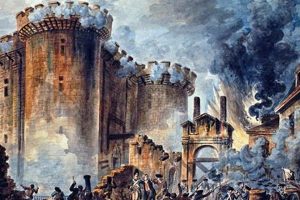
The seizure of the Bastille, a royal fortress and prison in Paris, on July 14, 1789, represented a pivotal moment in the French Revolution. The event symbolized the collapse of royal authority and the burgeoning power of the revolutionary forces. Previously considered an impenetrable symbol of the monarchy’s absolute power, its fall demonstrated the vulnerability of the Ancien Rgime.
The event’s importance lies in its demonstration of popular uprising against perceived tyranny. It inspired common citizens to actively participate in shaping their political destiny and contributed significantly to the spread of revolutionary fervor across France. Furthermore, it provided revolutionaries with weapons and gunpowder, bolstering their capacity to challenge the royal army, and signaled a decisive shift in the balance of power, empowering the National Assembly and accelerating the dismantling of feudal structures.
The act served as a catalyst for subsequent revolutionary events, solidifying the revolution’s early gains. It fueled further unrest and ultimately contributed to the abolition of feudalism, the Declaration of the Rights of Man and of the Citizen, and the eventual establishment of a republic, transforming French society and impacting political movements throughout Europe.
Understanding the Significance
To fully grasp the implications, several aspects require careful consideration.
Tip 1: Recognize Symbolic Importance: The Bastille represented royal authority and oppression. Its capture, therefore, was primarily a symbolic victory, signifying the people’s rejection of absolute monarchy.
Tip 2: Appreciate the Strategic Impact: While largely symbolic, the event provided revolutionaries with weapons and gunpowder, tangibly strengthening their position against the royal forces.
Tip 3: Consider the Role of Fear and Rumor: Exaggerated accounts of royal intentions fueled the populace’s anxieties and catalyzed the assault on the Bastille. Understand the importance of public perception in driving revolutionary action.
Tip 4: Analyze the Power Vacuum: The fall of the Bastille demonstrated the monarchy’s weakening grip on power. This created an opportunity for the National Assembly to assert its authority and initiate significant reforms.
Tip 5: Link to Subsequent Events: The seizure of the Bastille acted as a catalyst for further revolutionary events, including the abolition of feudalism and the Declaration of the Rights of Man and of the Citizen.
Tip 6: Understand the International Ramifications: This event had a ripple effect beyond France, inspiring revolutionary movements and challenging existing power structures across Europe.
By examining the multifaceted aspects, a greater insight into its importance as a turning point in the French Revolution and its broader historical impact is acquired.
These elements combined to reshape the course of French history and influence subsequent political upheavals worldwide.
1. Royal Authority Weakened

The erosion of royal authority was a critical precondition for, and a direct consequence of, the events at the Bastille. Prior to July 14, 1789, the French monarchy, under Louis XVI, maintained its power through a combination of tradition, perceived divine right, and military force. However, years of fiscal mismanagement, social inequality, and political inflexibility had significantly undermined public trust and confidence in the crown’s ability to govern effectively. The storming of the Bastille exemplified this decline by demonstrating the monarchy’s inability to protect its own symbols of power within its capital city. The fortress, intended as a deterrent to dissent, instead became a target, highlighting the state’s vulnerability.
The failure to quell the uprising at the Bastille reverberated throughout France. It emboldened revolutionary factions and eroded the morale of royalist forces. The King’s initial indecisiveness following the event further exacerbated the perception of weakness. The formation of the National Guard, intended to maintain order but ultimately sympathetic to the revolutionary cause, underscored the shift in power away from the monarchy. Furthermore, local authorities in other cities, witnessing the events in Paris, began to assert their autonomy, contributing to a general breakdown of central control. For instance, similar uprisings occurred in provincial towns, often targeting local prisons or administrative centers, mimicking the Parisian example and further diminishing royal influence.
In summary, the diminished royal authority was both a cause and a result of the storming. The pre-existing conditions of weakened governance enabled the populace to act, while the successful capture of the Bastille solidified the perception of royal impotence. This understanding is crucial because it illustrates the complex interplay between social unrest, political opportunity, and the disintegration of established power structures. The practical implication is that successful revolutions often capitalize on existing vulnerabilities within the ruling regime, transforming symbols of power into targets of popular dissent. This event showed that the King no longer had the means nor the moral authority to control the people, directly catalyzing the French Revolution.
2. Popular Uprising Empowered

The surge in popular empowerment is intrinsically linked to the events at the Bastille and is fundamental to understanding its historical meaning. The capture of the fortress was not merely a military action, but a profound assertion of collective will against perceived injustice and a symbol of oppressive rule. It marked a pivotal shift in the dynamic between the governed and the governing, unleashing a wave of self-determination that propelled the French Revolution.
- Erosion of Deference
The storming of the Bastille shattered the long-held belief in the inviolability of royal authority. Citizens, previously subject to the decrees of the monarchy without recourse, actively challenged and overcame a symbol of its power. This act of defiance undermined traditional hierarchies and fostered a sense of agency among the common people. The event demonstrated that organized popular action could effectively counter the state’s instruments of control, fostering a belief in the potential for further change.
- Emergence of Citizen Militias
The immediate aftermath saw the rapid formation of citizen militias, most notably the National Guard, which were instrumental in maintaining order and defending the gains of the revolution. These militias, composed of ordinary citizens, provided a tangible demonstration of the people’s ability to govern themselves and protect their interests. The establishment of such forces signified a departure from reliance on the royal army and solidified the concept of popular sovereignty, where power resided in the hands of the people, not the monarch.
- Spread of Revolutionary Ideals
News of the Bastille’s fall and the subsequent popular mobilization spread rapidly throughout France, igniting similar uprisings in provincial towns and rural areas. This dissemination of revolutionary fervor empowered local populations to challenge feudal obligations, seize control of local governments, and establish their own forms of self-governance. The Bastille became a potent symbol of liberation, inspiring widespread action against established authority and fueling the broader revolutionary movement.
- Political Consciousness and Participation
The storming of the Bastille fostered a surge in political consciousness and participation among the French populace. Ordinary citizens, previously excluded from political life, began to actively engage in debates, join political clubs, and demand representation in the newly formed National Assembly. This newfound political awareness contributed to the development of radical ideologies and fueled the demand for greater social and economic equality, transforming the political landscape of France and paving the way for further revolutionary changes.
The empowerment of the populace as a direct consequence of the event at the Bastille is an enduring legacy. The spirit of collective action, the belief in self-governance, and the demand for political participation established during this period fundamentally reshaped French society and continue to resonate within modern democratic movements. The seizure of the Bastille transformed the perception of the governed from passive subjects to active agents of change, defining a new era in political history.
3. Symbolic Victory achieved

The attainment of a symbolic triumph following the Bastille assault is central to comprehending its profound significance. The fortress, though housing few prisoners at the time, represented the arbitrary power of the monarchy, specifically the lettres de cachet, which permitted imprisonment without trial. By successfully breaching its walls, revolutionaries not only gained access to weapons and gunpowder but, more importantly, dismantled a potent emblem of royal authority. This act resonated deeply with the French populace, signaling the fallibility of the Ancien Rgime and the potential for its overthrow. For instance, the destruction of the prison itself, brick by brick, and the subsequent public display of its remnants, served as a tangible representation of the victory over oppression.
The symbolic impact extended beyond France, influencing revolutionary movements across Europe and inspiring similar acts of defiance against autocratic rule. The event demonstrated that even seemingly impenetrable structures of power could be challenged and overcome by a determined citizenry. This understanding has practical significance as it highlights the importance of symbols in political struggles. By targeting and dismantling symbols of oppression, revolutionaries can effectively undermine the legitimacy and authority of the existing regime, galvanizing support and facilitating further action. Moreover, the symbolic importance of the victory became a rallying cry for the revolution, unifying diverse factions under a common cause and providing a framework for future actions. The Declaration of the Rights of Man and of the Citizen, for example, was directly inspired by the revolutionary spirit unleashed by the event.
In conclusion, the achievement of a symbolic victory through the storming of the Bastille was not merely a peripheral aspect, but a core component of its historical meaning. The event’s impact stemmed not only from the acquisition of resources but, crucially, from the psychological blow dealt to the monarchy and the corresponding boost to revolutionary morale. The practical implications of understanding this connection are substantial, providing insight into the dynamics of power, the importance of symbols in political movements, and the potential for popular action to challenge even the most entrenched forms of authority. The symbolism continues to echo, serving as a reminder of the power of collective action against oppression.
4. Political Catalyst initiated

The seizure of the Bastille on July 14, 1789, served as a potent impetus for subsequent political transformations, fundamentally altering the trajectory of the French Revolution. The event initiated a chain reaction of societal upheaval and political restructuring, directly impacting the existing power dynamics and setting the stage for radical reforms. This act moved beyond a simple act of rebellion, becoming the spark that ignited widespread revolutionary fervor across France.
The event acted as a catalyst in several distinct ways. First, it empowered the National Assembly, providing it with the legitimacy and momentum to challenge royal authority directly. The Assembly, emboldened by the popular uprising, swiftly moved to dismantle feudal structures and draft the Declaration of the Rights of Man and of the Citizen, documents that enshrined principles of liberty, equality, and fraternity. Secondly, the storming precipitated a wave of similar uprisings in provincial towns and rural areas, decentralizing power and accelerating the disintegration of the Ancien Rgime. Examples include peasant revolts targeting feudal lords and the establishment of local revolutionary committees, all inspired by the Parisian example. Thirdly, the event prompted a realignment of political factions and the emergence of new leaders who capitalized on the revolutionary momentum to advance their agendas. Figures like Maximilien Robespierre and Georges Danton rose to prominence amidst the turmoil, advocating for increasingly radical measures to consolidate revolutionary gains.
In summary, the actions in Paris acted as an immediate political catalyst for the broader French Revolution. It shattered the aura of royal inviolability, empowered the National Assembly, spurred decentralized uprisings, and fostered the rise of radical leadership. Understanding this connection underscores the importance of identifying pivotal moments in revolutionary processes, recognizing their capacity to transform seemingly isolated acts of defiance into drivers of large-scale social and political change. The events showed that a single, symbolic act could indeed act as a catalyst to change the face of France forever.
5. Revolutionary Momentum gained
The seizure of the Bastille directly generated significant impetus for revolutionary advancement. The act itself served as a validation of popular action and provided tangible resources, fostering a climate of heightened expectation and ambition for further societal transformations. Prior to July 14, 1789, the revolutionary movement was largely confined to intellectual circles and the National Assembly, facing significant resistance from the monarchy and the aristocracy. The capture of the fortress demonstrated the potential for ordinary citizens to effect dramatic change through direct action, thereby emboldening revolutionary factions and attracting broader popular support. The successful storming supplied weaponry and gunpowder, reducing the revolutionaries’ reliance on external sources and increasing their capacity to challenge royal forces. The event also demonstrated the monarchy’s vulnerability, undermining its legitimacy and bolstering the confidence of revolutionary leaders.
The surge in revolutionary energy manifested in various ways. The “Great Fear,” a period of widespread panic and peasant unrest in the French countryside, was partially fueled by news of the Bastille’s fall. This event provided the rural population with a sense of empowerment, prompting them to target feudal lords and destroy records of their obligations. The National Assembly, riding this wave of popular support, quickly enacted significant reforms, including the abolition of feudal privileges and the Declaration of the Rights of Man and of the Citizen. These reforms, unthinkable before the event, were made possible by the increased revolutionary fervor. Further, the storming of the Bastille fostered a climate of political mobilization and participation. Political clubs and newspapers proliferated, disseminating revolutionary ideas and encouraging citizen engagement. This upswing in political activity provided a foundation for more radical political factions to emerge and gain influence, pushing the revolution towards increasingly transformative goals.
In conclusion, the augmentation of revolutionary force was an immediate and critical consequence of the Bastille’s capture. It provided the movement with tangible resources, symbolic legitimacy, and widespread popular support, enabling the National Assembly to enact sweeping reforms and driving the revolution towards more radical objectives. Understanding this connection is crucial for appreciating the event’s broader significance, as it highlights how a single act of defiance can catalyze a cascade of political and social changes. The practical significance of recognizing this connection lies in its illustration of how popular momentum can be instrumental in overcoming entrenched power structures and achieving transformative social change. The dynamics unleashed continue to provide lessons for understanding revolutions throughout history.
6. Feudal Order challenged

The assault on the Bastille and the challenge to the feudal system are inextricably linked, with the former representing a significant manifestation of growing discontent with the latter. The Bastille, as a symbol of royal authority, also indirectly represented the feudal order which derived its legitimacy from the monarchy. The feudal system, characterized by hierarchical social structures, aristocratic privileges, and peasant obligations, was facing increasing strain due to economic inequality, social mobility, and Enlightenment ideals. The storming exemplified the widespread rejection of these inequalities and the desire for a more equitable society. For example, the cahiers de dolances, or lists of grievances, submitted prior to the Estates-General, frequently highlighted issues related to feudal dues and aristocratic privileges, revealing the deep-seated resentment towards the system. The act of attacking the Bastille can be understood as a direct attack on the foundation upon which the feudal system rested: arbitrary power.
The practical consequence of challenging the feudal structure manifested in the immediate aftermath of the Bastille’s fall. The “Great Fear,” a period of rural unrest, saw peasants attacking manor houses, destroying feudal records, and asserting their autonomy from aristocratic control. The National Assembly, recognizing the urgency of the situation, formally abolished feudalism on August 4, 1789. This abolition, while initially incomplete and requiring compensation to be paid to the former lords, represented a significant step towards dismantling the old order and establishing a more egalitarian society. Understanding the storming of the Bastille as a challenge to feudalism helps to contextualize the subsequent reforms undertaken by the National Assembly and the radicalization of the French Revolution. It highlights the importance of socio-economic factors in driving political change and the role of popular uprisings in accelerating the dismantling of entrenched systems of power. For instance, the abolition of tithes, another element of the feudal system, further reduced the economic power of the clergy and contributed to the redistribution of wealth.
In summary, the storming of the Bastille signified more than just a seizure of a fortress; it represented a direct challenge to the feudal order and its associated inequalities. The event acted as a catalyst for popular uprisings, prompting the National Assembly to dismantle feudal structures and enact reforms aimed at creating a more equitable society. The link between the attack and the challenge to the feudal system is critical for comprehending the profound and lasting impact of this turning point in French history. The practical significance of this connection underscores the importance of addressing socio-economic inequalities to prevent political instability and the potential for violent uprisings to disrupt established systems of power. This intersection illuminates the foundational tensions that propelled the French Revolution toward a complete societal transformation.
7. Societal Transformation Begun

The fall of the Bastille and the initiation of societal transformation are fundamentally intertwined. The event, far from being a singular act of rebellion, served as the starting point for a comprehensive reshaping of French society, impacting its political, economic, and social structures. The seizure of the fortress marked not an end but a beginning the commencement of a revolutionary process designed to dismantle the old order and construct a new societal framework.
- Shift in Power Dynamics
The storming of the Bastille fundamentally altered the power dynamic in France. The event weakened the monarchy, empowered the National Assembly, and fueled popular participation in politics. This shift moved authority away from traditional elites and toward a broader segment of society. The consequences include the abolishment of feudalism and the drafting of the Declaration of the Rights of Man and Citizen. The redistribution of power from the monarchy to the people was a key element of the societal transformation that was just starting.
- Reconfiguration of Social Classes
The pre-revolutionary social structure, characterized by rigid class divisions and aristocratic privilege, began to erode following the Bastille’s fall. The abolishment of feudal privileges and the emphasis on equality challenged the traditional hierarchies. This led to the emergence of new social identities and opportunities for social mobility. The reconfiguration of social classes meant the old order was dying and the transformation to the new classes were forming.
- Emergence of New Ideologies
The events in Paris spurred the development and dissemination of new political ideologies. Concepts such as popular sovereignty, natural rights, and republicanism gained traction, influencing political discourse and shaping the revolutionary agenda. The spread of these ideologies challenged the legitimacy of the Ancien Rgime and provided a framework for constructing a new political order. The storming gave rise to these new ideologies to transform the society from its former state.
- Redefinition of National Identity
The storming of the Bastille contributed to the redefinition of French national identity. The emphasis on popular sovereignty and collective action fostered a sense of shared purpose and belonging. The revolution sought to create a unified national identity based on principles of liberty, equality, and fraternity, replacing the traditional allegiance to the monarchy with a commitment to the nation. The revolution caused the transformation of the old identity to that of the citizen and was well on its way after the storming of the Bastille.
The storming of the Bastille stands as a watershed moment, marking the genesis of widespread societal transformation in France. The shift in power dynamics, reconfiguration of social classes, emergence of new ideologies, and redefinition of national identity collectively underscore the profound impact of the event. These aspects provide a more comprehensive understanding of the storming and its enduring relevance as a catalyst for societal change.
Frequently Asked Questions About the Significance of the Bastille’s Seizure
The following questions address common inquiries regarding the meaning and lasting impact of the storming of the Bastille.
Question 1: Why is the event considered a turning point in the French Revolution?
The event signified the collapse of royal authority and the empowerment of the revolutionary forces. It signaled the beginning of widespread societal and political transformation.
Question 2: What was the primary symbolic importance of the Bastille?
The Bastille represented royal tyranny and the arbitrary power of the monarchy, particularly the practice of imprisonment without trial. Its fall symbolized the end of autocratic rule.
Question 3: How did the event impact the broader populace of France?
It inspired common citizens to actively participate in shaping their political destiny. It fueled revolutionary fervor and encouraged similar uprisings throughout the country.
Question 4: What immediate resources did the revolutionaries gain from capturing the Bastille?
The revolutionaries acquired weapons and gunpowder, which strengthened their capacity to challenge the royal army. These resources bolstered their ability to defend their actions.
Question 5: How did the actions affect the King’s authority?
The King’s inability to defend the Bastille significantly weakened his perceived power and legitimacy. This failure emboldened revolutionary factions and further eroded public trust in the monarchy.
Question 6: What lasting impact did the storming have on subsequent revolutionary events?
It acted as a catalyst for the abolition of feudalism, the Declaration of the Rights of Man and of the Citizen, and the eventual establishment of a republic, transforming French society.
In summary, the seizure of the Bastille represented a multifaceted turning point, symbolizing the rejection of tyranny, empowering popular action, and paving the way for profound societal and political change.
The next section will explore the historical context surrounding this critical moment.
What Did the Storming of the Bastille Signify
The preceding analysis reveals that the seizure of the Bastille went beyond the capture of a physical structure. It signified the collapse of royal authority, the empowerment of the populace, and the commencement of a transformative period in French history. The event provided revolutionary momentum, challenged the feudal order, and set in motion a series of changes that would fundamentally reshape French society. The lasting consequences of this action are woven into the fabric of modern political thought.
The assault on the Bastille serves as a reminder of the potential for popular action to challenge oppressive regimes and the enduring power of symbols in political struggles. The lessons drawn from this pivotal moment remain relevant in understanding the dynamics of revolution, the importance of civic engagement, and the ongoing pursuit of liberty, equality, and justice in societies worldwide. The event’s place in history is secure as an illustration of the struggle against authoritarianism.



![Bastille Storm's Impact: What Was the Outcome? [Explained] | Hubbastille: Explore the Fusion of Culture, Music & Creativity](https://hubbastille.com/wp-content/uploads/2026/01/th-33-300x200.jpg "Bastille Storm's Impact: What Was the Outcome? [Explained] Hubbastille: Explore the Fusion of Culture, Music & Creativity")