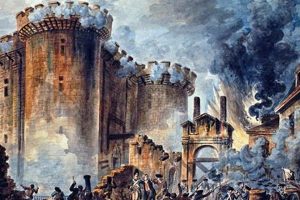
The event in question involved an armed populace attacking a medieval fortress and prison in Paris. This action, carried out on July 14, 1789, signified a critical moment in the French Revolution. The Bastille, though holding few prisoners at the time, represented royal authority and oppression to many Parisians.
The significance of this assault lies in its symbolic dismantling of absolute monarchy and the beginning of popular uprising against the existing political structure. Its benefits extended beyond the immediate release of prisoners, acting as a catalyst for further revolutionary actions and inspiring widespread social and political reform. Historically, it marked a turning point, demonstrating the power of collective action and contributing to the demise of the ancien rgime.
The following sections will delve into the underlying causes that fueled this event, the immediate triggers that incited the crowd, and the long-term consequences that reshaped French society and European politics. It will explore the socio-economic conditions, political tensions, and ideological currents that converged to make such a dramatic confrontation inevitable.
Understanding the Motivations Behind the Bastille Assault
A comprehensive understanding of the motivations requires analyzing a confluence of factors rather than attributing the event to a single cause. It’s vital to explore the socio-economic context and the specific immediate catalysts to gain a thorough perspective.
Tip 1: Examine Socio-Economic Conditions: Widespread poverty, food shortages, and economic inequality fueled popular discontent. Analyze grain prices, taxation policies, and the disparity between the aristocracy and the common people.
Tip 2: Analyze Political Discontent: The absolute monarchy and the perceived lack of representation for the Third Estate generated significant resentment. Investigate the role of the Estates-General and the demands for political reform.
Tip 3: Consider the Influence of Enlightenment Ideals: Enlightenment thinkers promoted ideas of liberty, equality, and popular sovereignty. Assess how these ideals influenced the revolutionaries’ thinking and justified their actions against perceived tyranny.
Tip 4: Identify the Immediate Triggers: The dismissal of Jacques Necker, a popular finance minister, and the concentration of troops in Paris heightened tensions. Understand how these events acted as immediate catalysts for action.
Tip 5: Understand the Symbolism of the Bastille: The Bastille represented royal authority and oppression. Analyze its role as a state prison and a symbol of the ancien rgime’s power.
Tip 6: Assess the Role of Revolutionary Leaders: Individuals like Camille Desmoulins and other agitators played a crucial role in galvanizing the crowd. Study their speeches, writings, and influence on public opinion.
Tip 7: Recognize the Impact of Fear and Rumor: Fear of royal repression and rumors of aristocratic conspiracies fueled paranoia and contributed to the sense of urgency. Acknowledge the role of misinformation in escalating the crisis.
Understanding the underlying motivations requires considering a combination of economic hardship, political frustration, Enlightenment ideals, immediate triggers, and the potent symbolism of the Bastille itself. Recognizing the interplay of these factors provides a more nuanced and complete understanding of the event.
The subsequent sections will provide a more detailed analysis of each of these factors, culminating in a comprehensive understanding of the circumstances surrounding the event.

The Bastille, as a prominent physical structure, functioned as a potent symbol of royal authority within Paris. This symbolism directly contributed to the popular decision to assault and ultimately dismantle it. While the prison held relatively few inmates at the time of the assault, its imposing presence and historical association with royal decrees and incarcerations cast it as a tangible representation of the monarchy’s oppressive power. The decision to target the Bastille was not solely a pragmatic one; it represented a calculated symbolic strike against the very embodiment of the ancien rgime. Its fall signified the weakening of royal control and the ascendancy of popular will.
The Bastille’s symbolism extended beyond its function as a prison. It also served as an armory, holding gunpowder and weapons that were perceived as instruments of royal control over the populace. The crowd’s need for these resources intertwined with the desire to dismantle the symbol of royal authority. The act of seizing the Bastille was therefore both a practical measure to arm the revolutionaries and a highly symbolic gesture demonstrating defiance of royal power. The success of the assault resonated throughout Paris and beyond, inspiring further acts of rebellion and signaling the definitive shift in power dynamics.
Understanding the Bastille’s symbolic weight is crucial for grasping the motivations behind its storming. It illustrates that the event was not merely a spontaneous outburst of violence, but a carefully targeted act designed to undermine the foundations of royal authority. Recognizing this connection allows for a more nuanced interpretation of the French Revolution, revealing the importance of symbolism in mobilizing popular support and shaping the course of historical events. The destruction of the Bastille served as a powerful message: royal authority was no longer absolute and could be challenged by the collective action of the people.
2. Economic hardship

Economic hardship served as a critical catalyst for the unrest culminating in the assault on the Bastille. Widespread poverty, coupled with soaring bread prices, created a volatile atmosphere of resentment and desperation among the Parisian populace. A series of poor harvests in the years leading up to 1789 resulted in severe grain shortages, driving up the cost of bread, the staple food for the majority of the population. Many Parisians were forced to spend a significant portion of their income solely on sustenance, leaving them vulnerable to even minor economic setbacks. This situation fueled a pervasive sense of injustice and frustration, directing popular anger toward the perceived indifference of the aristocracy and the ineffectiveness of the royal government.
The burden of taxation further exacerbated the economic strain on the lower classes. The French tax system was notoriously inequitable, placing a disproportionate burden on the Third Estate while the nobility and clergy enjoyed significant exemptions. This disparity fostered a sense of grievance and resentment among those who felt they were carrying an unfair share of the nation’s financial obligations. The combination of high food prices and heavy taxation left many Parisians struggling to survive, creating a fertile ground for revolutionary sentiment. This environment allowed for the easy mobilization of large crowds willing to take radical action, such as storming the Bastille, as a means of expressing their anger and demanding change.
In summary, economic hardship played a pivotal role in the events of 1789. The combination of widespread poverty, soaring bread prices, and an inequitable tax system created a desperate and angry populace ripe for revolution. The storming of the Bastille, fueled by these economic grievances, marked a turning point in the French Revolution, demonstrating the power of popular discontent and highlighting the importance of economic stability in maintaining social order. Recognizing the significance of economic factors provides a deeper understanding of the complex motivations that drove the French people to challenge the existing power structures.
3. Political frustration
Political frustration constituted a significant driving force behind the storming of the Bastille. The existing political structure, characterized by an absolute monarchy, provided limited avenues for citizen participation and systematically excluded the Third Estate from meaningful representation. This exclusion bred resentment and a growing desire for political reform. The Estates-General, convened in 1789 after a long hiatus, offered a glimmer of hope for change, but the rigid voting procedures and the resistance of the privileged orders to meaningful concessions quickly extinguished that hope. This perceived intransigence further fueled the populace’s frustration and sense of political powerlessness. The inability to affect change through established political channels created a climate ripe for radical action.
The actions of the monarchy, particularly the perceived mismanagement of the nation’s finances and the maintenance of a lavish court while the population suffered, exacerbated this political frustration. The dismissal of Jacques Necker, a finance minister popular with the Third Estate for his reformist views, served as a pivotal event, signaling the king’s unwillingness to address the concerns of the people. This act, viewed as a direct affront to the burgeoning movement for reform, functioned as an immediate trigger for the escalating unrest. Consequently, the assault on the Bastille became a manifestation of this pent-up political frustration, a direct challenge to the authority of the monarchy and a demand for a more representative form of government. It was, in essence, a forceful assertion of the people’s desire to actively participate in shaping their own political destiny.
Ultimately, understanding the role of political frustration is crucial for comprehending the underlying causes of the French Revolution and the specific events leading to the storming of the Bastille. It highlights the importance of inclusive governance and the dangers of suppressing popular demands for political participation. The events of 1789 serve as a historical example of the consequences of failing to address legitimate grievances and the potential for widespread unrest when individuals feel politically marginalized and disenfranchised. The Bastille’s storming represented the ultimate expression of this frustration, propelling France towards a period of profound political and social upheaval.
4. Enlightenment Ideals

Enlightenment ideals profoundly influenced the intellectual and political landscape of 18th-century France, providing a philosophical framework that directly contributed to the revolutionary fervor culminating in the assault on the Bastille. These ideals, emphasizing reason, individual rights, and popular sovereignty, challenged the legitimacy of the absolute monarchy and inspired calls for social and political reform.
- Emphasis on Natural Rights
Enlightenment thinkers, such as John Locke, articulated the concept of natural rights inherent rights possessed by all individuals, including life, liberty, and property. These ideas resonated deeply with the Third Estate, who felt their basic rights were being violated by the arbitrary actions of the monarchy and the privileged classes. The storming of the Bastille can be viewed as an assertion of these natural rights, a demand for freedom from oppression and unjust imprisonment.
- Advocacy for Popular Sovereignty
The principle of popular sovereignty, championed by philosophers like Jean-Jacques Rousseau, asserted that political power ultimately resides in the people. This challenged the divine right of kings and provided a justification for challenging the authority of the monarchy. The assault on the Bastille represented a rejection of royal absolutism and a claim to popular sovereignty, demonstrating the belief that the people had the right to determine their own government.
- Belief in Reason and Progress
The Enlightenment emphasized the power of reason and the belief in the possibility of human progress through knowledge and reform. This fostered a critical spirit and a willingness to challenge traditional institutions and practices. The revolutionaries believed that by dismantling the Bastille and challenging the old order, they were paving the way for a more rational and just society, guided by Enlightenment principles.
- Critique of Absolutism and Social Hierarchy
Enlightenment thinkers, including Montesquieu and Voltaire, critiqued the concentration of power in the monarchy and the rigid social hierarchy that characterized the ancien rgime. They advocated for constitutional government and greater social equality. The attack on the Bastille was a direct challenge to the structures of absolutism and social hierarchy, aimed at dismantling the symbols of royal power and promoting a more egalitarian society.
In conclusion, Enlightenment ideals provided the intellectual justification and moral impetus for the storming of the Bastille. The principles of natural rights, popular sovereignty, reason, and the critique of absolutism fueled the revolutionaries’ determination to challenge the existing order and build a new society based on liberty, equality, and fraternity. The event, therefore, stands as a testament to the enduring influence of Enlightenment thought on the course of history.
5. Immediate Triggers
The assault on the Bastille, while rooted in long-standing socio-economic and political tensions, was directly precipitated by a series of immediate triggers that acted as catalysts for popular action. These triggers transformed simmering discontent into open rebellion, providing the final impetus for the crowd to storm the fortress. Without these immediate events, the underlying grievances might have remained contained, or manifested in different forms.
A primary trigger was the dismissal of Jacques Necker, the popular finance minister, by King Louis XVI on July 11, 1789. Necker, perceived as a reformer sympathetic to the Third Estate, had advocated for financial policies that challenged the privileges of the nobility. His dismissal was interpreted by many Parisians as a sign that the king was unwilling to address their concerns and intended to suppress any attempts at reform. This action ignited public outrage and fueled fears of a royal crackdown on the burgeoning National Assembly. Another significant trigger was the visible concentration of royal troops around Paris in the days leading up to July 14th. This military presence was viewed as a deliberate attempt to intimidate the population and suppress any potential unrest. The perceived threat of military force heightened tensions and created a sense of urgency, pushing the populace to take preemptive action. Finally, inciting speeches, notably by Camille Desmoulins in the gardens of the Palais Royal, galvanized the crowd and directed their anger towards the Bastille. Desmoulins, and others, warned of an impending royalist crackdown and urged citizens to arm themselves in defense of their rights. These speeches provided a clear call to action and focused the crowd’s attention on the Bastille as a symbol of royal oppression and a source of weapons.
In summary, the immediate triggers, specifically Necker’s dismissal, the concentration of troops, and inciting speeches, were crucial in transforming underlying discontent into direct action against the Bastille. These events provided the spark that ignited the powder keg of social and political tensions, leading to a pivotal moment in the French Revolution. Understanding the significance of these triggers offers a clearer understanding of the specific circumstances that led to the storming of the Bastille and underscores the importance of immediate events in shaping the course of history.
Frequently Asked Questions
This section addresses common inquiries regarding the motivations and circumstances surrounding the event, providing concise answers based on historical evidence.
Question 1: What primarily motivated the crowd’s actions?
Several factors converged, including widespread economic hardship, political frustration due to the absolute monarchy, the influence of Enlightenment ideals advocating for liberty and equality, and the perceived threat of royal repression.
Question 2: Why was the Bastille specifically targeted?
The Bastille served as a potent symbol of royal authority and oppression. It also functioned as a prison and armory, making it a target for those seeking to dismantle royal power and acquire weapons for self-defense.
Question 3: How significant was the event in the broader context of the French Revolution?
The storming of the Bastille is considered a pivotal moment, marking the beginning of the French Revolution. It demonstrated the power of popular uprising and led to further revolutionary actions aimed at dismantling the ancien rgime.
Question 4: Did the Bastille hold many prisoners at the time of the assault?
No, the Bastille held relatively few prisoners at the time. However, its symbolic importance as a representation of royal authority far outweighed its function as a prison.
Question 5: What role did Enlightenment ideals play in the assault?
Enlightenment ideals, promoting liberty, equality, and popular sovereignty, provided the philosophical justification for challenging the absolute monarchy and demanding political reform.
Question 6: What were the immediate triggers that incited the crowd?
Immediate triggers included the dismissal of Jacques Necker, a popular finance minister, and the concentration of royal troops around Paris, which heightened fears of royal repression.
In summary, the assault was driven by a complex interplay of socio-economic, political, and ideological factors, culminating in a symbolic act of defiance against royal authority.
The subsequent section will analyze the long-term consequences of this action and its impact on French society and European politics.
Conclusion
The exploration of why a crowd stormed the Bastille reveals a confluence of factors rather than a singular cause. Economic hardship, political frustration stemming from absolute monarchy, the galvanizing influence of Enlightenment ideals, and immediate triggers like Necker’s dismissal all contributed to the volatile environment. The Bastille, as a symbol of royal authority and oppression, became the focal point for the expression of these widespread grievances. The act itself was a pivotal moment, igniting the French Revolution and signaling a fundamental shift in the balance of power.
The events surrounding the fall of the Bastille serve as a crucial reminder of the potent combination of social unrest and political ideals. Examining the factors that spurred this event offers insight into the dynamics of revolution and the importance of addressing societal inequalities. Continued study of this historical turning point remains essential for understanding the ongoing evolution of political thought and the enduring quest for social justice.


![Bastille Storm's Impact: What Was the Outcome? [Explained] | Hubbastille: Explore the Fusion of Culture, Music & Creativity](https://hubbastille.com/wp-content/uploads/2026/01/th-33-300x200.jpg "Bastille Storm's Impact: What Was the Outcome? [Explained] Hubbastille: Explore the Fusion of Culture, Music & Creativity")