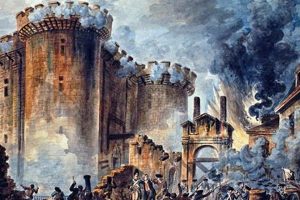
The seizure of the Bastille, a medieval fortress and prison in Paris, by a civilian crowd on July 14, 1789, represented a pivotal moment in the French Revolution. The event was not a spontaneous act of violence, but rather the culmination of growing social, economic, and political tensions within French society. The populace was driven by a complex mix of factors, including widespread discontent with the monarchy, severe food shortages, and a deep-seated distrust of the royal authorities.
The significance of the Bastille lay not so much in its strategic importance as a military installation, but in its symbolic representation of royal power and oppression. Its fall signaled a profound shift in the balance of power, demonstrating that the monarchy was vulnerable to popular uprising. This emboldened revolutionaries throughout France and ignited further acts of rebellion. The storming also resulted in the acquisition of much-needed arms and ammunition, which further empowered the revolutionary cause. The event is often considered a key turning point, propelling the revolution into a more radical phase.
Underlying this specific event were several critical elements that created a tinderbox of popular anger. These included the King’s perceived indifference to the plight of the common people, the concentration of troops in Paris fueling fears of repression, and the influence of Enlightenment ideals promoting liberty and equality. The dismissal of Jacques Necker, a popular finance minister, served as the immediate catalyst, sparking open revolt and prompting the citizens of Paris to take matters into their own hands by targeting the Bastille.
Understanding the Motivations Behind the Bastille Storming
Analyzing the reasons for this historic event requires careful consideration of several key factors that contributed to the volatile atmosphere in Paris during the summer of 1789. A comprehensive understanding necessitates examining the social, economic, and political landscape of the time.
Tip 1: Analyze Socioeconomic Disparities: The vast inequality between the privileged aristocracy and the impoverished masses fueled resentment. Explore the tax burden on the Third Estate and the extravagant spending of the royal court.
Tip 2: Examine the Role of Enlightenment Ideals: The philosophical ideas of liberty, equality, and fraternity, popularized by Enlightenment thinkers, inspired calls for social and political reform. Research the influence of figures like Rousseau and Voltaire.
Tip 3: Investigate the Food Crisis: Severe grain shortages led to skyrocketing bread prices, causing widespread hunger and unrest among the common people. Understand the impact of consecutive poor harvests and the government’s response.
Tip 4: Assess the Weakness of Royal Authority: King Louis XVI’s perceived indecisiveness and inability to address the nation’s problems eroded public confidence in the monarchy. Evaluate his leadership skills and political decisions during this critical period.
Tip 5: Consider the Political Climate: The Estates-General, convened in May 1789, quickly became deadlocked over voting procedures, further exacerbating political tensions. Analyze the events leading up to the formation of the National Assembly.
Tip 6: Understand the Symbolism of the Bastille: The Bastille represented royal tyranny and oppression, making it a potent symbol of everything the revolutionaries opposed. Research its history and its reputation among the Parisian populace.
Tip 7: Acknowledge the Immediate Catalysts: The dismissal of Jacques Necker, a popular finance minister, and the concentration of royal troops in Paris ignited fears of a royal crackdown, prompting the citizenry to arm themselves. Identify the key events that triggered the storming.
By meticulously examining these factors, a clearer understanding of the complex motivations driving the event can be achieved. The storming was a response to systemic issues and represented a crucial turning point in the French Revolution.
Applying these insights provides a robust foundation for further exploration of the Revolution’s subsequent events and their lasting consequences on France and the world.
1. Royal Authority Erosion

The diminishing legitimacy and perceived competence of the French monarchy under Louis XVI played a crucial role in the events of July 14, 1789. This erosion of royal authority created a power vacuum and fostered an environment in which radical action, such as the assault on the Bastille, became increasingly conceivable.
- Fiscal Mismanagement and Perceived Indifference
The monarchy’s chronic mismanagement of state finances, coupled with the perception that Louis XVI and his court were detached from the suffering of the common people, significantly undermined public trust. Extravagant spending while the majority of the population struggled with poverty and famine fueled resentment and delegitimized the crown’s authority. Examples include the construction and maintenance of Versailles while the nation teetered on the brink of bankruptcy. This disparity fueled a sense of injustice, prompting desperate measures.
- Weak Leadership and Political Indecisiveness
Louis XVI’s reputation for indecisiveness and lack of strong leadership exacerbated existing problems. His inability to effectively address the growing economic and social crises facing France contributed to the perception that the monarchy was incapable of governing effectively. This weakness allowed dissenting voices to gain traction and encouraged bolder challenges to royal power. His vacillation on reforms further eroded the perception of strong governance.
- Failure of Reform Attempts
Various attempts at reform, particularly those proposed by ministers like Turgot and Necker, were often thwarted by the entrenched interests of the nobility and the court. These failures highlighted the monarchy’s inability to enact meaningful change and reinforced the belief that the existing system was fundamentally broken. The rejection of these reforms demonstrated the king’s inability to overcome resistance, and further eroded faith in the monarchy’s capacity to lead France.
- Loss of Control Over Events
As tensions escalated in the lead-up to the Revolution, the monarchy appeared increasingly unable to control the unfolding events. The summoning of the Estates-General, intended to address the nation’s problems, instead unleashed forces that the king could not contain. The formation of the National Assembly and the Tennis Court Oath demonstrated a clear defiance of royal authority and a determination to establish a new political order. This loss of control showcased the extent to which royal authority had diminished and inspired direct action.
The combination of fiscal mismanagement, weak leadership, failed reforms, and a general loss of control over events contributed significantly to the erosion of royal authority. This erosion created the conditions in which popular discontent could coalesce into direct action against the symbols of royal power, such as the Bastille, ultimately contributing to the events of July 14, 1789.
2. Enlightenment Ideals Influence

The intellectual ferment of the Enlightenment profoundly shaped the ideological landscape that contributed to the storming of the Bastille. Enlightenment ideals provided a philosophical framework for questioning the legitimacy of absolute monarchy and advocating for principles of liberty, equality, and popular sovereignty. These concepts fueled the revolutionary fervor that propelled Parisians to take direct action against the Bastille, a symbol of royal oppression.
- Emphasis on Individual Rights and Freedoms
Enlightenment thinkers such as John Locke articulated the concept of natural rights, including the rights to life, liberty, and property. These ideas resonated deeply with the Third Estate, which felt disenfranchised and oppressed by the aristocracy. The desire to secure these rights and freedoms motivated individuals to challenge the existing power structure, culminating in actions such as the storming of the Bastille, seen as a step towards securing these rights against royal encroachment. The Declaration of the Rights of Man and of the Citizen, drafted shortly after the Bastille’s fall, clearly reflects the influence of Lockean ideals.
- Advocacy for Popular Sovereignty
Jean-Jacques Rousseau’s concept of the social contract emphasized the idea that legitimate political authority derives from the consent of the governed. This notion challenged the divine right of kings and suggested that sovereignty ultimately resides in the people. The storming of the Bastille can be interpreted as an assertion of popular sovereignty, a rejection of the monarchy’s claim to absolute power, and a demand for self-determination. The actions of the Parisian populace were viewed as an expression of the general will, aimed at establishing a government accountable to its citizens.
- Critique of Absolutism and Privilege
Enlightenment philosophers, including Voltaire, criticized the arbitrary power of absolute monarchs and the privileges enjoyed by the aristocracy. This critique fueled resentment among the Third Estate, which bore the brunt of taxation and lacked political representation. The Bastille, as a symbol of royal power and arbitrary imprisonment, became a focal point for this resentment. The act of storming the Bastille was a direct challenge to the existing system of privilege and an assertion of the principle of equality before the law.
- Dissemination of Radical Ideas through Salons and Print Culture
Enlightenment ideas were disseminated through salons, pamphlets, and newspapers, reaching a wider audience and fostering a sense of collective identity among those who sought reform. This print culture facilitated the spread of revolutionary ideas and helped to mobilize public opinion against the monarchy. The pamphlets and newspapers circulating in Paris in the lead-up to the storming of the Bastille often invoked Enlightenment principles to justify resistance against royal authority.
In conclusion, the influence of Enlightenment ideals on the revolutionary mindset of the Parisian populace cannot be overstated. By providing a philosophical justification for challenging absolute monarchy, advocating for individual rights, and promoting the concept of popular sovereignty, Enlightenment thinkers laid the intellectual groundwork for the storming of the Bastille. This event served as a powerful symbol of the revolutionary spirit and a testament to the transformative power of Enlightenment ideas in shaping the course of history.
3. Food Scarcity, High Prices
Severe food shortages and soaring prices, particularly of bread, the staple food for the majority of the Parisian population, significantly contributed to the volatile atmosphere that culminated in the storming of the Bastille. A series of poor harvests in the years preceding 1789 led to a dramatic reduction in grain supply. This scarcity drove up the cost of bread, placing it beyond the reach of many working-class families. The widespread hunger and desperation that resulted created an environment ripe for social unrest and political upheaval.
The connection between food insecurity and the siege of the Bastille is direct. With many families spending a majority of their income on bread alone, any price increase could push them into starvation. Rumors of grain hoarding by wealthy merchants and government officials further inflamed public anger. The populace, already suspicious of the monarchy and the aristocracy, viewed the food crisis as evidence of their indifference to the suffering of the common people. The combination of empty stomachs and perceived governmental neglect fueled a potent sense of injustice and a willingness to take radical action. The storming itself can be partially understood as a desperate act to secure resources and challenge the perceived power structures responsible for their plight.
The chronic food shortages underscored the fragility of the existing social order and highlighted the monarchy’s inability to effectively address the basic needs of its citizens. This tangible failure contributed significantly to the erosion of public trust and strengthened the resolve of those seeking fundamental political change. Understanding the critical role of food scarcity in fueling the revolution provides vital insight into the socio-economic factors that drove the event. It emphasizes the precarious conditions under which a population, deprived of basic necessities, can be motivated to overthrow established authority. This historical understanding also carries significant relevance in contemporary contexts, where food insecurity remains a major driver of social and political instability.
4. Socioeconomic inequality
The vast disparity in wealth, privilege, and opportunity between the aristocracy and the Third Estate formed a foundational cause contributing directly to the conditions that precipitated the storming of the Bastille. This inequality permeated all aspects of French society, fueling resentment and a sense of injustice that ultimately erupted into revolutionary action.
- Unequal Taxation and Fiscal Burden
The French tax system disproportionately burdened the Third Estate, which comprised the vast majority of the population, including peasants, laborers, and the bourgeoisie. The aristocracy and clergy, who possessed significant wealth and land, were largely exempt from direct taxation. This meant that the Third Estate shouldered the financial responsibility for the state, even amidst widespread poverty and economic hardship. This inequitable distribution of the tax burden fueled resentment and a sense of exploitation among the Third Estate, prompting demands for fiscal reform and greater equality.
- Feudal Dues and Obligations
In rural areas, peasants were subjected to feudal dues and obligations owed to their landlords, which further exacerbated their economic hardship. These obligations often included a portion of their harvest, labor services, and other payments that left them with little to sustain themselves. The persistence of these feudal practices, which were largely absent in other parts of Europe, fostered a sense of backwardness and oppression among the peasantry. The desire to abolish these feudal dues and obligations was a key motivation for rural unrest during the Revolution and contributed to the widespread support for the storming of the Bastille, seen as a symbol of the feudal system.
- Restricted Access to Opportunities and Advancement
Social mobility in pre-revolutionary France was severely limited, with opportunities for advancement largely determined by birth and social status. The aristocracy monopolized positions of power in government, the military, and the Church, while members of the Third Estate faced significant barriers to upward mobility. This lack of opportunity fueled frustration and a sense of being trapped in a rigid social hierarchy. The storming of the Bastille, in part, reflected a desire to dismantle this system of privilege and create a society in which individuals could rise based on merit rather than birth.
- Extravagant Lifestyle of the Elite vs. Poverty of the Masses
The stark contrast between the opulent lifestyle of the aristocracy and the abject poverty of the Third Estate served as a constant reminder of the deep inequalities within French society. The extravagant spending of the royal court at Versailles, while many Parisians struggled to afford bread, fueled resentment and a sense of moral outrage. The Bastille, as a symbol of royal power, became a target for this resentment, representing the perceived indifference of the elite to the plight of the common people. The act of storming the Bastille was, in part, an expression of this moral outrage and a demand for a more just and equitable society.
In conclusion, socioeconomic inequality was a primary driver of the unrest leading to the assault on the Bastille. The inequities in taxation, feudal obligations, opportunities, and lifestyle served as constant sources of friction, ultimately contributing to the revolutionary fervor that swept through Paris and France, culminating in the pivotal events of July 14, 1789. Understanding the extent and impact of this inequality is critical to comprehending the underlying causes of the French Revolution.
5. Political Deadlock

The protracted political stalemate within the Estates-General directly contributed to the volatile atmosphere leading to the storming of the Bastille. The inability of the three Estatesclergy, nobility, and commonersto reach a consensus on fundamental reforms created a sense of frustration and hopelessness, pushing the Third Estate to take radical action.
- Voting Impasse and Representation Dispute
The central point of contention revolved around the method of voting. The traditional system of voting by order, where each Estate had one vote, ensured that the privileged orders could always outvote the Third Estate, regardless of its size or popular support. The Third Estate, representing the vast majority of the population, demanded voting by head, where each individual delegate would have a vote, thus reflecting the demographic reality of France. The refusal of the privileged orders and the monarchy to concede this demand created an insurmountable obstacle to meaningful reform, fueling the perception that the existing political system was inherently unjust and unresponsive to the needs of the people. This impasse resulted in the Third Estate declaring itself the National Assembly, marking a clear act of defiance.
- Failure to Address Grievances and Demands
The Estates-General was convened to address the pressing issues facing France, including the fiscal crisis, widespread poverty, and social inequality. However, the political deadlock prevented any substantive discussion or resolution of these grievances. The privileged orders were unwilling to relinquish their exemptions and privileges, while the monarchy proved unable or unwilling to impose meaningful reforms. This failure to address the deeply rooted problems of French society exacerbated popular discontent and fueled the belief that only radical change could bring about a just and equitable society. The lack of progress fostered a sense of desperation.
- Erosion of Trust in Political Institutions
The prolonged political stalemate within the Estates-General eroded public trust in political institutions and the ability of the government to address the nation’s problems. The perceived intransigence of the privileged orders and the perceived weakness of the monarchy led to a loss of faith in the established political order. This erosion of trust created a vacuum that was filled by radical voices and revolutionary movements. The inability of the Estates-General to function effectively reinforced the idea that the existing system was broken and that direct action was necessary to bring about change.
- Radicalization of the Third Estate
The political deadlock within the Estates-General contributed to the radicalization of the Third Estate. As negotiations stalled and frustrations mounted, more radical voices gained prominence within the Third Estate, advocating for more assertive action. The formation of the National Assembly and the Tennis Court Oath demonstrated the growing determination of the Third Estate to assert its authority and challenge the legitimacy of the monarchy. This radicalization created a climate of defiance and emboldened the Parisian populace to take direct action against symbols of royal authority, such as the Bastille.
In essence, the political deadlock within the Estates-General provided the backdrop against which popular discontent could escalate into revolutionary action. The failure of the established political institutions to address the fundamental problems facing France fueled a sense of frustration and hopelessness, pushing the Parisian populace to take matters into their own hands and storm the Bastille, marking a turning point in the French Revolution.
6. Bastille's Symbolism

The symbolic weight of the Bastille far outweighed its practical value as a military stronghold or prison at the time of its storming. Its representation as a monument to royal tyranny and arbitrary justice was a crucial element in galvanizing the Parisian populace to action. This symbolic significance, deeply embedded in the collective consciousness, directly contributed to the decision to target it.
- Representation of Royal Authority and Despotism
Originally constructed as a fortress, the Bastille evolved into a state prison used to incarcerate individuals who opposed the monarchy or fell out of favor with the ruling elite. These prisoners, often detained without due process or trial, exemplified the arbitrary nature of royal justice. The fortress, therefore, became synonymous with the unchecked power of the monarchy and its capacity for oppression. The image of the Bastille as a symbol of despotism provided a tangible target for popular anger and a focal point for revolutionary sentiment.
- Symbol of Injustice and Arbitrary Imprisonment
The stories, often exaggerated, of those imprisoned within the Bastille circulated widely, fueling public resentment against the monarchy. While the number of prisoners held at the time of the storming was relatively small, the prisons reputation as a place of unjust confinement was firmly established. The secrecy surrounding the prison and the lack of transparency in its operations further contributed to its image as a symbol of arbitrary justice and the denial of basic rights. This perception fueled the desire for liberation and the establishment of a more just legal system.
- Focal Point for Popular Discontent
The Bastille served as a physical embodiment of the grievances felt by the Third Estate. It represented not only royal oppression but also the broader system of privilege and inequality that characterized French society. The accumulation of economic hardship, social injustice, and political marginalization found a concrete representation in the imposing structure of the Bastille. Targeting the Bastille was thus a way for the Parisian populace to strike at the heart of the oppressive system and assert their demands for change.
- Inspiration for Revolutionary Action
The symbolic importance of the Bastille transformed a relatively minor event into a watershed moment in the French Revolution. The successful assault on the fortress demonstrated the vulnerability of the monarchy and the power of popular uprising. This act of defiance inspired revolutionary movements throughout France and served as a catalyst for further challenges to royal authority. The storming of the Bastille quickly became a potent symbol of revolutionary triumph and a call to action for those seeking liberty and equality.
In summary, the Bastilles symbolism, deeply rooted in its history as a symbol of royal despotism, arbitrary imprisonment, and systemic injustice, played a critical role in motivating the Parisian mob to storm its gates. The successful seizure of the fortress, fueled by this powerful symbolism, ignited the French Revolution and reshaped the course of European history.
7. Necker's Dismissal Catalyst

The dismissal of Jacques Necker, the popular finance minister, by King Louis XVI on July 11, 1789, served as a pivotal catalyst that directly inflamed tensions and fueled the Parisian uprising leading to the storming of the Bastille. His removal was perceived not merely as a change in administration but as a clear signal of the King’s intent to suppress reform and maintain the existing inequitable power structure.
- Loss of Public Confidence
Necker, though a member of the Genevan bourgeoisie and not nobility, had garnered considerable public trust through his efforts to manage the French treasury and advocate for financial reforms that addressed the plight of the Third Estate. His removal was widely interpreted as a rejection of these reform efforts and a victory for the conservative factions within the royal court. This resulted in a sharp decline in public confidence in the King’s willingness to address the pressing economic and social problems plaguing France. The dismissal amplified existing anxieties and intensified suspicions regarding the monarchy’s intentions.
- Fear of Royal Crackdown
Necker’s dismissal coincided with an increased concentration of royal troops in and around Paris, further heightening anxieties among the populace. The dismissal, coupled with the troop deployments, led to widespread fears of a royal crackdown on any potential dissent or resistance. Parisians interpreted these actions as an indication that the King intended to forcibly suppress the growing calls for reform and maintain absolute control. This perceived threat of imminent repression prompted many citizens to arm themselves and prepare for a potential confrontation.
- Signal of King’s Opposition to Reform
Necker had become a symbol of hope for those seeking meaningful reforms to address the economic and social inequalities in French society. His dismissal was viewed as a decisive rejection of these reforms and a clear indication that the King was unwilling to compromise or address the grievances of the Third Estate. This realization fueled a sense of betrayal and heightened the determination of the populace to take matters into their own hands. The dismissal effectively closed off any remaining avenues for peaceful negotiation or compromise, pushing the situation closer to open conflict.
- Trigger for Popular Mobilization
News of Necker’s dismissal spread rapidly throughout Paris, sparking outrage and galvanizing the populace into action. Camille Desmoulins, a popular journalist and political agitator, famously addressed a crowd at the Palais-Royal, urging them to arm themselves and defend the nation against the perceived threat of royal tyranny. This call to arms resonated deeply with the Parisian populace, who were already on edge due to food shortages, economic hardship, and political uncertainty. Necker’s dismissal thus served as the immediate trigger that transformed simmering discontent into active rebellion, culminating in the storming of the Bastille just days later.
The dismissal of Jacques Necker acted as a critical turning point, transforming simmering discontent into open revolt. The event encapsulated the fears, frustrations, and aspirations of the Parisian populace, serving as the immediate catalyst that propelled them to action against the perceived symbol of royal oppression the Bastille. This event underscores how seemingly isolated political decisions can have profound and far-reaching consequences when enacted within a context of deep-seated social and political unrest.
Frequently Asked Questions
This section addresses common inquiries surrounding the motivations behind the storming of the Bastille, providing concise and factual answers based on historical evidence.
Question 1: Was the storming of the Bastille a spontaneous event?
No, the storming was not spontaneous. It was the culmination of growing social, economic, and political tensions within French society, fueled by long-term grievances and immediate triggers.
Question 2: How many prisoners were actually in the Bastille at the time of the storming?
Contrary to popular belief, there were only seven prisoners in the Bastille on July 14, 1789. They included four forgers, one count accused of immoral behavior, and two individuals deemed insane.
Question 3: Was the storming primarily about liberating prisoners?
While the liberation of prisoners was a factor, the primary motivation was to seize the Bastille’s supply of arms and gunpowder, which were needed by the Parisian citizens to defend themselves against perceived royal aggression.
Question 4: What was the role of Jacques Necker’s dismissal in the events?
Necker’s dismissal, a popular finance minister, acted as the immediate catalyst for the uprising. It was interpreted as a sign that King Louis XVI intended to suppress reform and maintain the power of the aristocracy.
Question 5: How did Enlightenment ideals influence the storming?
Enlightenment philosophies, emphasizing liberty, equality, and popular sovereignty, provided a framework for questioning the legitimacy of absolute monarchy and advocating for radical change. These ideas inspired the revolutionaries.
Question 6: What was the long-term significance of the storming of the Bastille?
The storming of the Bastille marked a pivotal moment in the French Revolution, symbolizing the triumph of popular will over royal authority. It inspired revolutionary movements throughout France and signaled the beginning of the end for the absolute monarchy.
In summary, the storming was a complex event driven by a confluence of factors, including social inequality, economic hardship, political deadlock, and the influence of Enlightenment ideals. The Bastille’s symbolism as a symbol of royal tyranny made it a prime target for revolutionary action.
The following section will explore the immediate aftermath of this pivotal event and its influence on the future trajectory of the French Revolution.
Conclusion
The exploration of why did the Paris mob storm the Bastille reveals a confluence of complex and intertwined factors. Widespread social and economic inequality, coupled with a rigid political system unresponsive to the needs of the Third Estate, created a climate of profound discontent. The influence of Enlightenment ideals, promoting liberty and equality, fueled a desire for fundamental change. The monarchy’s perceived weakness, compounded by fiscal mismanagement and the dismissal of Jacques Necker, acted as the immediate catalyst, pushing the Parisian populace to take direct action against the Bastille, a potent symbol of royal authority and oppression. The storming was not a mere act of vandalism, but a deliberate assault on a structure representing the Ancien Rgime’s perceived injustices.
The events of July 14, 1789, irrevocably altered the course of French history. The storming of the Bastille served as a powerful demonstration of popular sovereignty and a decisive blow against absolute monarchy. Understanding the intricate web of motivations behind this pivotal event is essential for comprehending the subsequent trajectory of the French Revolution and its enduring impact on the modern world. Further investigation into the social, political, and economic dynamics of pre-revolutionary France remains crucial for a complete appreciation of this transformative moment.

![Bastille Storm's Impact: What Was the Outcome? [Explained] | Hubbastille: Explore the Fusion of Culture, Music & Creativity](https://hubbastille.com/wp-content/uploads/2026/01/th-33-300x200.jpg "Bastille Storm's Impact: What Was the Outcome? [Explained] Hubbastille: Explore the Fusion of Culture, Music & Creativity")