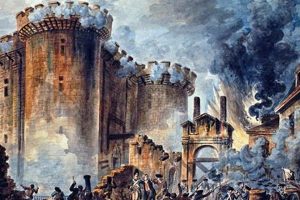
The taking of the Bastille, a medieval fortress and prison in Paris, occurred on July 14, 1789. It was a pivotal event during the early stages of the French Revolution. The event saw a mob of Parisians, primarily composed of tradesmen, artisans, and common citizens, converge on the Bastille seeking gunpowder and arms believed to be stored within its walls.
This action, though resulting in relatively few casualties, symbolized the overthrow of royal authority and marked a significant victory for the revolutionary cause. The Bastille represented the absolute power of the monarchy, and its capture demonstrated the people’s willingness to challenge and dismantle the existing regime. The event fueled the burgeoning revolution, providing momentum and inspiring similar acts of defiance across France. The destruction of the Bastille resonated deeply, signaling the end of arbitrary royal power and the dawn of a new era of popular sovereignty.
The circumstances leading to this event were multifaceted, including widespread economic hardship, social inequality, and growing resentment towards the perceived excesses and injustices of the monarchy. The storming itself was precipitated by rumors of royal troops preparing to suppress the burgeoning National Assembly, a body formed by representatives of the Third Estate seeking constitutional reform.
Analyzing the Fall of the Bastille
Understanding the taking of the Bastille requires a careful consideration of the prevailing social, economic, and political conditions of late 18th-century France. A thorough examination of contributing factors provides a more complete and nuanced perspective on this pivotal event.
Tip 1: Examine the Socioeconomic Context: Identify the widespread economic hardship, including food shortages and high taxes, that fueled popular discontent. Consider the role of social inequalities inherent in the French class system, where the Third Estate bore the brunt of taxation while the nobility enjoyed significant privileges.
Tip 2: Analyze the Role of Enlightenment Ideals: Investigate how Enlightenment philosophies emphasizing liberty, equality, and popular sovereignty influenced revolutionary thought and action. Explore the writings of thinkers such as Rousseau and Voltaire, and their impact on the perception of royal authority and the call for citizen rights.
Tip 3: Assess the Weakness of the Monarchy: Evaluate the leadership of King Louis XVI and his perceived indecisiveness and detachment from the needs of the populace. Consider the Queen’s unpopularity and the perception of extravagance at the royal court, which further alienated the common people.
Tip 4: Understand the Formation of the National Assembly: Trace the events leading to the formation of the National Assembly, a body representing the Third Estate that challenged royal authority and demanded constitutional reform. Analyze its significance as a precursor to the attack on the Bastille.
Tip 5: Investigate the Immediate Triggers: Determine the specific events and rumors that precipitated the attack on the Bastille, including the dismissal of Jacques Necker, a popular finance minister, and fears of royal troops suppressing the National Assembly.
Tip 6: Evaluate the Symbolism of the Bastille: Recognize that the Bastille, though holding relatively few prisoners at the time, represented the absolute power and arbitrary justice of the monarchy. Analyze its significance as a target for popular anger and a symbol of oppression.
A comprehensive grasp of these factors is essential to understanding the significance of the event. It allows one to move beyond a simple narrative of violence and explore the deeper underlying forces that propelled the French Revolution.
These points will assist in constructing a more complete understanding of this event.
1. Royal Authority Weakened

The event, a critical juncture in the French Revolution, directly reflected and amplified the weakening of royal authority. The ability of Parisian citizens to successfully attack and seize a royal fortress demonstrated a significant erosion of the monarchy’s power and legitimacy.
- Inability to Protect Royal Assets
The monarchy’s failure to effectively defend the Bastille, a symbol of its authority, revealed a critical vulnerability. The storming highlighted the inadequacy of royal troops to maintain order and protect government assets against popular uprising. This failure emboldened revolutionaries and further eroded public confidence in the crown’s ability to govern.
- Challenge to Absolute Rule
For centuries, the French monarchy operated under the principle of absolute rule, where the king’s word was law. The storming of the Bastille directly challenged this principle by demonstrating that the populace could defy royal decrees and take matters into their own hands. This act of defiance undermined the perception of the king as an unchallengeable authority.
- Erosion of Public Trust
The event, widely reported and celebrated, contributed to a significant decline in public trust in the monarchy. The perceived indifference of the royal court to the plight of the common people, coupled with the violent suppression of dissent, fueled resentment and distrust. This erosion of public trust paved the way for more radical challenges to royal authority in the subsequent years of the revolution.
- Empowerment of Revolutionary Forces
The successful capture of the Bastille significantly empowered revolutionary forces, providing them with a tangible victory and a surge of popular support. The event demonstrated the potential for coordinated action by ordinary citizens to overthrow oppressive institutions, further emboldening revolutionaries to pursue more ambitious goals, including the abolition of the monarchy itself.
In essence, the violent seizure of the Bastille both exemplified and accelerated the decline of royal authority. The monarchy’s inability to prevent the attack and the subsequent empowerment of revolutionary forces cemented the event’s place as a pivotal moment in the French Revolution, permanently altering the balance of power in France.
2. Symbol of Tyranny

The Bastille’s status as a symbol of tyranny was inextricably linked to the actions that led to its siege and eventual fall. This imposing structure, initially constructed as a fortress, had evolved into a state prison, incarcerating individuals deemed enemies of the monarchy. The individuals held within its walls, though relatively few in number at the time of the event, represented the arbitrary power of the king and the absence of due process. The issuance of lettres de cachet, royal orders that allowed for imprisonment without trial, reinforced the perception of the Bastille as a tool of oppression, silencing dissent and enforcing royal will.
The popular understanding of the Bastille as a symbol of tyranny was crucial in motivating the citizens of Paris to take direct action. The desire to dismantle this symbol of royal power fueled the crowds that gathered on July 14, 1789. The storming was not merely an attempt to acquire gunpowder, but a deliberate act of rebellion against the perceived injustices of the monarchy. The success of the event, even with its limited immediate practical impact, carried immense symbolic weight, signaling a challenge to the established order. The subsequent demolition of the Bastille further solidified its status as a representation of the overthrown tyranny, and its stones were repurposed as symbols of a new era.
Understanding this connection between the “symbol of tyranny” and the event provides a critical insight into the French Revolution. It highlights the power of symbols in mobilizing popular sentiment and legitimizing acts of rebellion. The event underscored that tangible actions against visible symbols of oppression can have profound and lasting consequences. This understanding is essential for analyzing revolutions and social movements, where the targeting of symbolic sites and figures often plays a pivotal role in achieving broader political and social change.
3. Popular Uprising
The assault on the Bastille was fundamentally a popular uprising, driven by widespread discontent and a collective desire for political and social change. Understanding the nature of this uprising is essential to interpreting the event and its significance within the broader context of the French Revolution.
- Broad Social Base
The uprising was not limited to a single social group or faction. Participants included tradesmen, artisans, laborers, and even some members of the middle class, reflecting a broad coalition united by shared grievances. The diversity of participants underscores the depth and breadth of dissatisfaction with the existing regime. Examples of individuals involved highlight the range of backgrounds fueling the revolt. These individuals all were motivated by a shared desire for change and a willingness to challenge the established order.
- Spontaneous Mobilization
While simmering discontent had been building for months, the actual assault on the Bastille was largely spontaneous. Triggered by specific events, such as the dismissal of Jacques Necker and fears of royal troops, the uprising lacked a centralized command structure. The quick mobilization highlights the volatile atmosphere in Paris and the readiness of the populace to take direct action. The ability of citizens to organize themselves and coordinate an attack on a fortified structure underscores their determination and the weakness of the existing government.
- Motivated by Grievances
The popular uprising was fueled by a range of economic, social, and political grievances. Economic hardship, including food shortages and high prices, exacerbated social inequalities and resentment towards the privileged classes. Politically, the demand for greater representation and a constitutional monarchy motivated many participants. Examples of specific grievances, such as the burden of taxation and the lack of political rights, demonstrate the concrete concerns that drove the uprising. These combined factors provided a potent catalyst for the event.
- Assertion of Popular Sovereignty
The actions of the Parisians in storming the Bastille represented a direct assertion of popular sovereignty. By taking matters into their own hands and challenging the authority of the monarchy, they demonstrated a belief that ultimate power resided in the people. This event marked a turning point in the revolution, signaling a shift away from absolute monarchy towards a more democratic form of government. The implications of this assertion of popular sovereignty would resonate throughout the revolution and beyond, shaping the development of modern political thought.
The diverse aspects of this widespread mobilization are central to interpreting its implications. The convergence of broad social classes, a spontaneous organization, and motivation by widespread grievances all culminated in a symbolic assertion of popular sovereignty. These factors are critical to understanding its role as a catalyst of the French Revolution.
4. Seeking Gunpowder

The pursuit of gunpowder served as a critical catalyst in the event. The insurgents, facing the perceived threat of royal troops moving to suppress the nascent National Assembly, understood the necessity of arming themselves. The Bastille, known to store substantial quantities of gunpowder and munitions, became a logical target. The act of seeking gunpowder, therefore, was not merely an opportunistic grab for weapons, but a strategic imperative driven by the perceived need for self-defense and resistance against royal authority. Without gunpowder, the revolutionaries would have been severely limited in their capacity to challenge the monarchy and defend their newly formed Assembly. Therefore, the urgency of seeking gunpowder directly contributed to the escalation of tensions and the decision to directly confront the Bastille.
The practical significance of understanding this link lies in appreciating the tactical and strategic dimensions of the revolutionary movement. The quest for gunpowder illustrates the revolutionaries’ pragmatic approach to achieving their goals. It demonstrates their willingness to acquire and utilize the necessary resources to challenge the existing power structure. This understanding also highlights the monarchy’s vulnerabilities; its inability to effectively control access to essential resources inadvertently fueled the uprising. A detailed analysis of this dynamic reveals the interplay between immediate needs and broader strategic objectives that defined the initial stages of the French Revolution. Moreover, similar dynamics can be observed in other revolutionary movements throughout history, where the control and distribution of resources, particularly weaponry, plays a pivotal role in shaping the trajectory of conflict.
In summary, the motivation of seeking gunpowder was an essential element within the events. It was a practical response to perceived threats from the monarchy and a strategic decision to bolster the revolutionaries’ capacity for resistance. Understanding this connection underscores the complexity of the French Revolution, highlighting the interplay between immediate needs, strategic objectives, and the availability of resources. This pursuit exemplifies the resourcefulness, determination, and the calculated risk-taking that were central to the revolutionary movement.
5. Revolution's Catalyst

The fall of the Bastille served as a powerful catalyst for the French Revolution, transforming simmering discontent into open rebellion. This event propelled the revolutionary movement forward, inspiring widespread uprisings and fundamentally altering the political landscape. The actions unleashed a chain reaction, accelerating the demise of the old regime and ushering in an era of radical change. The effects resonate far beyond the immediate context, influencing revolutionary movements worldwide.
The symbolic impact of the event far outweighed its strategic significance. The Bastille, a symbol of royal authority and oppression, became the focal point of popular anger. Its capture sent a clear message that the monarchy’s power was not absolute and that the people were willing to challenge its authority. The event sparked similar uprisings in other cities and rural areas, as people across France took up arms against local authorities. The formation of citizen militias and the seizure of arms depots became widespread phenomena, fueled by the spirit of defiance that was unleashed in Paris. For example, news of the event quickly spread throughout the country, inspiring peasants to attack feudal estates and destroy records of their obligations to landlords. These actions, known as the Great Fear, further destabilized the existing order and accelerated the breakdown of traditional social structures.
In essence, it galvanized the French populace and transformed a series of localized grievances into a unified revolutionary movement. The capture of the Bastille provided the necessary spark, demonstrating that the existing power structures were vulnerable and that change was possible. This event provided revolutionaries a sense of purpose, uniting them in their determination to dismantle the old order and build a new society based on the principles of liberty, equality, and fraternity.
Frequently Asked Questions Regarding the Taking of the Bastille
The following addresses commonly asked questions to provide clarity and deeper understanding of this historical event.
Question 1: What were the primary factors motivating the crowd to attack the Bastille?
The convergence of several factors motivated the assault. Widespread discontent resulting from economic hardship, food shortages, and perceived political oppression fueled popular anger. Rumors of royal troops preparing to suppress the National Assembly served as an immediate catalyst, prompting Parisians to seek arms and gunpowder for self-defense. The Bastille, a symbol of royal authority and arbitrary imprisonment, represented a tangible target for this pent-up frustration.
Question 2: What was stored inside the Bastille at the time of the event?
The Bastille primarily contained gunpowder and munitions. Contrary to popular perception, it held a relatively small number of prisoners. The strategic importance of the Bastille lay in its function as an armory and its symbolic significance as a representation of royal power.
Question 3: How many people were killed during the seizing of the Bastille?
The death toll was relatively limited compared to the scale of later revolutionary violence. Approximately one hundred insurgents were killed, while the defenders of the Bastille suffered a small number of casualties. The event was more significant for its symbolic impact than for the magnitude of the violence.
Question 4: What was the immediate aftermath of the fall of the Bastille?
The fall of the Bastille unleashed a wave of popular uprisings across France. News of the event spread rapidly, inspiring peasants and townspeople to take up arms against local authorities. The monarchy’s authority was significantly weakened, and the National Assembly gained momentum in its efforts to establish a constitutional government.
Question 5: What symbolic significance did this event hold for the French Revolution?
The taking of the Bastille served as a watershed moment in the French Revolution. It demonstrated that the people were capable of challenging and overthrowing royal authority. The event became a potent symbol of popular sovereignty and resistance to tyranny, inspiring revolutionaries throughout France and beyond.
Question 6: What were the long-term consequences of the events?
The long-term consequences were profound. The monarchy was eventually abolished, and France transitioned to a republic. The revolution ushered in a period of radical social and political change, characterized by both progress and violence. The ideals of liberty, equality, and fraternity, which inspired the revolution, continue to influence political thought and social movements around the world.
In summary, the seizing of the Bastille holds a significant position as a potent emblem of the French Revolution. Its profound impact is visible in the destruction of the old order as it gave way to revolutionary fervor.
The understanding of historical context related to “explain the storming of the bastille” remains paramount.
Explain the Storming of the Bastille
This examination of the events has revealed its multifaceted significance as a catalyst within the French Revolution. The analysis encompasses the prevailing socio-economic conditions, the symbolic importance of the target, the motivations of the insurgents, and the event’s immediate and long-term consequences. It is clear that the siege was not merely an isolated incident but a pivotal moment that accelerated the demise of the monarchy and ignited revolutionary fervor across France.
Continued study of this historical event remains crucial for understanding the dynamics of revolution, the power of symbolism, and the enduring quest for liberty. Recognizing the lessons embedded within this event will enhance the ongoing effort to safeguard democratic principles and prevent the resurgence of oppressive regimes. The spirit of defiance and the pursuit of self-governance that characterized this historic day continue to resonate in contemporary struggles for justice and human rights worldwide.



![Bastille Storm's Impact: What Was the Outcome? [Explained] | Hubbastille: Explore the Fusion of Culture, Music & Creativity](https://hubbastille.com/wp-content/uploads/2026/01/th-33-300x200.jpg "Bastille Storm's Impact: What Was the Outcome? [Explained] Hubbastille: Explore the Fusion of Culture, Music & Creativity")