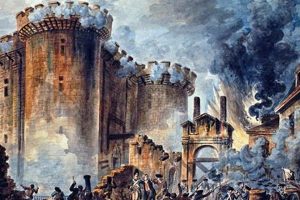
The phrase “stormen p bastillen” translates directly to “the storming of the Bastille.” It refers to a pivotal event in the French Revolution, characterized by the forceful seizure of the Bastille, a medieval fortress and prison in Paris, on July 14, 1789. This event is often cited as the symbolic start of the revolution.
The significance of this event lies in its representation of popular uprising against royal authority. The Bastille, though holding few prisoners at the time, was seen as a symbol of the monarchy’s oppressive power. Its capture demonstrated the people’s resolve to overthrow the existing regime and demand political change. This action ignited revolutionary fervor across France and contributed significantly to the dismantling of the old order.
The events surrounding the attack on the fortress and its subsequent fall are crucial for understanding the broader context of the French Revolution, including the social, political, and economic factors that led to its outbreak, as well as the subsequent course of events that shaped modern France. The incident continues to resonate as a powerful symbol of liberty and popular sovereignty.
Insights Regarding the Storming of the Bastille
The following are insights to aid in understanding the historical impact of the event.
Tip 1: Contextualize the event within the broader economic crisis. High bread prices and widespread famine fueled popular discontent in Paris, creating a volatile atmosphere.
Tip 2: Acknowledge the symbolic importance beyond the number of prisoners released. The Bastille represented royal authority and its fall symbolized the overthrow of that authority.
Tip 3: Examine the role of misinformation and rumor. Exaggerated accounts of the Bastille’s weaponry and the governor’s intentions fueled the mob’s anger.
Tip 4: Consider the perspective of the soldiers guarding the Bastille. They were under orders to defend the fortress, placing them in a difficult position against the Parisian crowd.
Tip 5: Analyze the event’s immediate aftermath. The destruction of the Bastille and the formation of the National Guard represented a significant shift in power.
Tip 6: Evaluate the long-term consequences on the course of the Revolution. The events solidified the revolutionary cause and emboldened the populace to demand further reforms.
Tip 7: Understand its mythologization in French national identity. The event is remembered as a pivotal moment in the struggle for liberty and equality.
These insights highlight the multifaceted nature of the storming of the Bastille. Understanding them provides a more nuanced perspective on this pivotal historical episode.
The study of this event allows for deeper appreciation of the complex and turbulent period of the French Revolution.
1. Royal Authority Symbol

The Bastille, prior to its seizure, functioned as a potent symbol of the French monarchy’s extensive and largely unchecked power. Its physical presence in the heart of Paris served as a constant reminder of the King’s ability to imprison, often arbitrarily, those who challenged his authority or were deemed enemies of the state. This symbolic weight played a critical role in making the Bastille a primary target during the burgeoning unrest of 1789.
- Architectural Manifestation of Power
The Bastille’s imposing architecture, with its high walls, towers, and heavy fortifications, was designed to intimidate and project an image of invulnerability. This visual representation of strength reinforced the perception of the monarchy’s absolute control. In the context of the storming, the physical assault on this structure represented a direct challenge to the King’s seemingly unassailable dominance.
- Repository of Political Prisoners
While the Bastille held relatively few prisoners at the time of its capture, its historical role as a prison for political dissidents and those who had displeased the King contributed significantly to its symbolic weight. The imprisonment of individuals without due process underscored the arbitrary nature of royal justice and fueled resentment among the populace. The release of these prisoners, regardless of their actual number, became a symbolic act of liberation from monarchical oppression.
- Weaponry and Military Arsenal
The Bastille also served as a military arsenal, housing gunpowder and other essential supplies. This reinforced its image as a place of royal power, emphasizing the monarchy’s ability to suppress dissent through force if necessary. The storming was, in part, motivated by the desire to seize these resources, thereby weakening the King’s military advantage and empowering the revolutionary forces.
- Focal Point of Popular Resentment
Due to its combined roles as a prison, fortress, and symbol of royal authority, the Bastille became a focal point for popular resentment against the monarchy. It embodied the perceived injustices and inequalities of the old regime, making it a natural target for those seeking to overthrow the existing order. The storming was not merely an act of violence but a deliberate attack on a tangible representation of monarchical power and oppression.
The storming of the Bastille was, therefore, an attack not only on a physical structure but also on the symbolic foundations of royal authority. By capturing and ultimately destroying this symbol, the revolutionaries effectively signaled their rejection of the monarchy’s legitimacy and their determination to establish a new political order based on the principles of liberty, equality, and fraternity.
2. Popular Uprising Ignition
The assault on the Bastille served as a catalyst, igniting a full-scale popular uprising that extended far beyond the initial action in Paris. The event’s symbolic weight and the audacity of the act transformed localized discontent into widespread revolutionary fervor, mobilizing diverse segments of French society to challenge the established order.
- Immediate Mobilization of Parisians
The attack on the Bastille galvanized the Parisian populace, who were already experiencing economic hardship and political frustration. The event spurred many citizens to take up arms, join revolutionary militias, and actively participate in street protests and demonstrations. The success of the assault demonstrated that the monarchy was not invincible and that popular action could achieve tangible results.
- Dissemination of Revolutionary Ideals
News of the Bastille’s fall spread rapidly throughout France, carried by word of mouth, letters, and early forms of media. This dissemination of information played a crucial role in propagating revolutionary ideals such as liberty, equality, and fraternity. The event became a symbol of popular resistance to tyranny, inspiring similar uprisings in other cities and regions across the country.
- Formation of National Guard and Citizen Militias
In the aftermath of the assault, citizen militias began to form across France, often modeled after the National Guard established in Paris. These armed groups provided a means for citizens to defend themselves against potential royalist counterattacks and to enforce the authority of revolutionary councils. This widespread arming of the populace significantly altered the balance of power, empowering local communities and challenging the central authority of the monarchy.
- Erosion of Royal Authority and Legitimacy
The assault on the Bastille and the subsequent popular uprising severely undermined the authority and legitimacy of the French monarchy. The event demonstrated that the King was unable to maintain order or protect his own symbols of power, leading to a loss of confidence in the government. This erosion of royal authority paved the way for more radical reforms and ultimately the abolition of the monarchy itself.
The events surrounding the Bastille provided the spark that ignited a broader revolutionary movement. The mobilization of Parisians, the dissemination of revolutionary ideals, the formation of citizen militias, and the erosion of royal authority all contributed to a widespread uprising that transformed French society and politics. The symbolic significance of the event continues to resonate, reminding us of the power of popular action to challenge and overthrow oppressive regimes.
3. Revolutionary Fervor Unleashed

The storming of the Bastille served as a critical catalyst in unleashing revolutionary fervor throughout France. The pre-existing conditions of social inequality, economic hardship, and political disenfranchisement had created a volatile atmosphere. However, it was the action itselfthe direct assault on a symbol of royal authoritythat transformed simmering discontent into an active and widespread revolution.
The event’s impact can be understood as a demonstration effect. The success of the Parisian populace in capturing the Bastille, despite the fortress’s formidable reputation, emboldened others to challenge the established order. News of the event spread rapidly, inspiring similar acts of defiance in other cities and regions. This led to the formation of citizen militias, the dismantling of feudal privileges, and the emergence of new political structures. Real-life examples include the Great Fear, a period of rural panic and violence, and the establishment of revolutionary communes throughout France. The storming of the Bastille provided a tangible model for popular action, illustrating that resistance to royal authority was not only possible but could also be successful.
In summary, the storming of the Bastille did not merely reflect revolutionary sentiment; it actively amplified and spread it. This event provided a focal point for popular anger, demonstrating the potential for collective action and triggering a chain reaction of revolutionary activities across France. The practical significance of understanding this connection lies in recognizing the power of symbolic acts and the role they can play in transforming social and political landscapes.
4. Social Unrest Catalyst

The attack on the Bastille acted as a critical catalyst for pre-existing social unrest, accelerating the French Revolution. Decades of economic inequality, food shortages, and oppressive taxation created widespread discontent among the Third Estate. The Bastille, viewed as a symbol of monarchical tyranny, became the focal point for this accumulated resentment. The event demonstrates a direct cause-and-effect relationship, wherein long-term systemic issues culminated in a violent outburst triggered by the symbolic significance of the fortress.
The importance of social unrest as a component leading to the storming of the Bastille is undeniable. Without the prevailing conditions of poverty, injustice, and perceived royal indifference, a simple prison assault would not have evolved into a nationwide revolution. The event provided an outlet for the frustrations of the common people, emboldening them to challenge the authority of the monarchy and aristocracy. For example, the Rveillon riots, occurring shortly before the storming, showcased the level of social tension brewing in Paris. This was compounded by the dismissal of Jacques Necker, a popular finance minister, which was interpreted as a sign that the monarchy was unwilling to address the people’s grievances.
Understanding the Bastille attack within the context of social unrest holds practical significance for analyzing historical and contemporary sociopolitical movements. It underscores the importance of addressing societal inequalities and grievances to prevent violent upheavals. The episode illustrates that even seemingly isolated events can have far-reaching consequences when they tap into deeper currents of social discontent. Analyzing these past conditions offers insight into similar tensions today, allowing for potentially preventative measures and more thoughtful engagement with popular movements.
5. Historical Significance Embodied
The event encapsulates historical significance as a pivotal turning point in the French Revolution, transforming what began as social and political unrest into a full-fledged challenge against monarchical authority. The incident’s representation extends beyond a mere prison break; it symbolizes the overthrow of an oppressive regime and the dawn of a new era predicated on principles of liberty, equality, and fraternity. The effects of this event resonate through subsequent historical movements and democratic revolutions globally.
The essence of embodying historical significance lies in the event’s capacity to symbolize broader themes. The Bastille, as a physical structure, was of limited strategic importance. However, its role as a state prison and symbol of royal power transformed its capture into an act of profound significance. For instance, the subsequent dismantling of the fortress and the distribution of its stones as souvenirs reinforced the symbolic rejection of the old order. The adoption of July 14 as Bastille Day, France’s national day, further solidified the event’s place in the nation’s collective memory.
The understanding of this event’s embodiment of historical significance holds practical implications for analyzing similar transformative events throughout history. It highlights the power of symbolic acts in mobilizing populations and challenging established power structures. By recognizing the intricate connection between historical events and their symbolic meaning, scholars and policymakers can gain insights into the dynamics of social change and political revolutions, fostering a more nuanced and informed approach to understanding historical processes.
Frequently Asked Questions Regarding The Storming of the Bastille
The following questions and answers address common inquiries and misconceptions concerning the historical event of the storming of the Bastille.
Question 1: What were the primary motivations behind the storming?
The motivations were multi-faceted, including securing gunpowder and weapons believed to be stored within the fortress, releasing political prisoners (although few were present at the time), and, critically, dismantling a potent symbol of royal authority and oppression.
Question 2: Was the Bastille heavily defended at the time of the attack?
The Bastille’s garrison was relatively small, consisting primarily of elderly soldiers and Swiss Guards. The fortress’s defenses had been neglected, and its strategic importance had diminished over time.
Question 3: How many prisoners were actually freed during the event?
Only seven prisoners were liberated: four forgers, two individuals deemed insane, and one count imprisoned at the request of his family. The low number underscores the primarily symbolic nature of the attack.
Question 4: What was the immediate aftermath of the storming?
The event triggered widespread panic and unrest throughout Paris. The King, initially hesitant to use force, eventually conceded to the demands of the revolutionaries. The Bastille was subsequently demolished, and its fall became a potent symbol of the revolution’s success.
Question 5: What is the lasting legacy and symbolic importance of this event?
The storming of the Bastille is celebrated as a pivotal moment in the French Revolution and a symbol of popular resistance against tyranny. It embodies the ideals of liberty, equality, and fraternity, and its impact resonates in subsequent struggles for democracy and human rights worldwide.
Question 6: To what extent was violence involved, and who were the key participants?
The storming involved considerable violence, resulting in the deaths of numerous attackers and defenders. Key participants included members of the Parisian populace, revolutionary agitators, and the fortress’s governor, Bernard-Ren de Launay, who was ultimately killed by the mob.
In summary, the storming of the Bastille, while tactically insignificant in terms of prisoner release or military gain, holds immense symbolic weight as the ignition point of the French Revolution and a representation of resistance against oppressive rule.
The following are some key terminology to consider when discussing this historical event.
Stormen p Bastillen
This exploration has illuminated the multi-faceted significance of “stormen p bastillen.” It represents more than a mere historical event; it signifies the potent culmination of social unrest, the ignition of revolutionary fervor, and the symbolic dismantling of royal authority. The assault’s repercussions extended far beyond the fortress walls, influencing the course of the French Revolution and inspiring subsequent movements for liberty and equality worldwide.
Understanding “stormen p bastillen” remains crucial for comprehending the complex interplay between historical events, social forces, and symbolic representation. Continued analysis and critical evaluation of this pivotal moment will provide valuable insights into the dynamics of revolution and the enduring pursuit of human rights and democratic ideals.



![Bastille Storm's Impact: What Was the Outcome? [Explained] | Hubbastille: Explore the Fusion of Culture, Music & Creativity](https://hubbastille.com/wp-content/uploads/2026/01/th-33-300x200.jpg "Bastille Storm's Impact: What Was the Outcome? [Explained] Hubbastille: Explore the Fusion of Culture, Music & Creativity")